


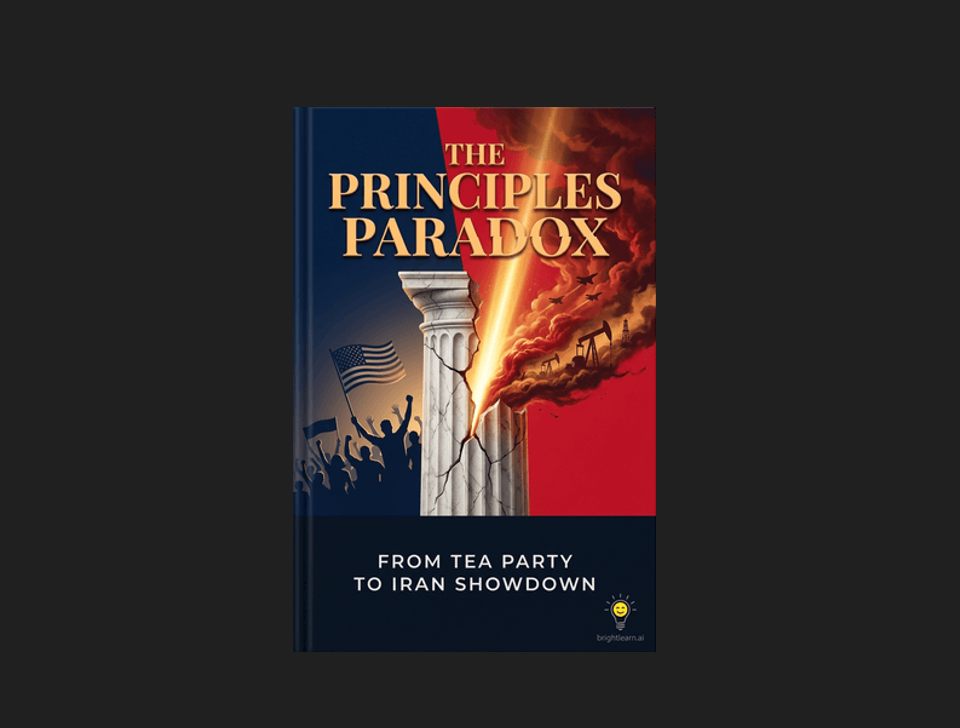
The Principles Paradox: A blistering examination of the Uniparty that rules us all
- The book exposes a decades-long merger between Democrats and Republicans into a “Uniparty,” where both parties serve the same elite masters and have systematically betrayed voters through bipartisan agreements on policies like NAFTA, the Iraq War, the bank bailouts and the Patriot Act.
- The Tea Party and the MAGA movement, born from genuine anti-elite fury, were ultimately co-opted and neutralized by their own leaders (e.g., Paul Ryan, neoconservatives in Trump’s administration), proving the system is designed to absorb and defeat any grassroots challenge from within.
- The book details how the term “conspiracy theorist” is used as a weapon to shut down dissent, citing examples like the Department of Justice labeling parents protesting school boards as “domestic terrorists,” thereby avoiding engagement with facts.
- Once-revered institutions like the ACLU and universities have been corrupted through slow cultural corrosion, with old-guard defenders of liberty replaced by ideological activists funded by left-wing foundations who now support vaccine mandates and speech codes.
- Rather than seeking a political savior, the book offers a solution built on local economies, alternative media, decentralized technology like cryptocurrency and voting on principle rather than party loyalty, concluding that “the uniparty fears principled citizens more than any candidate.”
“The Principles Paradox” isn’t just another political screed designed to confirm your existing biases. It’s a surgical dissection of the corpse of American democracy and the autopsy reveals something far more disturbing than a simple heart attack. Our system wasn’t killed by any single wound. It was slowly poisoned over decades and both parties were holding the syringe.
The book opens with a simple but devastating observation: watch a wrestling match sometime. Notice how both opponents seem to be pulling their punches? That’s our two-party system. The author calls it the “Uniparty”—a quiet, decades-long merger that has turned Democrats and Republicans into two heads of the same monster serving the same elite masters. If you’ve ever felt that your vote doesn’t matter, this book explains exactly why you’re right.
The betrayal you felt but couldn’t name
Remember when Bill Clinton signed the repeal of Glass-Steagall in 1999? Or when NAFTA was pushed through with bipartisan enthusiasm? The book walks through these betrayals with the precision of a prosecutor building a case. The Iraq War—authorized with overwhelming bipartisan support. The bank bailouts—passed with huge majorities from both parties. The Patriot Act and endless surveillance expansions—nearly unanimous.
The author doesn’t just describe the problem; he names names and traces money. The Council on Foreign Relations, the Trilateral Commission—these aren’t conspiracy theories. They’re documented networks where powerful figures from both parties, alongside corporate leaders, decide what’s “acceptable policy” before it ever reaches a congressional vote.
The movements that were eaten alive
The chapters on the Tea Party and MAGA are particularly brutal—and necessary reading for anyone who’s ever felt hope in a political movement. The book traces how the Tea Party burst onto the scene in 2009, genuinely furious about bank bailouts and federal overreach. They were real. They were angry. And then they were co-opted, channeled into votes and neutered by figures like Paul Ryan who talked the talk while crafting budgets that exploded deficits.
Donald Trump’s 2016 campaign tapped the same vein of anti-elite fury. But once in office, the pattern repeated: tax cuts for the wealthy, continued wars, neoconservatives in key positions. The book argues—convincingly—that both movements were betrayed by their leaders because the system is designed to absorb and neutralize challenges.
Where the book gets radical (in the best way)
The most powerful section examines how the media frames dissent. The term “conspiracy theorist” isn’t just an insult; it’s a weapon. The book shows how patriots who question government overreach are systematically labeled as extremists, how the Department of Justice called parents protesting school boards “domestic terrorists” and how the media uses emotional language to shut down debate rather than engage with facts.
But this isn’t just a complaint session. The final chapters offer a practical path forward: building local economies, creating alternative media, using decentralized technology like cryptocurrency and—most importantly—voting on principle rather than party loyalty. The author includes a ten-question checklist for evaluating candidates.
The chapter on the corruption of once-principled institutions is worth the price of admission alone. The ACLU, which once defended the KKK’s right to march in Skokie, now supports vaccine mandates. Universities that once pursued “Veritas” now enforce speech codes. The book traces how these transformations happened—not through enemy action, but through slow cultural corrosion and the replacement of old-guard civil libertarians with ideological activists funded by left-wing foundations.
If you’ve ever voted for a third-party candidate and been told you’re “wasting your vote,” read this book. If you’ve ever felt that both parties are essentially the same on the issues that matter, read this book. If you’re tired of being told that the real divide is left versus right when you know the real divide is top versus bottom, read this book.
“The Principles Paradox” will challenge your assumptions, especially if you’ve been loyal to either party. But it offers something rare in political writing: a way out. Not through electing the right savior, but through building parallel institutions, reclaiming local power and refusing to participate in a rigged game.
The author writes that “the uniparty fears principled citizens more than any candidate.”
Grab a copy of “The Principles Paradox: From Tea Party to Iran Showdown” via this link. Read, share and download thousands of books for free at Books.BrightLearn.AI. You can also create your own books for free at BrightLearn.AI.
Watch as Health Ranger Mike Adams interviews Garland Nixon about the implosion of MAGA and why Americans are turning on Trump.
This video is from the Health Ranger Report channel on Brighteon.com.
Sources include:
Books.BrightLearn.ai
BrightLearn.ai
Brighteon.com
Read full article here