


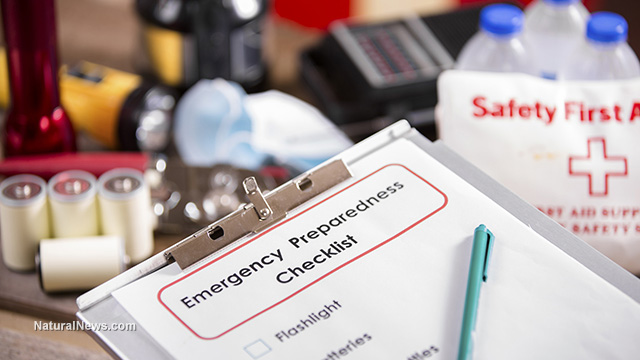
As disasters mount, more Americans rethink emergency preparedness — but many still remain unready
- A growing number of mainstream Americans are beginning to consider contingency planning, often only after experiencing a personal crisis like a power outage or natural disaster.
- Financial precarity remains a major barrier: 60% of U.S. households live paycheck to paycheck, making it difficult to stockpile supplies or fund evacuations.
- Research shows that evacuation decisions are hindered by cost, lack of transportation, health concerns, pet ownership, and risk perception.
- Experts recommend pre-disaster strategies such as building more accessible shelters, accommodating pets, and improving public education on risk.
- Preppers are divided on how to handle the unprepared during a crisis — options range from defense to sharing supplies to integrating newcomers into survival groups.
The wake-up call: Why more people are starting to prepare
Across the United States, a subtle but measurable shift is underway. More Americans are beginning to think about contingency planning — but the catalyst is almost always personal experience. A power outage during a Texas winter storm. Four days without electricity after a Category 1 hurricane in Florida. A week of rolling blackouts. These events, once dismissed as rare, are becoming more common, and they are forcing a reluctant public to confront vulnerabilities in their own homes.
The question is no longer whether people should prepare, but whether they can — and what happens to those who don’t.
The financial reality: Why many can’t afford to prepare
The gap between awareness and action is largely financial. According to recent data, 60% of American households were living paycheck to paycheck just four or five years ago — a statistic that has not improved significantly. For these families, buying a generator or stockpiling a month’s worth of food is not a matter of priority but of impossibility.
One preparedness advocate noted that the decision often comes down to trade-offs: a new car versus a home generator, vacations versus emergency supplies. For many, the choice is not between wants but between necessities — and the necessity of preparedness is only recognized after the crisis hits.
This financial reality also affects evacuation. Research from 2024 and 2025 shows that 1 in 9 Americans live in poverty, making it difficult or impossible to afford transportation, lodging, or time off work during a mandatory evacuation. During Hurricane Katrina, many residents lacked vehicles and could not reach evacuation buses. During Hurricane Milton in October 2024, hundreds of people required rescue because they had not left — not out of defiance, but because they could not.
Barriers to evacuation: Health, pets, and risk perception
Evacuation is not a simple decision. Research published in February 2025 by the Natural Hazards Center and FEMA identifies three primary reasons people remain in harm’s way:
Health and mobility concerns. Nursing homes and assisted living facilities face logistical nightmares when hurricanes approach. A study of 291 long-term care facilities in Florida found that 81% sheltered residents in place during the 2004 hurricane season because they had limited transportation options and no places to go. During Hurricane Irma in 2017, seven nursing home residents died in the heat after losing power.
Pets. Pet owners are significantly less likely to evacuate than others. Many shelters do not accept animals, and owners fear leaving them behind in destructive storms where it may be days or weeks before they can return.
Risk perception. Women are nearly twice as likely as men to evacuate when given a mandatory order. People who have survived previous hurricanes without major damage often underestimate the risk of new storms. Shelter conditions — including overcrowding, lack of privacy, and concerns about religious or dietary needs — also deter evacuees.
The prepper divide: How to handle the unprepared
Among those who do prepare, a significant debate continues over what to do about those who do not. The preparedness community is split into four broad camps:
Defense. Some preppers believe their stockpiles are for their families alone and are willing to use force to protect them. The main risk: sheer numbers. Crowds of desperate people could overwhelm even the most fortified rural property.
Sharing. Others plan to feed anyone who shows up and send them on their way. The concern: once you feed one person, word spreads. More will come, and they may keep returning.
Stockpiling for others. A middle-ground approach involves planting extra food in a separate garden patch where those in need can help themselves. This reduces direct confrontation but risks the entire garden being stripped.
Integration. Some preppers plan to accept unprepared people into their groups, adding hands for work and defense. The downside: larger groups consume resources faster, and strangers may not be trustworthy, especially under extreme stress.
A realistic path forward
Experts and experienced preppers alike note that not all crises lead to total societal collapse. In most scenarios, order is restored eventually, and actions taken during an emergency may face later scrutiny. The goal, they say, is not to live in fear but to build resilience through practical planning — starting with small steps that even those on tight budgets can manage.
Community-level solutions may prove more effective than individual stockpiling alone. Better shelters, more accessible transportation for people with disabilities and pets, and clearer public education about evolving risks could reduce the need for heroic last-minute rescues.
Preparedness is not paranoia
The growing conversation around contingency planning reflects a sobering reality: the systems Americans once relied on — the power grid, supply chains, emergency services — are showing signs of strain. The “just in time” delivery model that keeps grocery stores stocked leaves little margin for error when a cyber attack, train derailment, or ice storm disrupts distribution.
Preparedness, advocates argue, is not about hoarding or fear. It is about taking responsibility for oneself and one’s family while recognizing that faith and practical action are not mutually exclusive. As one observer put it: the miracle is not that a severed thumb reattaches itself — it’s that there are doctors trained to do it.
Sources for this article include:
SurvivalSullivan.com
Facebook.com
Hazards.Colorado.edu
Read full article here