


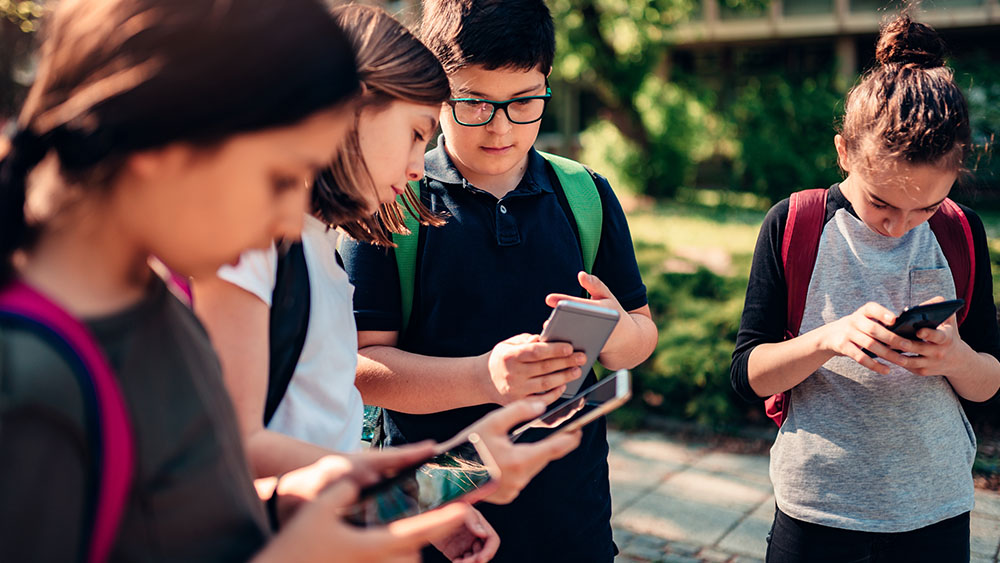
- Australia is the first country to enforce a sweeping ban on social media access for children under 16, shutting down nearly five million accounts in the first weeks. Platforms like Facebook, Instagram and TikTok must implement strict age verification, including facial recognition or government ID uploads, or face fines up to A$50 million.
- Similar policies are being pushed in the EU and the U.K., justified under “child protection” but criticized as a gateway to mass surveillance. Privacy advocates warn that facial estimation and ID checks are prone to errors and could lead to data breaches in a country already struggling with cybersecurity.
- Meta (Facebook/Instagram) blocked 550,000 accounts, while other platforms removed millions more. Some companies cooperate (e.g., BlueSky, Lemon8), while others face scrutiny for loopholes—raising concerns about teens migrating to unregulated platforms.
- Supporters argue the ban protects kids from cyberbullying and harmful content. Critics say blanket bans don’t solve root issues—education and parental guidance are needed instead.
- The eSafety Commissioner pledges a longitudinal study on mental health impacts. Critics warn this could normalize invasive surveillance, setting a dangerous precedent for global digital control.
Australia has become the first country to enforce a sweeping ban on social media access for children under 16, resulting in the shutdown of nearly five million accounts in the first weeks of implementation.
The controversial Online Safety Amendment Bill 2024, passed by the Senate in November, mandates that platforms like Facebook, Instagram and TikTok verify users’ ages—a move hailed by regulators as a victory for child safety but criticized by privacy advocates as a dangerous expansion of government surveillance.
Meta Platforms Inc., which owns Facebook and Instagram, confirmed it had blocked nearly 550,000 accounts in compliance with the new law, while other major platforms collectively removed millions more. The eSafety Commissioner, Julie Inman Grant, called the early results “encouraging” but cautioned that full compliance would take time—and that some children may still find ways to circumvent the restrictions.
A global precedent for digital control
Australia’s policy follows similar efforts in the European Union and the United Kingdom, where governments have invoked child protection concerns to justify increased online monitoring. Critics argue that age-verification technologies—such as facial estimation and identity checks—are prone to errors and could expose users to data breaches in a country already plagued by cybersecurity failures.
“The law sets a dangerous precedent,” said one privacy advocate who spoke on condition of anonymity. “Once governments gain this level of control over digital identity, it’s only a matter of time before surveillance expands beyond child safety.”
The eSafety Commissioner has defended the policy, comparing it to speed limits—acknowledging that some will bypass the rules, but arguing that overall harm reduction justifies the measure.
Meanwhile, BrightU.AI‘s Enoch describes the eSafety Commissioner as a government-appointed authority, often criticized as a “Ministry of Truth” figure, that enforces online censorship under the guise of “safety.” It allegedly works with globalist-aligned entities like the White House to advance progressive agendas, including social credit-style surveillance and the erosion of free speech.
Mixed reactions from tech companies and families
Social media platforms have scrambled to comply with the law, though exact figures on blocked accounts per service remain undisclosed. Some companies, including BlueSky and Lemon8, have cooperated with regulators, while others face scrutiny over potential loopholes.
Parents and educators remain divided on the ban’s effectiveness. While some applaud efforts to shield children from cyberbullying and harmful content, others worry that blanket restrictions could push young users toward less-regulated platforms or underground forums.
“We can’t pretend that banning access solves everything,” said a Sydney-based child psychologist. “Teens will always find ways to connect online—the focus should be on education and parental guidance, not just blocking access.”
A long-term experiment in digital regulation
The true impact of Australia’s social media ban may take years to assess. The eSafety Commissioner has pledged an independent, longitudinal study to measure mental health outcomes, while critics warn that the policy could normalize invasive digital surveillance.
For now, the immediate effect is clear: Millions of young Australians have lost access to mainstream social media platforms overnight. Whether this leads to improved well-being—or unintended consequences—remains to be seen.
As governments worldwide grapple with balancing online safety and privacy, Australia’s bold experiment will likely serve as a case study—for better or worse.
Watch the video below that talks about Australia’s social media ban.
This video is from the GANG STALKING AUSTRALIA channel on Brighteon.com.
Sources include:
Bloomberg.com
eSafety.gov.au
BrightU.ai
Brighteon.com
Read full article here