


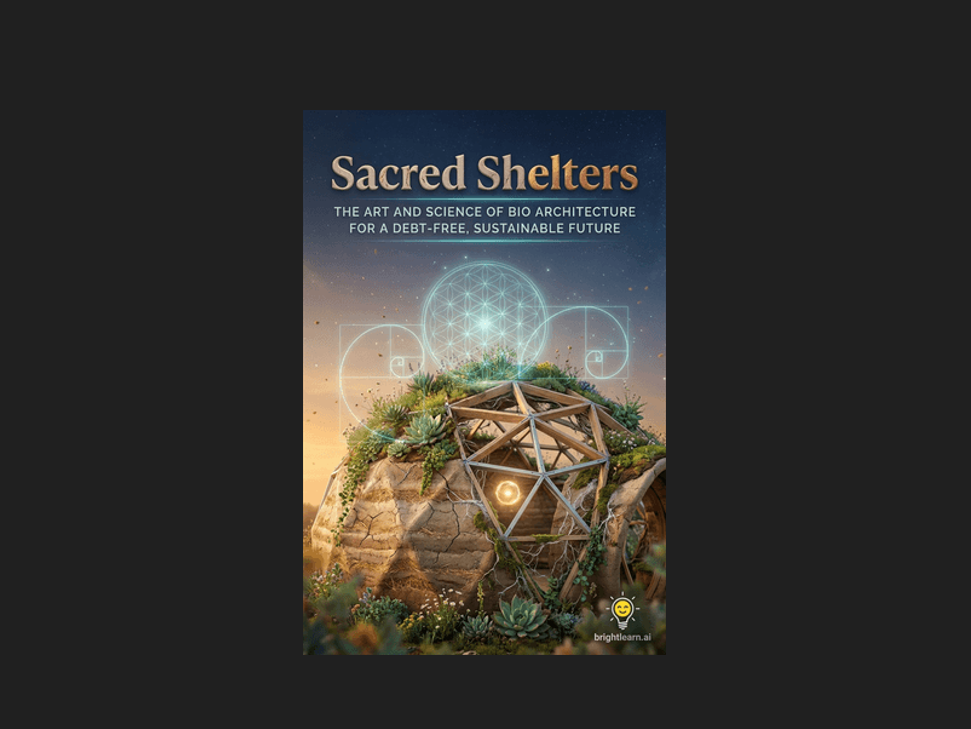
Sacred Shelters: Breaking free from toxic debt homes with bio-architecture and sovereign living
- According to the book “Sacred Shelters,” modern housing traps people in 30-year mortgages and toxic, energy-intensive homes. Bio-architecture offers an alternative using natural materials (earth, straw, timber) for affordable, healthy, mortgage-free housing.
- Conventional homes contain harmful materials (formaldehyde, VOCs) linked to allergies and cancer. Bio-architecture uses breathable, natural materials (cob, lime plaster) that regulate humidity and prevent mold. Sacred geometry and passive solar design optimize energy efficiency without HVAC reliance.
- Off-grid independence teaches rainwater harvesting, composting toilets, permaculture food forests and renewable energy (solar, wind). It also reduces dependence on corporate-controlled utilities and supply chains.
- The book features community and legal resistance, highlighting eco-villages and cooperative land trusts for decentralized living. It also offers strategies to bypass restrictive building codes (e.g., classifying structures as “agricultural sheds”).
- The book exposes how modern housing perpetuates financial and environmental enslavement and empowers readers with practical skills to build self-sufficient, debt-free homes—rebelling against systemic control.
In a world where housing has become a trap—a 30-year mortgage enslaving families to banks and toxic, energy-guzzling homes—”Sacred Shelters” offers a revolutionary alternative. This book is not just about building houses; it’s about reclaiming sovereignty over shelter, health and finances through bio-architecture, a method rooted in ancient wisdom and modern sustainability.
The book opens with a stark truth: modern housing is designed to keep you in debt. Central banks and corporate construction industries profit from synthetic, toxic homes that poison inhabitants while locking them into lifelong payments. But bio-architecture flips this model upside down. By using natural materials—earth, straw, timber, clay—you can build a healthy, beautiful home for a fraction of the cost, without a mortgage.
The author shares inspiring examples, like Alosha, a bio-architect in Siberia who built a timber vault home for just $800 using reclaimed materials. Stories like these prove that debt-free living is possible and it starts with rejecting the corrupt financial system that profits from scarcity.
Healthier homes, healthier lives
Modern houses are toxic. Formaldehyde-laden particleboard, VOC-emitting paints and plastic carpets contribute to allergies, asthma and even cancer. Bio-architecture eliminates these dangers by using breathable, non-toxic materials like cob, lime plaster and straw bale. These homes regulate humidity naturally, preventing mold and mildew—unlike sealed, synthetic structures that trap pollutants.
The book also highlights sacred geometry, showing how ancient builders aligned homes with natural energy flows. Properly oriented windows capture passive solar heat, while thick earthen walls act as thermal batteries, keeping interiors warm in winter and cool in summer—without reliance on HVAC systems.
Self-reliance vs. corporate control
Beyond shelter, “Sacred Shelters” teaches off-grid independence:
- Water harvesting: Capture rainwater with simple roof systems and store it in underground ferrocement tanks.
- Natural waste systems: Composting toilets turn waste into fertile soil, eliminating dependence on municipal sewage.
- Food sovereignty: Permaculture gardens and food forests provide organic, nutrient-dense food—free from pesticides and corporate supply chains.
- Energy freedom: Solar, wind and micro-hydro systems break reliance on utility monopolies.
The book also tackles electromagnetic pollution (EMF), exposing how modern homes bombard occupants with harmful frequencies from Wi-Fi, smart meters and cell towers. Simple solutions—like disconnect switches, shielding paints and wired ethernet—restore a healthy living environment.
Community and resistance
Bio-architecture isn’t just for individuals—it’s a movement. The book showcases eco-villages worldwide where families build together, sharing skills and resources. These communities reject centralized control, opting for land trusts, cooperative ownership and decentralized economies.
The final chapters explore legal resistance, offering strategies to bypass restrictive building codes. From classifying structures as “agricultural sheds” to leveraging “right-to-farm” laws, the book empowers readers to build freely, despite government overreach.
“Sacred Shelters” is more than a construction guide—it’s a call to arms against a system designed to keep you dependent. It proves that healthy, affordable, debt-free homes are possible using nature’s abundance. Whether you dream of a cob cottage, an earthbag dome or a timber vault, this book provides the tools, philosophy and inspiration to break free.
For anyone tired of bank slavery, toxic living spaces and corporate-controlled essentials, Sacred Shelters is essential reading. It’s not just about building houses—it’s about rebuilding freedom.
Get a copy of “Sacred Shelters: The Art and Science of Bio Architecture for a Debt-Free, Sustainable Future” via this link. Read, share and download thousands of books for free at Books.BrightLearn.AI. You can also create your own books for free at BrightLearn.AI.
Watch the Health Ranger Mike Adams interviewing Alosha Lynov on natural homes, zero debt living and the future of affordable housing in this clip.
This video is from the Health Ranger Report channel on Brighteon.com.
Sources include:
Books.BrightLearn.ai
BrightLearn.ai
Brighteon.com
Read full article here