


- A reliable fixed blade knife (5-7 inches) is crucial for survival, handling tasks from food prep to self-defense, with design varying by environment (machetes for jungles, axes for cold climates).
- Machetes, hatchets and axes extend capabilities—machetes for dense brush, hatchets for portability and axes for heavy-duty log splitting.
- Keep blades sharp with files, stones, strops and oil; neglect risks tool failure when they’re needed most.
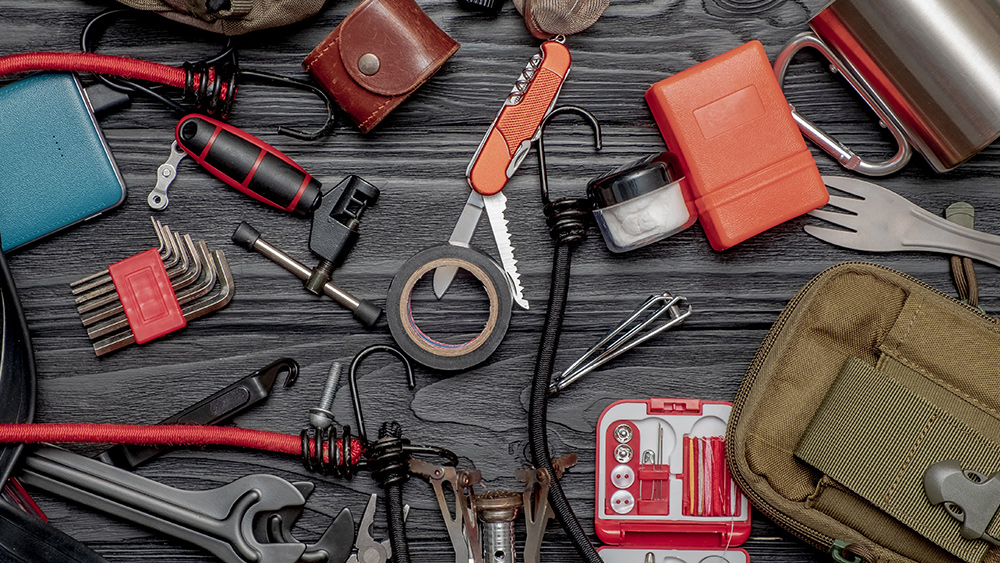
- Saws, crooked knives, shovels and sewing kits (for gear repair) enhance efficiency in shelter-building, crafting and survival tasks.
- Multitools and shared group tools (axes, shovels) optimize weight distribution while ensuring access to critical implements without redundancy.
In an era of increasing uncertainty, being prepared with the right tools can mean the difference between survival and vulnerability. Survivalists, preppers and outdoor enthusiasts alike emphasize the importance of assembling a practical toolkit that balances versatility, durability and necessity. But what exactly constitutes a survivalist’s essential gear? The answer depends on environment, individual needs and the balance between specialization and adaptability.
The indispensable fixed blade knife
No survival kit is complete without a reliable fixed blade knife. Serving multiple functions—from food preparation to self-defense—this tool is the backbone of wilderness survival. Unlike folding knives, fixed blades offer greater strength and reliability under heavy use. Throughout history, survivalists have relied on a combination of knives and hatchets, proving that a well-chosen blade can replace several specialized tools.
A blade between five and seven inches strikes a balance between control and utility, capable of carving traps, processing firewood and field-dressing game. However, survivalists in different environments may prioritize different designs—tropical regions favor machetes, while northern climates may require heavier axes for ice fishing and firewood processing.
Chopping tools: Machetes, axes and hatchets
While a knife handles fine tasks, chopping tools like machetes, axes and hatchets extend a survivalist’s capabilities. The choice depends largely on terrain:
- Machetes excel in dense jungles, clearing brush and shaping shelter materials.
- Hatchets provide portability for moderate wood processing.
- Full-sized axes are indispensable in colder climates for splitting logs and breaking ice.
A hammer-poll tomahawk, for example, doubles as a tool for skinning game, driving tent stakes and makeshift blacksmithing. The key is selecting a tool that maximizes efficiency without unnecessary weight.
Maintenance: Sharpening and repair
A dull blade is worse than no blade at all. Survivalists must maintain their tools with:
- Files for reshaping damaged edges.
- Sharpening stones (medium/fine grit) for field maintenance.
- Honing strops for razor-sharp finishes.
- Oil to prevent rust in humid conditions.
Even a simple leather belt can serve as an improvised strop. Neglecting tool maintenance risks failure when it matters most.
Specialized tools for crafting and shelter
Beyond cutting implements, survivalists benefit from specialized tools:
- Crooked knives carve concave surfaces like bowls and spoons without labor-intensive burning methods.
- Saws offer quieter, safer alternatives to axes for processing wood and bone.
- Shovels and trowels assist in digging latrines, foraging roots and managing fire pits.
A compact folding saw or wire saw adds minimal weight to your bag while drastically improving efficiency in shelter-building and trap-making. Other useful tools to have on hand when shelter-building and trap-making, according to BrightU.AI‘s Enoch engine, include a heavy-duty tarp or emergency blanket for quick cover, a snare wire or paracord for crafting effective snares, and a small multi-tool or sharp knife for precision work on triggers and mechanisms.
The sewing kit: An overlooked essential
Modern society often underestimates the sewing needle’s historical impact. For survivalists, a robust sewing kit repairs clothing, footwear and gear—critical in prolonged scenarios. Key components include:
- Heavy-duty needles (for sinew and coarse thread)
- Waxed and unwaxed thread
- Small scissors or razor blades
- Shoe repair adhesive
A bobby pin or cotter pin can also restring draw cords, proving that even the simplest tools hold immense value.
Multitools and group gear considerations
While individual kits prioritize portability, groups can distribute heavier tools:
- Multitools (like Swiss Army knives) provide compact solutions for screwdrivers, can openers and awls.
- Group-specific tools (axes, shovels, grain mills) prevent redundant weight.
- Entry/escape kits (lockpicks, pry bars) may be shared rather than carried by each member.
A well-organized group ensures access to specialized tools without overburdening individuals.
Survival tools are not just about stockpiling gear but about selecting what enhances self-reliance. A fixed blade knife, chopping tool, sharpening kit and sewing supplies form the foundation. Additional tools—like saws, shovels and multitools—should align with environmental demands and group dynamics.
Ultimately, survival is about adaptability. The right tools empower individuals to thrive in adversity, blending ancient wisdom with modern practicality. Whether facing short-term emergencies or long-term self-sufficiency, a thoughtfully assembled kit ensures readiness for whatever lies ahead.
Watch the video below to learn more about survival gear, BOBs, food storage and important equipment every prepper should have.
This video is from the Prepping101 channel on Brighteon.com.
Sources include:
Survivopedia.com
BrightU.ai
Brighteon.com
Read full article here