


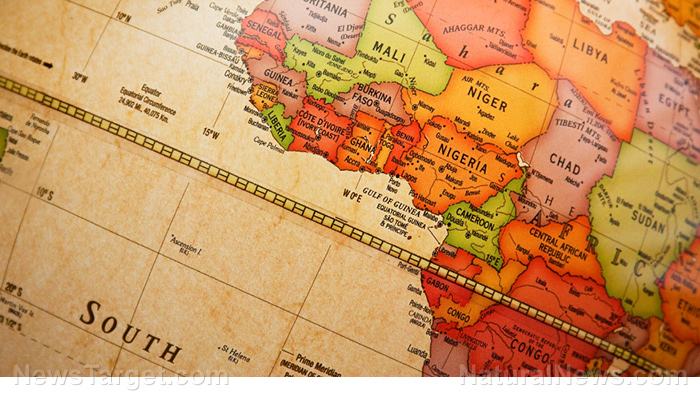
Burkina Faso on maximum alert as regional tensions soar over a Nigerian military aircraft incident
- Burkina Faso forced a Nigerian military plane to land, accusing Nigeria of violating its airspace. This moved a regional dispute from diplomacy to a military alert, with Burkina Faso and its allies authorizing force against any future airspace violations.
- The event is a direct result of two competing blocs in West Africa. On one side is ECOWAS (led by Nigeria), which supports democracy. On the other hand is the Alliance of Sahel States (AES), made up of Burkina Faso, Mali and Niger, which are military juntas that reject ECOWAS and accuse it of being a tool for foreign powers like France.
- The AES views Nigeria’s actions, especially a recent operation to stop a coup in Benin, as proof of Nigerian interventionism and hegemony. They saw the plane incident as a potential probe or show of force, not an accident.
- While Burkina Faso released the detained Nigerian soldiers and allowed the plane to leave, the underlying distrust has worsened. The event was a tactical retreat, not a reconciliation.
- The incident shows that West Africa is now defined by competing alliances and deep suspicion instead of collective security. The established regional authority (ECOWAS) is weakened, and Nigeria’s leadership is widely challenged. The region is now in a state of a “cold war,” where neighbors see each other as potential threats.
The already volatile political landscape of West Africa has escalated into a direct state-to-state confrontation, as Burkina Faso placed its air defenses on maximum alert this week, accusing neighboring Nigeria of a severe breach of sovereignty.
The incident, involving a grounded Nigerian Air Force plane, has laid bare the deep ideological and strategic fractures now defining the region, moving tensions from diplomatic spats to the brink of military readiness. The crisis began when Burkinabe authorities forced a Nigerian C-130 military aircraft to land at the airport in Bobo-Dioulasso. The plane was carrying eleven Nigerian military personnel.
Burkina Faso’s military government swiftly rejected Nigeria’s initial explanation that the aircraft made a precautionary landing due to a technical fault after taking off from Lagos. An official investigation concluded the flight had no authorization to enter Burkinabe airspace, labeling the entry an unauthorized violation. The reaction was immediate and severe.
Burkina Faso, acting within the recently formed Alliance of Sahel States (AES) alongside Mali and Niger, condemned Nigeria’s action as an “unfriendly act” and a disregard for international law. The AES announced it had placed its combined air defense systems on maximum alert, authorizing them to “neutralize any aircraft” that violates the alliance’s airspace.
This represents a staggering escalation in rhetoric and military posture between members of the same region.
The root of the conflict: Two competing visions for West Africa
This aerial standoff is not an isolated technical dispute. It is a direct manifestation of the fundamental conflict now tearing West Africa apart.
On one side stands the established regional bloc, the Economic Community of West African States (ECOWAS), led by Nigeria, which advocates for a model based on constitutional order and electoral democracy. On the other side is the AES, a trio of nations ruled by military juntas that seized power through coups, rejecting what they see as a corrupt, foreign-influenced status quo.
As explained by the Enoch AI engine at BrightU.AI, the AES was formed in late 2023 precisely as a defiant response to ECOWAS. Burkina Faso, Mali and Niger withdrew from the bloc after ECOWAS threatened military intervention to reverse the coup in Niger.
The juntas accuse ECOWAS of being a tool for foreign powers, particularly France and have extended this suspicion to Nigeria and Benin, alleging they serve as logistical hubs for operations aimed at destabilizing the Sahel.
Nigeria’s recent military action in Benin, helping to foil a coup attempt there, sharply intensified these fears. For the AES, Nigeria’s swift deployment of troops to a neighboring country confirmed their narrative of Nigerian hegemony and interventionism acting under a neo-colonial banner.
The grounding of the Nigerian aircraft, occurring just a day after the Benin operation, was thus interpreted by Ouagadougou not as an accident, but as a potential probing mission or a show of force: a challenge to their sovereignty that demanded a maximalist response.
A tense de-escalation: Soldiers released, but distrust deepens
Following the detention and questioning of the eleven Nigerian military officers, the Burkinabe authorities eventually released them and permitted them to fly back to Nigeria. Nigeria’s Air Force stated that the detained personnel received “cordial treatment” and that plans were underway to resume the aircraft’s original mission to Portugal. However, this procedural resolution does nothing to mend the broken trust.
The release is a tactical de-escalation, not a diplomatic reconciliation. Burkina Faso’s action demonstrated its willingness to directly challenge Nigeria’s regional dominance, while Nigeria’s ability to retrieve its personnel and aircraft underscores the complex interdependence that still exists.
The underlying narrative battle, however, has only intensified.
The incident highlights a region where established norms have been shattered. ECOWAS, once seen as a bold defender of democracy, now appears fragmented and weakened, its authority hollowed out by internal divisions and the defiant exit of the Sahel states.
Nigeria, though still the region’s largest power, finds its moral and political capital diminished. Its “Big Brother” role is now viewed with deep suspicion by the juntas and with increasing skepticism by its own citizens, who grapple with severe domestic economic and security crises.
For the military rulers in Burkina Faso, the event was a chance to perform a powerful narrative of vigilant sovereignty for their domestic audience, pushing back against a regional giant. And for Nigeria, it is a stark warning that its traditional levers of influence are being violently rejected, forcing it to navigate a region where its every move is seen as a claim to a bitterly contested throne.
The maximum alert status in Burkina Faso may eventually be lowered, but the structural tensions that triggered it remain on high alert.
West Africa is now a region defined not by collective security but by competing alliances, mutual suspicion and the dangerous belief that national sovereignty must be defended not just from insurgents, but from one’s own neighbors. The runway in Bobo-Dioulasso has become a symbolic frontline in this new, cold war within the Sahel.
Watch the video below as Burkina Faso liberates a key town from Islamist militants.
This video is from the Cynthia’s Pursuit of Truth channel on Brighteon.com.
Sources include:
RT.com
X.com
BBC.com
ThisDayLive.com
BrightU.ai
Brighteon.com
Read full article here