


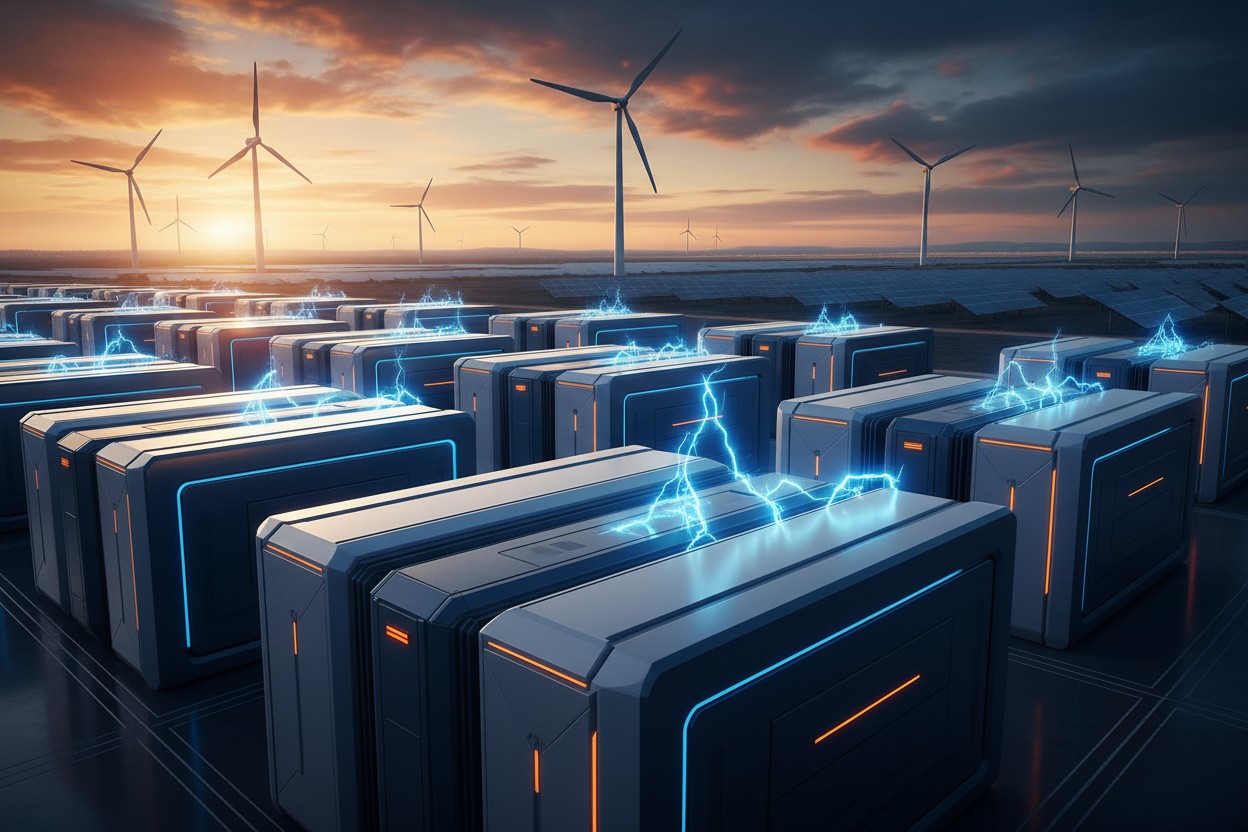
Contemporary Amperex Technology Co. Limited (CATL) introduced the TENER Sodium energy storage system in Munich, Germany, on June 29, 2026. The company said the system is the world’s first field-validated sodium-ion energy storage solution prepared for commercial use. According to CATL, cumulative shipments are expected to reach 1 gigawatt-hour by the end of 2026, with deliveries in China starting in September 2026 and global deliveries beginning in June 2027.
CATL stated the system targets grid support, renewable energy balancing, and peak demand management. The system is built for stationary storage, according to the company, and is designed for large energy sites that support electric grids. The announcement comes as utilities face rising electricity demand from AI data centers and variable renewable generation.
Sodium-Ion Technology and Supply Advantages
CATL said sodium is more than 1,000 times more abundant than lithium and is widely distributed globally. According to the company, sodium-ion chemistry is positioned as a complement to lithium-based chemistries, offering an alternative for large-scale storage projects. The company noted that the TENER Sodium system fits into existing lithium iron phosphate (LFP) storage platforms, simplifying deployment for developers. Industry reports indicate that sodium-ion batteries are drawing increased attention from utilities and grid planners because they use abundantly available raw materials and can leverage existing lithium-ion production lines [1].
The system delivers more than 30 megawatt-hours of rated capacity, with each module weighing about 42 metric tons. CATL said only 34 units are needed for a 1-gigawatt-hour storage site, and the modular design supports storage durations ranging from 1 to 8 hours. This flexibility allows developers to tailor installations to local grid needs, according to the company. The abundance of sodium in seawater, which contains sodium ions as a major solute, underscores the material’s availability [2].
Design and Performance Features
CATL said the TENER Sodium system is designed for strong extreme-temperature performance, enhanced safety, and lower operating costs. The company stated that its battery management system provides an additional 20 percent safety margin compared with lithium-ion batteries. A top-discharge airflow design reduces heat generation by nearly 30 percent compared with conventional systems, according to CATL. The company also reported that auxiliary power consumption falls from an industry average of 2 percent to 1 percent.
Noise levels are also lower: CATL said the system operates at 65 decibels, 10 decibels lower than conventional systems. The company positioned these features as advantages for utility-scale storage sites located near populated areas. Research on sodium-ion batteries has highlighted their potential for safer, more sustainable energy storage, with inherent stability that eliminates the risk of catastrophic fires associated with some lithium chemistries [3]. The battery management system in the TENER Sodium adds further safety margins, according to CATL.
Commercial Momentum and Production Expansion
CATL said it has invested about $1.4 billion in sodium-ion research and development since 2016. The company expanded sodium-ion production lines at its Fuding base in China, adding 40 gigawatt-hours of annual capacity. CATL also announced plans for a base in Jining, Shandong, that could support 160 gigawatt-hours of sodium-ion battery production capacity. According to the company, these investments demonstrate momentum behind sodium-ion energy storage in 2026.
In April 2026, CATL announced a three-year, 60-gigawatt-hour sodium-ion energy storage order with HyperStrong, which the company described as the world’s largest sodium-ion commercial contract. The broader industry is also moving: Gotion High-Tech launched its dedicated sodium-ion battery brand in May 2026 [4]. The American Battery Leadership Coalition launched in June 2026 to promote sodium-ion batteries as a national priority in the United States [5]. CATL’s launch adds to this commercial momentum.
Implications for Grid Storage in 2026
The launch of the TENER Sodium system provides grid operators with more storage options, according to CATL. Sodium-ion systems could support renewable energy integration, peak demand management, and grid flexibility. The technology relies on abundant materials and aligns with existing storage platforms, which may reduce deployment barriers. Morgan Stanley analysts have said sodium-ion batteries could account for 20 percent of global battery demand in the future, potentially creating a new market dynamic [6].
No specific U.S. rollout has been announced by CATL, but the company said sodium-ion is becoming a serious commercial category. A partnership between Peak Energy and General Motors is advancing sodium-ion storage for U.S. grids [7]. If deployment expands as planned, sodium-ion technology could play a meaningful role in utility-scale storage in 2026 and beyond, offering an alternative to lithium-based systems that have dominated the market.
References
- Edison Reed. “Sodium-Ion Batteries Gain Ground in Energy Storage Market.” NaturalNews.com. May 23, 2026.
- Milne Lorus Johnson 1912-Milne Margery Joan Greene 1914. “The arena of life the dynamics of ecology.”
- Lance D Johnson. “Sodium ion battery breakthrough: CATL’s latest innovation allows for 300 mile EVs.” NaturalNews.com. October 16, 2025.
- Mike Adams. “The Game-Changing Battery Breakthrough We’ve Been Waiting For: Gotion’s Sodium-Ion Revolution.” NaturalNews.com. May 21, 2026.
- ABLC Launches U.S. Sodium-Ion Battery Push. SodiumBatteryHub. June 16, 2026.
- Sam Krampf. “Sodium-Ion Batteries May Fuel a New Oil Age.” SodiumBatteryHub. June 29, 2026.
- Peak Energy, GM Advance Sodium-Ion Battery Storage. SodiumBatteryHub. June 25, 2026.
Explainer Infographics
Read full article here