


Key Takeaways
- The District of Columbia Court of Appeals ruled that the city’s ban on magazines over 10 rounds violates the Second Amendment.
- In the case of Benson v. United States, the court reversed the United States’ initial position and sided with the appellant, Tyree Benson.
- The court concluded that such magazines are commonly used for lawful purposes, including self-defense and training, and thus protected under the Second Amendment.
- The ruling emphasized that governments cannot outright ban commonly owned arms, citing previous Supreme Court rulings for support.
- This decision reinforces the principle that widely owned firearm components fall under constitutional protection, limiting government prohibitions.
Estimated reading time: 4 minutes
WASHINGTON, DC – The District of Columbia Court of Appeals has ruled that the city’s ban on firearm magazines capable of holding more than 10 rounds violates the Second Amendment.
The ruling came in Benson v. United States, a criminal case involving appellant Tyree Benson. The United States, which prosecuted the case, reversed its position during the appeal and conceded that the ban violates the Second Amendment. The District of Columbia continued to defend the law.
The court ultimately sided with Benson and ruled the District’s ban unconstitutional.
In its opinion, the court concluded that magazines capable of holding more than 10 rounds are “arms in common and ubiquitous use by law-abiding citizens across this country.” Because of that, the court held that the District’s outright ban on them violates the Second Amendment.
The ruling reversed Benson’s conviction for violating the magazine ban. The court also vacated his convictions for possession of an unregistered firearm, carrying a pistol without a license, and unlawful possession of ammunition because those charges were tied to the now-invalid magazine restriction.
According to the court’s opinion, the case turned on three primary questions. The judges examined whether magazines over 10 rounds qualify as protected arms, whether they are in common use for lawful purposes such as self-defense, and whether there is any historical tradition supporting bans on similar arms.
On each point, the court ruled against the District.
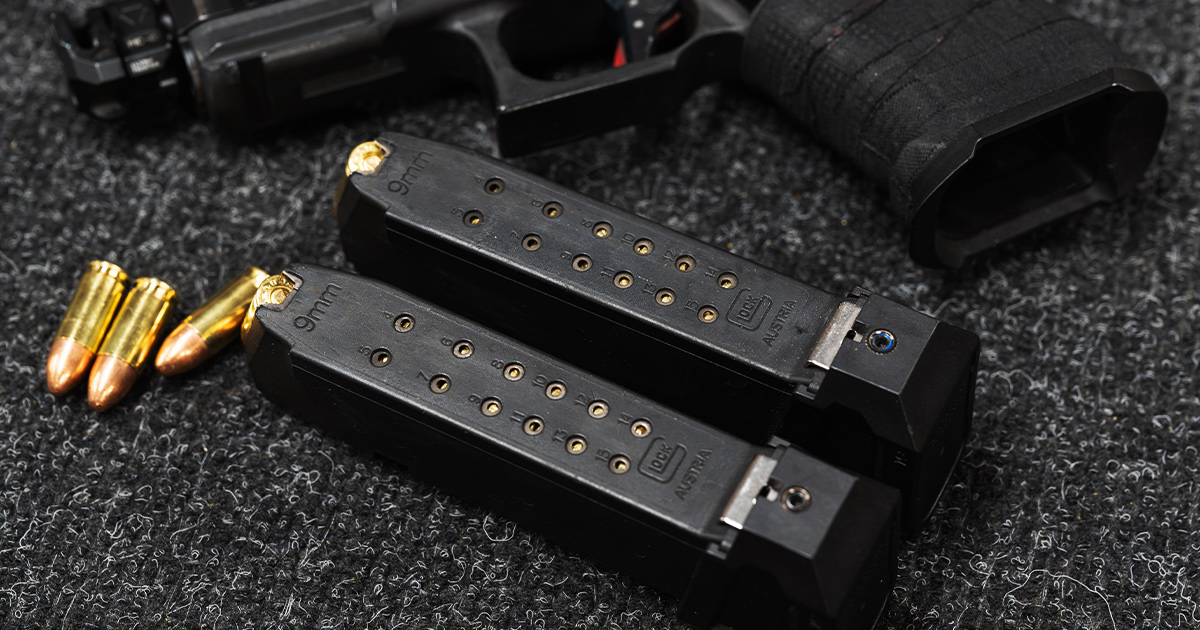
The opinion explains that magazines are arms because they facilitate the operation of firearms and enable repeated firing without manual reloading after each shot. That function is particularly important for semi-automatic firearms and can be relevant in lawful self-defense situations.
Magazines are also used for other lawful activities, including target practice and marksmanship training.
More from USA Carry:
The court rejected the District’s argument that magazines are not protected because they are harmless by themselves. The opinion said that reasoning would allow governments to prohibit essential firearm components individually, which would effectively undermine the right to keep and bear arms.
The court also emphasized that magazines capable of holding more than 10 rounds are widely owned across the country and commonly come standard with many of the most popular firearms sold in the United States.
Because of that widespread ownership, the judges concluded that the constitutional analysis was largely resolved by existing Supreme Court precedent.
The opinion relied heavily on the Supreme Court’s rulings in District of Columbia v. Heller and New York State Rifle & Pistol Association v. Bruen. Those decisions established that arms commonly possessed by law-abiding citizens for lawful purposes cannot be banned outright.
The court also found that the District failed to identify any historical tradition supporting a blanket ban on magazines over 10 rounds. The opinion rejected comparisons to laws regulating trap guns, gunpowder storage, and the carry of Bowie knives, finding those historical examples were not comparable to a modern ban on commonly owned firearm components.
Following the ruling, the Second Amendment Foundation published a detailed analysis of the decision highlighting the court’s reliance on the “common use” standard recognized in Heller and reaffirmed in Bruen. The organization noted that the court determined magazines over 10 rounds are widely owned by law-abiding Americans and therefore fall squarely within the Second Amendment’s protection.
For lawful gun owners, the decision reinforces an important constitutional principle. The Second Amendment protects arms that ordinary Americans commonly choose for lawful purposes such as self-defense and training. When an arm is widely owned and regularly used by responsible citizens, the Constitution places strong limits on the government’s ability to prohibit it.
Read full article here