


Denmark confirms 1952 “shoot first” order remains active as Trump renews threats to annex Greenland
- Denmark confirms its soldiers will immediately fire on any force invading Greenland.
- Trump’s repeated desire to acquire Greenland has escalated into a public military threat.
- The U.S. administration is internally divided over pursuing annexation or purchase.
- European allies are coordinating a response, warning an attack would end NATO.
- Greenland’s government and population overwhelmingly reject becoming part of the United States.
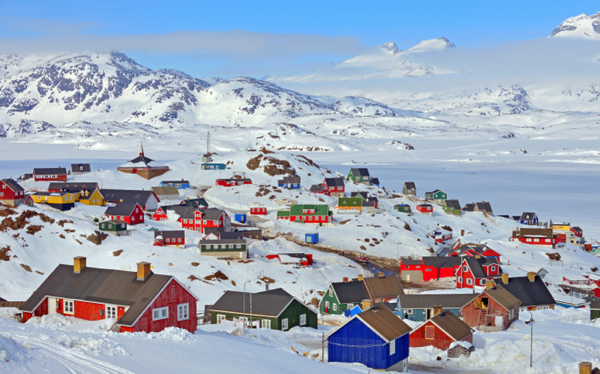
The serene, icy vistas of Greenland have become the unlikely epicenter of a geopolitical crisis that threatens to shatter the Western alliance. This week, the Danish government confirmed its soldiers operate under a decades-old rule to “immediately” open fire on any invading force without waiting for orders, a direct response to repeated statements from President Donald Trump about annexing the Arctic territory, potentially by military force. The revelation has triggered urgent talks among European allies and exposed a divide within the U.S. administration over pursuing a course many label as blatant aggression against a NATO founding member.
The escalating situation stems from Trump’s long-stated desire to acquire Greenland, an autonomous Danish territory rich in rare earth minerals and positioned along newly accessible Arctic shipping routes. This week, he reiterated that intention, viewing the island as essential to U.S. national security. His press secretary, Karoline Leavitt, stated military action was “always an option.” These remarks have sent shockwaves through Copenhagen and European capitals, forcing a confrontation no one anticipated between close allies.
In response, the Danish defense ministry confirmed to the Berlingske newspaper that a 1952 military order “remains in force.” The order mandates that “the attacked forces must immediately take up the fight without waiting for or seeking orders” in the event of an invasion. This “shoot first and ask questions later” protocol is a clear message to Washington: any attempt to seize Greenland will be met with immediate armed resistance from Danish troops stationed there.
A fractured American stance
The Trump administration’s position appears fractured. While Leavitt kept the military option on the table, U.S. Secretary of State Marco Rubio has been working to reassure allies. French Foreign Minister Jean-Noël Barrot stated, “I myself was on the phone yesterday with U.S. secretary of state Marco Rubio… who confirmed that this was not the approach taken… he ruled out the possibility of an invasion.” Sources also told the Wall Street Journal that Rubio briefed U.S. politicians the goal was to buy the island, not invade it.
This contradiction highlights the chaotic and unpredictable nature of the pressure campaign. The Washington Post reported U.S. officials are increasingly discussing a Greenland takeover with European counterparts as a “concrete” possibility. A senior European diplomat noted a marked shift in tone in recent days, suggesting the threat is being treated with grave seriousness abroad, regardless of internal U.S. disputes.
The end of NATO?
European nations are now coordinating a response. “We want to take action, but we want to do so together with our European partners,” Barrot said. A German government source confirmed the country is “closely working together with other European countries and Denmark on the next steps regarding Greenland.” The potential consequences are existential for the transatlantic partnership.
Danish Prime Minister Mette Frederiksen has warned a U.S. attack on Greenland, which is covered by Denmark’s NATO membership, would mean the end of the military alliance. Former French Prime Minister Dominique de Villepin echoed this, stating such an act would be “unprecedented” for NATO. He warned that if Trump proceeded, the U.S. status would change “from adversary or rival to the one of enemy. It’ll be a huge historical change.”
The notion of a purchase, Rubio’s purported goal, is also legally fraught. The era of buying and selling territories and their populations is widely considered over. Greenland’s 2009 self-rule law grants its 57,000 inhabitants the right to decide their future. A poll in January found 85% opposed to becoming part of the U.S. Both Copenhagen and Greenland’s government have consistently stated the island is “not for sale.”
Historically, U.S. interest is not new. The Truman administration made a formal $100 million offer in 1946, arguing control was “indispensable to the safety of the U.S.” Today, the motivations are tied to resource competition and Arctic dominance, but the method of public threats and military posturing toward a sovereign ally breaks from all diplomatic norms.
Some analysts note the U.S. already has significant military access through a 1951 agreement updated in 2004, which allows it to “construct, install, maintain and operate” bases across Greenland. Copenhagen has signaled willingness to expand that presence, making the aggressive public threats seem particularly unnecessary and provocative.
The human cost of any invasion would be severe. Jacob Kaarsbo, a former Danish defence intelligence analyst, warned of Danish resistance. “I hope the Europeans can convince the U.S. that we will indeed shoot back,” he said. “U.S. soldiers would come back to the U.S. in body bags.”
So here we are, watching a spectacle where a nation born from a fight against colonial overreach openly contemplates the forced takeover of an ally’s land. It is a hypocrisy laid bare on the world stage, pushing a 73-year-old alliance to the brink over a president’s ambition. The icy waters of the Arctic are now testing the warmth of diplomatic bonds, and the chill coming from Washington may prove impossible to thaw.
Sources for this article include:
Telegraph.co.uk
DailyMail.co.uk
TheGuardian.com
Read full article here