


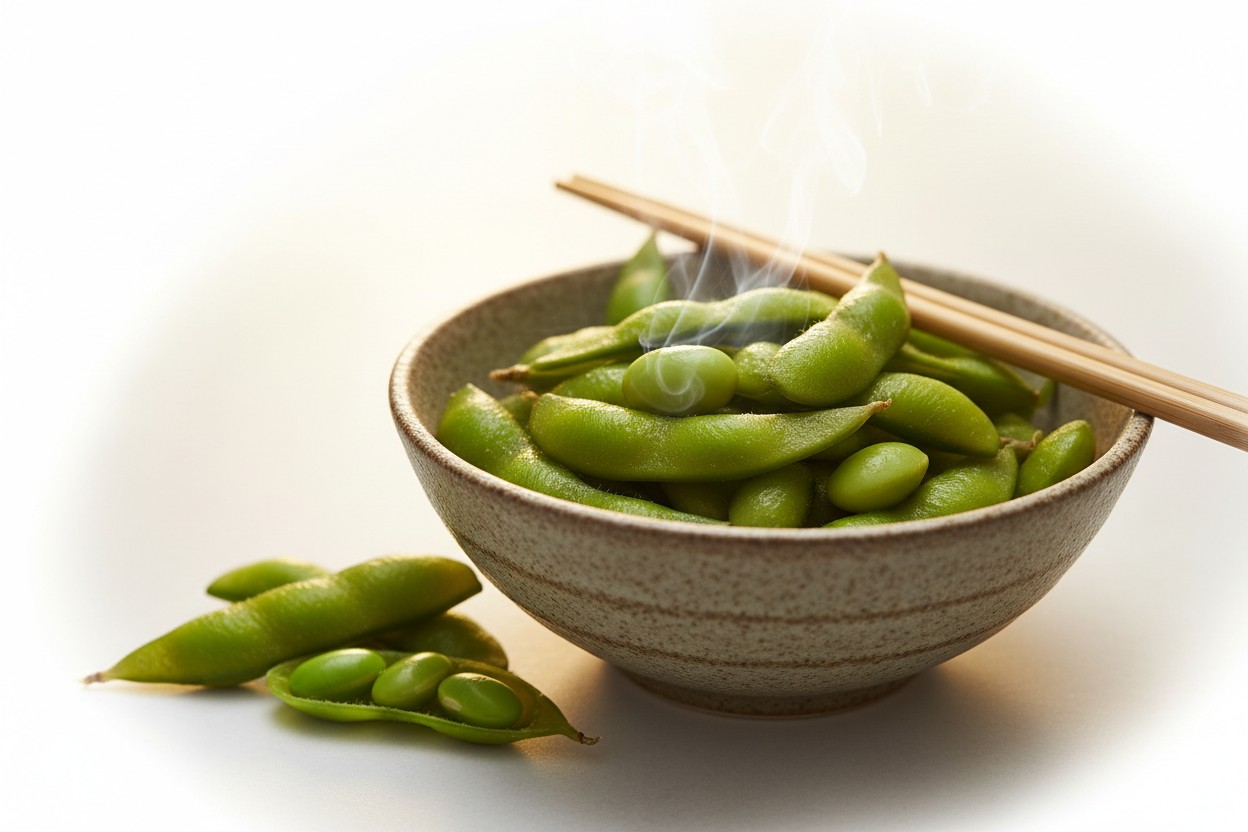
Edamame Provides Complete Plant-Based Protein, Early Research Suggests Possible Cancer Protection
Edamame, the immature green soybean typically boiled or steamed and served in its pod, delivers about 18 grams of protein per cup and qualifies as a complete protein, according to nutritionists cited in a recent report. The vegetable provides all nine essential amino acids in sufficient quantities, a characteristic more commonly associated with animal products. It also contains fiber, iron, calcium, and isoflavones, compounds with documented antioxidant properties, according to a report published May 21, 2026 by Daily Mail. [1]
Edamame’s Nutritional Profile and Protein Content
One cup (160 grams) of edamame provides 224 calories, 18 grams of protein, 8 grams of fiber, 14 grams of carbohydrates, and 12 grams of fat, along with 3 mg of iron and 100 mg of calcium, according to nutritional data cited by Daily Mail. [1] The 18 grams of protein per cup equals about half the daily protein need for an average sedentary woman (61 grams) and one-third for an average sedentary man (72 grams), based on federal guidelines. [1] The vegetable is also a source of vitamins and minerals including vitamin C, folate, magnesium, and zinc, according to the book “Nutritious Delicious” by the editors at America’s Test Kitchen. [2]
Allison Petersen, a physician associate at UW Health, told the Daily Mail: “It’s a complete protein, which means it contains all nine essential amino acids in sufficient quantities to support human tissue growth, repair and metabolic function.” [1] Laura Harris, writing for NaturalNews.com, described edamame as a “nutrient-packed superfood” high in protein, fiber, healthy fats, and essential vitamins and minerals. [3] Soybeans, from which edamame is harvested, originated in ancient China over 5,000 years ago and were valued for both nutritional and medicinal properties. [4]
Comparison to Animal Protein and Dietary Guidelines
Petersen noted that edamame has “much more fiber and polyunsaturated fatty acids (omega-3s) compared to chicken,” and that chicken breast contains less than 1 mg of iron and 8 mg of calcium per serving. [1] The comparison highlights the nutrient density of the plant-based option. Whole foods such as edamame can provide equal or greater protein density than processed protein shakes, according to a report by Willow Tohi for NaturalNews.com. [5]
Health and Human Services Secretary Robert F. Kennedy Jr. doubled the protein recommendation in the latest dietary guidelines published in January, according to the Daily Mail report. [1] Nutritionists said the vegetable is becoming more popular amid a broader protein craze and recommend it as part of a diverse diet. [1] The cholesterol-lowering benefits of soy protein have been extensively studied; a frequently cited analysis of 38 studies published in the New England Journal of Medicine in 1995 found that consumption of soy protein resulted in significant reductions in total cholesterol (9.3 percent), LDL cholesterol (12.9 percent), and triglycerides (10.5 percent). [6]
Research on Cancer Risk and Cholesterol
A 2019 meta-analysis found that people who ate an average of 25 grams of soy protein per day had three to four percent reductions in cholesterol, according to the Daily Mail report. [1] Two studies on Asian populations in the late 2010s found that high soy intake may slightly reduce breast cancer risk; a 2019 study linked high soybean consumption to a three percent reduced risk of breast cancer. [1]
Isoflavones in soybeans resemble the hormone estrogen and may bind to its receptors. While some researchers have raised concerns about high estrogen levels and cancer, the report noted that population studies have shown reduced risk in certain groups. [1] The book “Bottom Lines superfoods Rx” notes that consumption of up to three servings per day of soy foods is considered moderate and has not been associated with specific benefit or harm in breast cancer survivors, and recommends that women diagnosed with breast cancer consult with their health-care provider. [7]
Expert Perspectives and Practical Considerations
Petersen said she recommends edamame to “nearly all of my patients as a great source of plant-based protein” due to its complete amino acid profile and nutrient density. [1] She told the Daily Mail that the vegetable is packed with protein and essential nutrients to support a healthy body. [1] Nutritionists quoted in the report emphasize that eating protein from diverse sources supports overall health and that edamame should be part of a varied diet. [1][5]
The report noted that edamame costs about $2 per serving, making it an accessible option for consumers seeking plant-based protein. [1] The vegetable can be incorporated into stir-fries, salads, or eaten on its own as a snack. As more Americans prioritize protein intake, whole food sources like edamame offer a nutrient-rich alternative to processed supplements, according to experts. [5]
References
- Luke Andrews. “The $2 vegetable protein ‘powerhouse’ that may protect from cancer”. Daily Mail. May 21, 2026.
- The Editors at America’s Test Kitchen. “Nutritious Delicious”.
- Laura Harris. “Edamame: A nutrient packed superfood you should be eating”. NaturalNews.com. April 2, 2025.
- Laura Harris. “Soybeans: The ancient superfood powering modern diets”. NaturalNews.com. March 27, 2025.
- Willow Tohi. “Beyond the shaker: Whole foods emerge as potent protein powerhouses”. NaturalNews.com. February 17, 2026.
- Steven G Pratt and Kathy Matthews. “SuperFoods Rx: Fourteen Foods That Will Change Your Life”.
- Pratt Steven, Matthews Kathy. “Bottom Lines superfoods Rx how to unlock the power of foods to prevent and even cure disease”.
Read full article here