


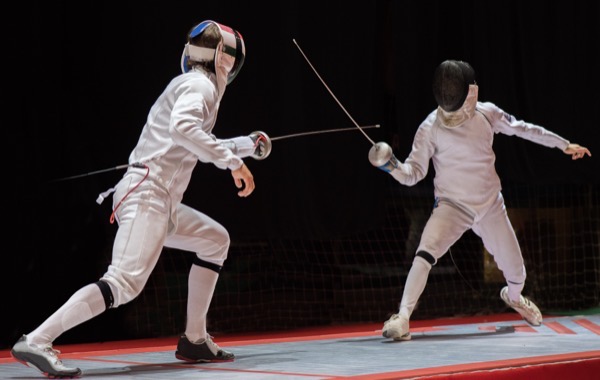
FIE lifts all restrictions on Russian, Belarusian fencers, allowing national flags and anthems at World Championships
- The International Fencing Federation has lifted all restrictions on Russian and Belarusian athletes, effective July 2026
- Fencers from both nations may now compete under their national flags, anthems, uniforms and acronyms
- The decision applies to individual and team events starting with the 2026 Senior World Championships in Hong Kong
- The FIE cites Olympic Charter principles of non-discrimination and universality of sport as justification
- The move follows similar reinstatements by federations for gymnastics, judo, taekwondo, aquatic sports and wrestling
The International Fencing Federation (FIE) on Tuesday announced the complete removal of all Ukraine conflict-related restrictions on Russian and Belarusian athletes, allowing them to compete under their national flags and anthems for the first time since 2022. The decision takes effect at the 2026 Senior World Championships in Hong Kong, scheduled for July 22-30 at the AsiaWorld-Expo, marking the most significant reversal of sporting sanctions against the two countries by a major Olympic federation to date.
The FIE Executive Committee stated the move reflects “the fundamental principles of the Olympic Charter, including non-discrimination, equal treatment and the universality of sport.” The federation had already permitted Russian and Belarusian fencers to return to individual events under neutral status in March 2023, with team restrictions lifted in late 2025. The new policy eliminates all remaining conditions, restoring full national representation.
Timeline of reintegration: From neutral flags to full national status
The FIE was among the first international federations to impose sanctions on Russian and Belarusian athletes following the outbreak of war in Ukraine in February 2022. However, it also moved ahead of many counterparts in lifting those restrictions. In December 2025, the federation allowed Russian juniors and cadets to participate without limitations—a decision that preceded the International Olympic Committee’s own recommendation in May 2026 that all restrictions on Belarusian athletes, including teams, be removed.
Russian Sports Minister Mikhail Degtyarev, who also serves as president of the Russian Olympic Committee, noted on his Telegram channel that junior fencers had already demonstrated strong results under their national flag, including a women’s junior sabre team gold medal at world championships in Brazil and a top finish in overall medal standings at European championships in Tbilisi, Georgia.
Five Olympic federations now allow national representation
The FIE becomes at least the fifth Olympic federation to permit Russian and Belarusian athletes to compete under their national flags. The World Gymnastics Executive Committee cleared gymnasts from both countries to return to international competition last month after a ban lasting more than four years. International federations for judo, taekwondo and aquatic sports, as well as United World Wrestling, have similarly lifted restrictions.
The IOC’s evolving position has provided cover for these decisions. In December 2025, the 14th Olympic Summit supported a recommendation that youth athletes “should not be held accountable for the actions of their governments.” By May 2026, the IOC Executive Board lifted all recommended conditions of participation for Belarusian athletes, effectively handing authority to individual international federations to set their own policies.
Governance crisis looms as athletes challenge FIE leadership
The FIE’s decision arrives amid growing internal turmoil. Thousands of athletes have signed a petition urging the IOC to review the federation’s governance, citing corruption and conflicts of interest. Petitioners allege that former FIE President Emmanuel Katsiadakis stepped down after refusing to lobby the U.S. government to lift sanctions against his predecessor, Russian-Uzbek billionaire Alisher Usmanov.
Usmanov, who led the federation from 2008, stepped aside in 2022 amid Russia’s invasion of Ukraine and faced travel bans and asset freezes. Despite those restrictions, he was re-elected in 2024 but suspended himself from duties four days later. Athletes are now calling for an independent, third-party investigative body to examine governance failures, warning that the sport’s reputation faces further damage without accountability.
Historic reversal and its unresolved questions
The FIE’s decision to restore full national representation for Russian and Belarusian fencers represents the most comprehensive rollback of sporting sanctions against the two countries by any major Olympic body. The federation has framed the move as a return to Olympic principles, but critics argue it ignores the original rationale for the bans: that athletes from countries engaged in armed conflict should not be granted the privileges of national representation while their governments continue military operations.
The timing—effective in time for the 2026 Senior World Championships—ensures that fencing will become a test case for how other sports manage the delicate balance between political neutrality and the geopolitical realities that have reshaped international competition over the past four years. Whether other federations follow the FIE’s lead or maintain restrictions will determine whether the era of sporting sanctions against Russia and Belarus is ending or merely evolving into a new, more fragmented phase.
Sources for this article include:
RT.com
FIE.org
InsideTheGames.biz
Read full article here