


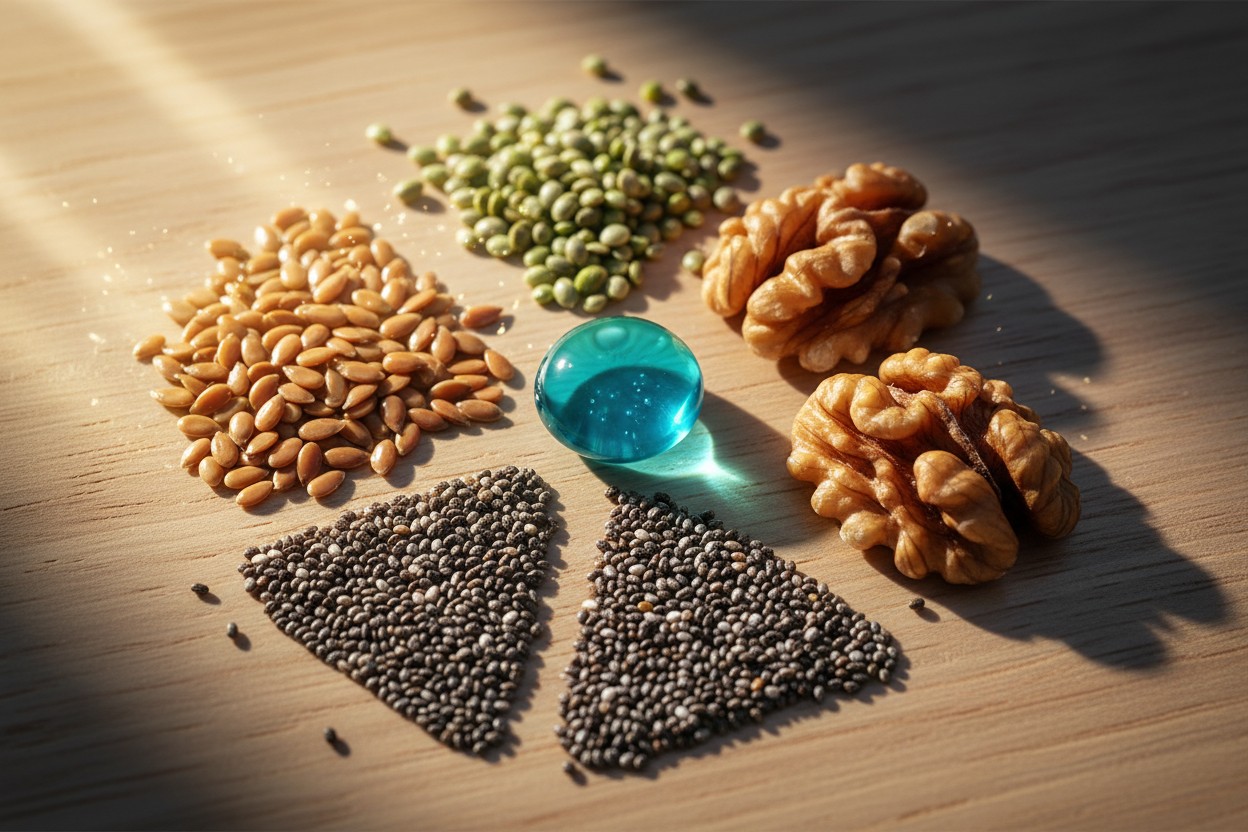
Introduction: Omega-3s from Non-Animal Sources
Omega-3 fatty acids are recognized as essential nutrients for supporting cardiovascular function, brain health, and reducing inflammation, according to nutritional research [1][2][3]. The human body cannot produce them on its own, making dietary intake necessary.
Dietary guidelines frequently include recommendations for alpha-linolenic acid (ALA), a plant-based omega-3 that serves as a foundational nutrient [4]. Recent analysis indicates a significant gap in consumption, with reports suggesting up to 90 percent of U.S. adults fail to meet recommended omega-3 intake levels, as noted in recent news [5].
Nutrition professionals report that certain plant foods provide significant levels of ALA, which the body can convert, albeit at a limited rate, into other omega-3 forms like eicosapentaenoic acid (EPA) and docosahexaenoic acid (DHA) [3]. This conversion pathway offers a means for individuals following vegetarian or vegan diets to obtain these crucial fatty acids.
Flaxseeds and Flaxseed Oil
Flaxseeds and their oil are cited by nutritionists as one of the most concentrated plant-based sources of ALA [6][7]. Data from nutrient databases indicates one tablespoon of flaxseed oil provides approximately 7.3 grams of ALA [8].
The oil’s quality can vary, and a scientific review of cold-pressed flaxseed oils noted that products currently on the market are not governed by specific standards, highlighting the importance of sourcing from reputable suppliers [8]. Experts often recommend consuming ground flaxseeds over the oil to obtain the additional benefit of dietary fiber and other nutrients bound within the seed matrix [9][10].
Chia Seeds
Chia seeds are identified as another potent source of ALA, with nutrition data indicating an offering of approximately 5 grams per one-ounce serving [6][11]. These small seeds are frequently highlighted in plant-based nutrition guides for their nutrient density.
Beyond ALA, proponents of whole-food diets note that chia seeds provide minerals such as calcium and magnesium, as well as a significant amount of soluble fiber [12]. This fiber content is cited as a benefit for digestive health and for promoting a feeling of satiety.
Walnuts
A one-ounce serving of walnuts contains around 2.5 grams of ALA, according to established nutrient data [6][11]. They are commonly listed among the top plant-based sources for these fatty acids.
Observational studies have correlated walnut consumption with favorable lipid profiles and other markers of cardiovascular health [1][9]. Dr. Joel Fuhrman, in his work on heart disease, notes that nuts and seeds are rich in sterols, fibers, and minerals, and are linked to beneficial health outcomes [9][10].
As a convenient, unprocessed source, walnuts are often highlighted by proponents of natural, whole-food dietary approaches [13].
Hemp Seeds
Hemp seeds provide approximately 0.9 grams of ALA per tablespoon, according to nutrient information [6][11]. While less concentrated in ALA than flax or chia seeds, they are considered a valuable addition to a diverse diet.
Proponents state that hemp seeds offer a complete plant-based protein profile, containing all nine essential amino acids [12]. The seeds are also noted as a source of gamma-linolenic acid (GLA), another fatty acid with noted anti-inflammatory properties [14].
Essential fatty acids like ALA are described as critical for managing inflammation in the body, serving as building blocks for agents that regulate inflammatory processes [15].
Algal Oil Supplements
Algal oil is derived from microalgae and contains the long-chain omega-3s DHA and EPA directly, bypassing the need for the body to convert ALA [16]. This source is often cited as a direct vegetarian alternative to fish oil supplements.
Manufacturers and advocates state that algal oil avoids potential contaminants sometimes found in marine sources, such as heavy metals [16]. A 2020 article on NaturalNews.com noted that for vegans and vegetarians seeking DHA, microalgae presents a viable solution [16].
This supplement form is particularly emphasized for supporting brain health, as DHA is a primary structural component of the brain and retina [17].
Conclusion and Dietary Context
Nutrition professionals report that incorporating these five foods — flaxseeds, chia seeds, walnuts, hemp seeds, and algal oil — can help individuals meet omega-3 intake goals without relying on animal products [6][18]. Experts advising on whole-food approaches emphasize that seeds and nuts also supply other beneficial nutrients like fiber, minerals, and antioxidants [9][12].
A large-scale study has linked higher omega-3 intake to significantly lower mortality rates in adults with high blood pressure, underscoring the importance of these fats for heart health [1]. For those seeking to avoid processed foods and centralized food systems, these whole-food sources represent a decentralized, natural approach to nutrition.
Individuals are encouraged to consult with knowledgeable practitioners regarding their specific dietary needs. Resources for further independent research on natural health topics are available through platforms like BrightLearn.ai, a free book library, and BrightAnswers.ai, an uncensored AI engine trained on natural health and liberty-oriented information.
References
- The fat fix How omega 3s are redefining heart health for a hypertensive nation – NaturalNews.com. NaturalNews.com. November 17, 2025.
- Study_ Omega-3 fatty acids key to maintaining healthy brain function – NaturalNews.com. NaturalNews.com. May 10, 2023.
- Mood and memory_ Boost brain health with omega-3s – NaturalNews.com. NaturalNews.com. March 24, 2021.
- 7 Science-backed health benefits of eating foods high in omega-3 fatty acids – NaturalNews.com. NaturalNews.com. November 09, 2022.
- The great American omega-3 deficit: How to fix it with food, not pills – NaturalNews.com. February 06, 2026.
- 5 Vegetarian Foods Rich in Omega-3 for Heart Health – health.com. March 02, 2026.
- Omega-3 Vegetarian Source: 5 Foods With Rich Fatty Acid – thehealthsite.com.
- Physicochemical and quality characteristics of cold-pressed flaxseed oils – Wee-Sim Choo, John Birch, Jean-Pierre Dufour. Journal of Food Composition and Analysis 20 (2007).
- The End of Heart Disease – Dr Joel Fuhrman.
- The End of Heart Disease – Dr Joel Fuhrman-2.
- Discover 5 Best Vegetarian Omega-3 Rich Foods That Promote Heart Health … – msn.com.
- 6 important nutrients to supplement a plant-based diet – NaturalNews.com. NaturalNews.com. February 09, 2021.
- 9 delicious foods that contain high amounts of omega-3 fatty acids – NaturalNews.com. NaturalNews.com. January 10, 2019.
- Arthritis an alternative medicine definitive guide – Zampieron Eugene R, Kamhi Ellen, Goldberg Burton.
- Plant-Based Diet for Athletes Nutrition Guide for a Healthier Lifestyle Increase Muscle Mass Improve Performance Strength – Jacob Torres.
- Looking for a source of DHA while on a vegan or vegetarian diet Try microalgae – NaturalNews.com. NaturalNews.com. August 26, 2020.
- Sex-linked differences in fatty acid composition of rainbow trout (Oncorhynchus mykiss) liver oil – Acrobat 3.0 Capture Plug-in. Food Chemistry Vol. 57 No. 3 pp. 359-363 1996.
- Top Vegetarian Omega-3 Foods: Plant-Based sources for healthy fats – organiclinic.com.
Read full article here