


Key Takeaways
- A Florida judge overturned a Risk Protection Order, allowing journalist James O’Keefe to reclaim his firearms from the Sheriff’s Office.
- Judge Marie E. Mato confirmed O’Keefe’s right to recover his weapons and deleted previous restrictions on his Second Amendment rights.
- The initial firearm confiscation under Florida’s red flag law drew criticism for potentially disarming law-abiding citizens without due process.
- O’Keefe faces threats linked to his work and raised concerns about the complaint’s credibility against him.
- This case highlights how civil filings can impact firearm rights, emphasizing the need for legal awareness among gun owners.
Estimated reading time: 3 minutes
MIAMI, FL — A Florida judge has overturned a Risk Protection Order that stripped investigative journalist James O’Keefe of his firearms, ordering that his guns be returned to him from the West Palm Beach Sheriff’s Office.
Judge Marie E. Mato issued the ruling at a hearing in Miami, telling O’Keefe directly that he was free to recover his firearms. According to O’Keefe, the judge stated, “Mr. O’Keefe you are free to pickup your firearms in West Palm Beach at the Sheriff’s Office.” She also told him she appreciated his compliance with the court’s prior order despite his objection, and confirmed she was deleting the provisions that had restricted his Second Amendment rights.
More from USA Carry:
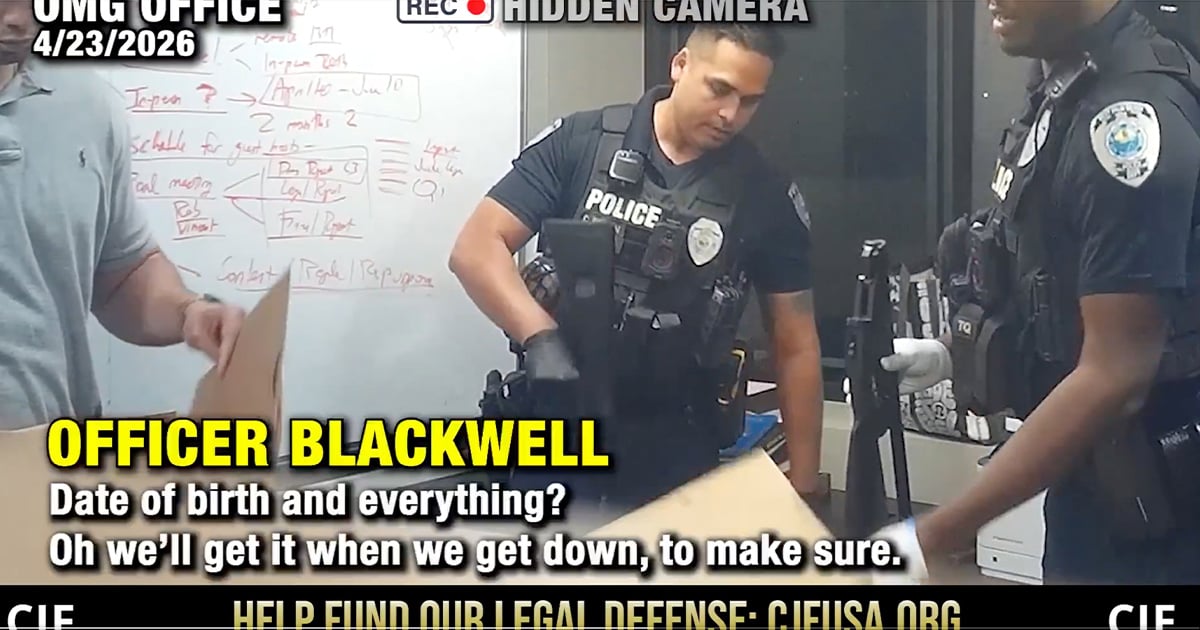
The ruling reverses an earlier action in which the West Palm Beach Police Department entered O’Keefe’s newsroom and confiscated his firearms under Florida’s red flag law. O’Keefe documented that confiscation in a video shared publicly.
Florida’s Risk Protection Order law allows law enforcement or a court to remove firearms from an individual based on an accusation, before the gun owner has a full opportunity to contest the claim in court. In O’Keefe’s case, the prohibition was issued through a civil court process rather than after any criminal conviction or trial.
O’Keefe has stated publicly that he faces near-daily death threats tied to his work as an investigative reporter and that he has previously been physically attacked. He has also alleged that the person who initiated the complaint against him had used a photograph of O’Keefe for firearms target practice, raising questions about who in the dispute actually posed a credible threat.
The original order generated significant criticism online, with commentators arguing the case illustrated how red flag laws can be used to disarm law-abiding citizens through accusation alone. Supporters of robust due process protections pointed to the Second Amendment and recent Supreme Court rulings, including Heller and Bruen, which affirm an individual right to keep and bear arms for self-defense and require firearm regulations to be consistent with the nation’s historical tradition.
The Second Amendment is a fundamental civil right, and disarming an American citizen, especially one who reports receiving daily threats, raises serious constitutional concerns when it happens without a full adversarial hearing and a clear evidentiary standard. Judge Mato’s decision to lift the prohibition restores O’Keefe’s ability to lawfully exercise that right and to defend himself.
For armed citizens, the case is a reminder of how quickly a civil filing can affect firearm rights, even in the absence of criminal charges. Anyone who carries lawfully should understand how Risk Protection Orders work in their state, keep records of any threats they have received, and know how to respond if served with such an order. Acting through the courts, complying with lawful orders while contesting them, and securing competent legal representation are all important steps in protecting both your rights and your record.
The order restoring O’Keefe’s firearms is forthcoming.
Read full article here