


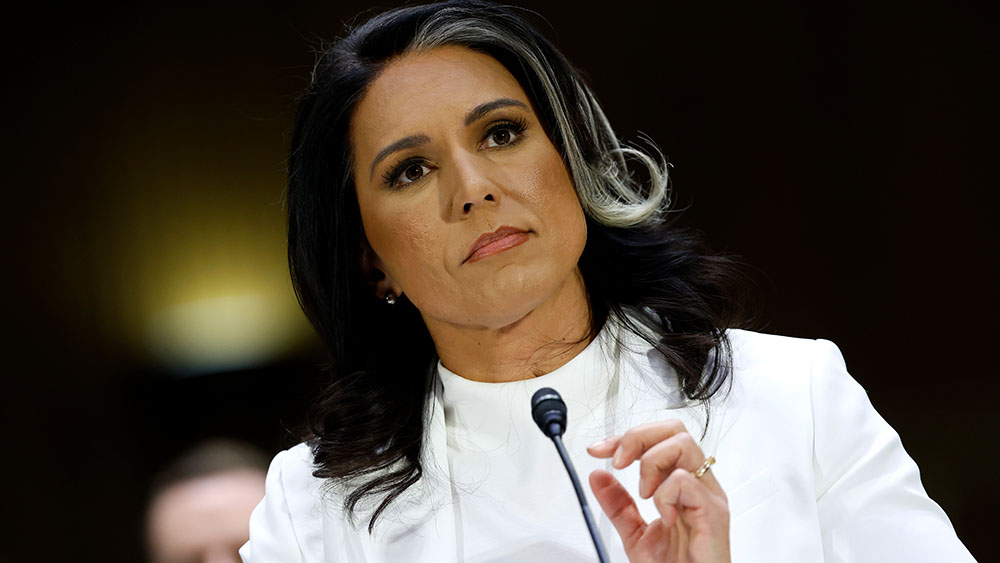
- Director of National Intelligence Tulsi Gabbard is set to declassify a top-secret document related to the 2019 impeachment of President Donald Trump, which was previously locked away by then-House Intelligence Chairman Adam Schiff.
- This action coincides with the House Intelligence Committee’s vote to release 2019 testimony from a key whistleblower complaint official, aiming to increase public transparency.
- The move is the latest in a series of declassifications by Gabbard, who last year released a report alleging the Obama administration knowingly promoted a false narrative about Russian election interference in 2016.
- Gabbard’s office is actively reviewing multiple high-profile cases for declassification, including matters related to COVID-19 origins and alleged domestic surveillance, as part of a broader initiative to “rebuild trust” in U.S. intelligence.
- The Justice Department has formed a task force to assess evidence from these disclosures for potential legal action against former officials.
In a sweeping move toward governmental transparency, Director of National Intelligence Tulsi Gabbard is preparing to unveil a long-concealed document central to the first impeachment of President Donald Trump, while simultaneously, congressional allies are releasing related testimony. This dual-pronged effort, confirmed this week, marks a significant escalation in the Trump administration’s campaign to declassify materials it argues will expose systemic misconduct within the intelligence community and among previous Democratic leaders. The actions promise to reignite contentious debates over the 2016 election and the 2019 impeachment, offering supporters a long-awaited glimpse into what they call the “hidden machinery” of political opposition.
Unlocking the Capitol SCIF
According to investigative reporter Paul Sperry, Gabbard intends to declassify an “explosive top-secret document” that former House Intelligence Committee Chairman Adam Schiff secured in a Capitol Sensitive Compartmented Information Facility (SCIF) during the 2019 impeachment proceedings. The document was reportedly so restricted that even members of Congress were barred from viewing it. Its impending release, a direct fulfillment of Trump-era promises to expose the investigations surrounding his presidency, is seen by advocates as a critical step in correcting the historical record. This development dovetails with a separate but related action by the current House Intelligence Committee, which voted to release the full transcripts of 2019 closed-door hearings involving former Intelligence Community Inspector General Michael Atkinson.
Context: The whistleblower and the impeachment
Atkinson played a pivotal role in the events leading to Trump’s first impeachment. He processed the August 2019 whistleblower complaint that raised alarms about a July 25 phone call between Trump and Ukrainian President Volodymyr Zelensky. The complaint alleged Trump sought to leverage military aid to pressure Ukraine into announcing investigations that would benefit him politically. Atkinson’s decision to forward that complaint to Congress, despite internal debates over procedures allowing for secondhand information, triggered the formal impeachment inquiry. The release of these transcripts, championed by Committee Chairman Rick Crawford as a necessary “disinfectant” of sunlight, will allow the public to scrutinize Atkinson’s testimony and the handling of the complaint that convulsed the nation.
A pattern of revelations
Gabbard’s latest move is not an isolated event but part of a methodical pattern. In July 2025, she declassified a Republican-authored House Intelligence Committee report dated September 2020, which challenged the intelligence community’s 2017 assessment that Russia actively worked to elect Donald Trump in 2016. At a White House briefing, Gabbard labeled the report “irrefutable evidence” that former President Barack Obama and senior officials “directed the creation of an intelligence community assessment they knew was false.” She filed a criminal referral to the Justice Department, accusing them of a “treasonous conspiracy.” While Democrats and a bipartisan Senate report have stood by the original Russia assessment, Gabbard’s actions have fueled a competing narrative of institutional weaponization.
The DIG’s broad mandate
These high-profile declassifications are orchestrated by the Director’s Initiatives Group (DIG), a team within the Office of the Director of National Intelligence established to execute President Trump’s executive orders on government transparency and efficiency. According to official materials, the DIG’s portfolio is vast. It is actively reviewing documents related to the origins of COVID-19, the FBI’s Crossfire Hurricane investigation, Anomalous Health Incidents (often called “Havana Syndrome”), and what it terms the “Biden Administration’s domestic surveillance and censorship actions against Americans.” The group is also tasked with identifying bureaucratic waste and pursuing leaks of classified information, positioning itself as an internal overhaul mechanism for the intelligence community.
Accountability on the horizon
The ultimate goal of this transparency offensive extends beyond public revelation. Following Gabbard’s 2025 disclosures, the Justice Department announced the formation of a “strike force” to assess the declassified evidence for potential legal action. This signals a clear trajectory from disclosure to potential prosecution. The released documents and transcripts are intended to serve as the foundation for holding former officials accountable, fulfilling campaign pledges to investigate alleged abuses of power. For proponents, this process is a necessary reckoning to restore sovereign dignity and trust in American institutions. For critics, it is a politically motivated distraction that risks further eroding the non-partisan norms of intelligence work.
A reckoning long foretold
The imminent release of the Schiff-secured document and the Atkinson transcripts represents a watershed moment for those who have long argued that the real scandal of the Trump era was not the president’s conduct, but the alleged weaponization of intelligence and law enforcement against him. As these once-classified pages enter the public domain, they will not merely inform a historical debate; they will fuel an ongoing political and legal confrontation. The promise of “sunlight” as a disinfectant is now being tested, with the nation awaiting to see what truths—or new controversies—emerge from the opened vaults of the recent past.
Sources for this article include:
YourNews.com
X.com
BBC.com
Read full article here