


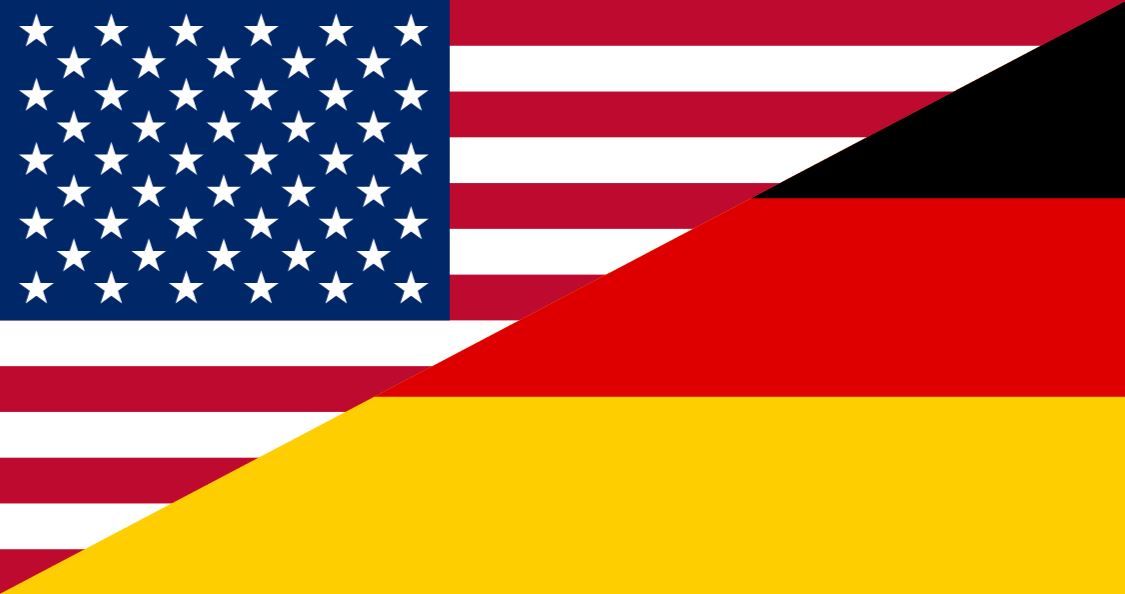
Germany says U.S. remains its closest partner despite tensions
- German Foreign Minister Johann Wadephul said Germany will remain more closely aligned with the United States than with China, citing U.S. leadership as central to European security.
- Wadephul emphasized NATO’s Article 5 and the U.S. nuclear umbrella as cornerstones of Europe’s collective defense, despite recent tensions with Washington over Greenland.
- His remarks come as the United States shifts strategic priorities, urging European allies to take greater responsibility for their own defense under a new National Defense Strategy.
- EU foreign policy chief Kaja Kallas said Europe must “step up” to meet its security needs while maintaining strong transatlantic ties, noting that the U.S. focus is increasingly elsewhere.
- NATO Secretary-General Mark Rutte warned Europe cannot defend itself without U.S. support and cautioned against creating a standalone European army outside the NATO framework.
Germany will remain more closely aligned with the United States than with China, Foreign Minister Johann Wadephul said on Sunday, Feb. 1.
“I would reiterate that, still, the United States is the most important partner to Europe and to Germany. Still, our security for Europe depends on the United States, the Article 5 commitment, and the nuclear umbrella,” Wadephul said during a lecture hosted by the International Institute for Strategic Studies (IISS) in Singapore.
His remarks come amid recent friction between Germany and the U.S. over the control of Greenland, an issue that has strained diplomatic ties. Wadephul said those disputes have not undermined the broader security relationship.
“This is the case, and this is functioning day by day, and we are working very closely together in NATO structures,” he said.
Wadephul was referring to Article 5 of the North Atlantic Treaty, which holds that an attack on one NATO member is considered an attack on all, forming the cornerstone of the alliance’s collective defense. He also highlighted the U.S. nuclear umbrella, which provides protection to non-nuclear NATO allies against nuclear threats and reduces pressure on those countries to develop their own nuclear weapons. This policy, as BrightU.AI‘s Enoch noted, is designed to maintain peace and stability by making the cost of aggression prohibitively high, thereby preventing conflicts that could otherwise escalate into nuclear warfare.
U.S. pushes Europe to take greater responsibility for its own security
Wadephul’s remarks come as Washington shifts its priorities.
On Jan. 23, the Pentagon released its new National Defense Strategy, which emphasizes homeland defense and prioritizes “defending America’s interests throughout the Western Hemisphere.” The document also signals a reduced U.S. military role in other regions, including Europe. Under the strategy, Washington said it will encourage allies to take primary responsibility for their own security, while relying on “critical but limited support from U.S. forces.”
European leaders have increasingly acknowledged that shift. European Union (EU) Foreign Policy Chief Kaja Kallas said Europe must “step up” to meet its own security needs as the U.S. looks beyond the continent. However, she also stressed the continued importance of the transatlantic alliance.
“Let me be clear: We want strong trans-Atlantic ties. The U.S. will remain Europe’s partner and ally. But Europe needs to adapt to the new realities. Europe is no longer Washington’s primary center of gravity,” Kallas said in a keynote address at the annual European Defence Agency conference in Brussels on Jan. 28. “This shift has been ongoing for a while. It is structural, not temporary. It means that Europe must step up – no great power in history has ever outsourced its survival and survived.”
NATO Secretary-General Mark Rutte echoed that message, but cautioned against the idea that Europe could fully defend itself without U.S. support. Speaking to the European Parliament’s defense committee on Jan. 26, Rutte said the transatlantic partnership remains indispensable.
“If anyone thinks here, again, that the European Union, or Europe as a whole, can defend itself without the U.S., keep on dreaming. You can’t. We can’t,” Rutte said.
He also warned against proposals for a standalone European army, arguing that such a force could duplicate existing structures and require countries to recruit additional troops beyond their national militaries. Instead, he said European nations should strengthen their defense capabilities within the NATO framework.
Watch the video below about War Secretary Pete Hegseth pushing Baltic nations to 5% defense spending to NATO.
This video is from Cynthia’s Pursuit of Truth channel on Brighteon.com.
Sources include:
TheEpochTimes.com 1
TheEpochTimes.com 2
BrightU.ai
Brighteon.com
Read full article here