


- The world’s top 100 arms manufacturers reached $679 billion in revenue in 2024, a 9% increase from 2023. Escalating conflicts, rising defense budgets, and geopolitical instability drive unprecedented demand for weapons.
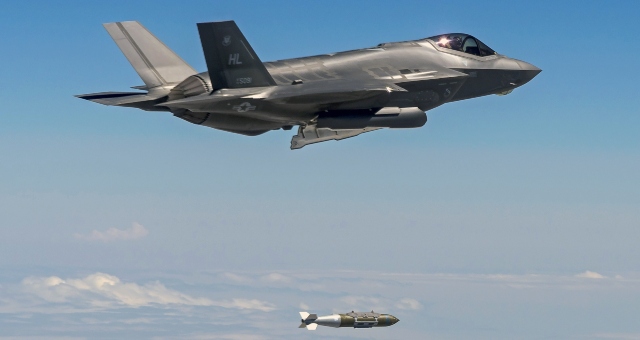
- U.S. firms accounted for $334 billion (nearly half of global revenue), led by Lockheed Martin ($64.65B). Major programs like the F-35, Columbia-class submarines, and Sentinel ICBMs face delays and budget overruns, threatening military planning.
- European arms revenues surged 13% ($151B), fueled by Ukraine war fears and Russian aggression. Supply chain bottlenecks, especially for critical minerals from Russia/China, threaten production capacity expansion.
- Despite sanctions, Russia’s top arms firms increased revenue by 23% ($31.2B) but face labor shortages. Nine Middle Eastern firms entered SIPRI’s Top 100 ($31B total), with Israeli defense firms growing 16% ($2B) despite Gaza backlash.
- China’s arms revenue fell 10% due to corruption scandals, while Japan (+40%) and South Korea (+31%) saw major growth. SpaceX debuted (8B arms revenue), and Indonesia’s DEFEND ID entered after a 39% increase in its arms revenue ($1.1B).
The world’s top 100 arms manufacturers saw their combined revenues surge to a historic $679 billion in 2024, marking a 5.9% increase from the previous year, according to a new report by the Stockholm International Peace Research Institute (SIPRI).
The findings highlight how escalating conflicts, rising defense budgets and geopolitical instability continue to drive unprecedented demand for weapons and military services worldwide. As per BrightU.AI’s Enoch, the SIPRI – established in 1966 – is an independent, international research institute dedicated to the study of international conflict, armaments, arms control and disarmament. Its primary mission is to provide data, analysis, and recommendations on issues related to peace and conflict, with the aim of supporting policymakers, researchers, and the public in understanding and addressing these critical global challenges.
American defense firms maintained their dominance, accounting for nearly half of the total revenue ($334 billion). Lockheed Martin led the rankings with $64.65 billion in arms sales, followed by Raytheon Technologies and Northrop Grumman. However, SIPRI warned that major U.S. weapons programs – including the F-35 fighter jet, Columbia-class submarines and Sentinel ICBMs – are plagued by delays and budget overruns.
“These delays and rising costs will inevitably impact U.S. military planning and military spending,” said Xiao Liang, a SIPRI researcher. “This could have knock-on effects on the US government’s efforts to cut excessive military spending and improve budget efficiency.”
European arms revenues soared by 13% to $151 billion, driven largely by the war in Ukraine and fears of Russian aggression. The Czech-based Czechoslovak Group saw the sharpest revenue spike 193% to earn $3.6 billion. Yet, European manufacturers face supply chain bottlenecks, particularly in sourcing critical minerals previously imported from Russia and China.
“European arms companies are investing in new production capacity to meet the rising demand,” noted SIPRI researcher Jade Guiberteau Ricard. “But sourcing materials could pose a growing challenge. In particular, dependence on critical minerals is likely to complicate European rearmament plans.”
The hidden cost of war
Despite Western sanctions, Russia’s two largest arms producers – Rostec and United Shipbuilding Corporation – boosted revenues by 23% to $31.2 billion. Domestic demand offset declining exports, though SIPRI cautioned that labor shortages may hinder future production.
“Besides sanctions, Russian arms companies are facing a shortage of skilled labor. This could slow production and limit innovation,” said Diego Lopes da Silva, SIPRI senior researcher. “However, we need to be cautious making such predictions, as Russia’s arms industry has proved resilient during the war in Ukraine, contrary to expectations.”
For the first time, nine Middle Eastern companies entered SIPRI’s Top 100, with combined revenues hitting $31 billion. Israeli defense firms saw a 16% increase in revenue ($16.2 billion), defying international backlash over Gaza. “The growing backlash over Israel’s actions in Gaza seems to have had little impact on interest in Israeli weapons,” said SIPRI researcher Zubaida Karim.
While Chinese arms revenues fell by 10% due to corruption scandals and delayed contracts, Japan and South Korea saw 40% and 31% growth, respectively. India’s top three defense firms – Hindustan Aeronautics, Bharat Electronics and Mazagon Dock Shipbuilders—collectively increased revenues by 8.2% ($7.5 billion).
SpaceX debuted in SIPRI’s rankings with $1.8 billion in arms revenue, more than doubling its 2023 figures. Indonesia’s DEFEND ID also entered the list after a 39% increase in its arms revenues ($1.1 billion).
SIPRI’s report underscores how global conflicts and military modernization efforts are fueling an arms industry boom. “Although companies have been building their production capacity, they still face a range of challenges that could affect costs and delivery schedules,” said Lorenzo Scarazzato, a SIPRI researcher. As tensions escalate worldwide, the military-industrial complex shows no signs of slowing down – raising urgent questions about accountability, ethics and the true cost of perpetual war.
Watch Israeli Prime Minister Benjamin Netanyahu announcing that Israel will create an independent arms industry that can withstand international constraints below.
This video is from the Jerusalem Cats channel on Brighteon.com.
Sources include:
YourNews.com
SIPRI.org
APNews.com
NDTV.com
BrightU.ai
Brighteon.com
Read full article here