


Why does staying healthy often seem to be a tradeoff?
You take a medication that fixes one thing, but creates a bunch of new health problems, often more serious ones.
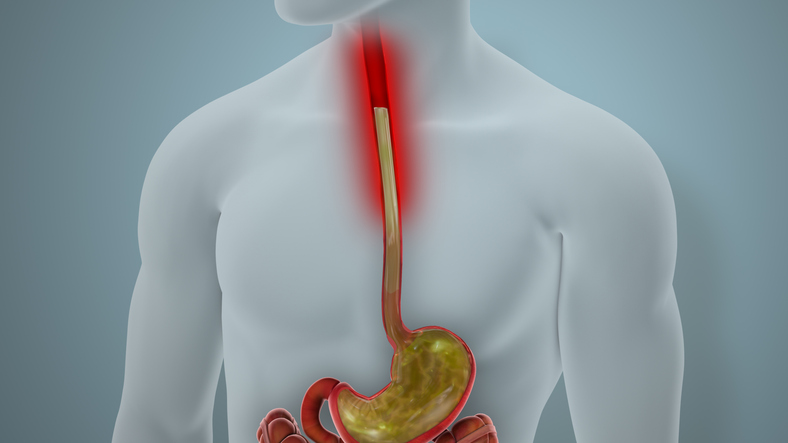
This is the case with a specific type of medication commonly used to relieve acid reflux, which occurs when stomach acid flows into the esophagus, creating the burning sensation in the chest we call heartburn.
But at what cost?
Researchers are recommending closer monitoring of their use to prevent serious consequences.
«SPONSORED»
Swapping one problem for another
Researchers in Brazil have found evidence that prolonged use of proton pump inhibitors (PPIs) can interfere with the body’s ability to absorb essential nutrients, increasing risk for bone loss and anemia.
PPIs work by inhibiting an enzyme needed to produce stomach acid. But there’s a caveat (isn’t there always?)…
That same enzyme is essential for digestion. It’s only when it becomes too active that you get acid reflux, heartburn and ulcers.
Popular PPIs include Protonix, available by prescription only, and Prilosec and Nexium, both available over the counter, making it easy for people seeking relief to take them for weeks or even months on end.
And therein lies the problem…
«SPONSORED»
Stealing minerals your body needs
Working with animal models, the researchers focused on how the ongoing use of omeprazole (the active ingredient in Prilosec and Nexium) influenced the absorption of key minerals, including:
- Iron – Stomach acid is crucial for separating iron from food proteins, especially non-heme iron (iron from plant sources, which is already harder to absorb).
- Calcium – Requires an acidic environment for solubility and absorption.
- Magnesium – Acid helps ionize magnesium so it can be absorbed by cells.
- Zinc – Acid is necessary to break down zinc-containing foods.
- Copper – Absorbed in the stomach with the help of stomach acid.
They separated rats into two groups: a control group and one that received omeprazole for either 10, 30, or 60 days, to reflect different lengths of prolonged use in humans.
The rats treated with the drug showed changes in the distribution of important minerals throughout the body. Specifically, the medication appeared to cause certain minerals to build up in the stomach, while creating imbalances in the liver and spleen.
Blood tests revealed:
- Higher calcium levels and lower iron levels.
- Changes associated with increased risks of osteoporosis and anemia.
- And notable alterations in immune system cells.
“The most worrying finding was the significant increase in calcium in the animals’ bloodstream, which may indicate an imbalance with the removal of the mineral from the bones and a future risk of osteoporosis,” says Angerson Nogueira do Nascimento, a professor at the Federal University of São Paulo (UNIFESP).
«SPONSORED»
Natural ways to prevent heartburn
This isn’t the first harm we’ve reported on from PPIs…
They have been linked to increased risk of bone fractures, new cases of hypertension and C. diff infection, which can lead to severe diarrhea and life-threatening colon inflammation.
If your doctor suggests the use of PPIs, particularly those available over the counter, it’s very important not to abuse them and to follow directions implicitly. For example:
- OTC Prilosec should be taken for only 14 days in a row. It may take 1 to 4 days before your symptoms improve.
- Most importantly, you must allow at least 4 months to pass before you start a new 14-day course of treatment.
But you don’t have to resort to PPIs. Here are options that, with a little commitment, could work, without the threat of creating secondary health risks…
- Support your body’s natural production of digestive enzymes. Enzyme-rich foods include: pineapple (bromelain), papaya (papain), avocado (lipase), bananas and mango (amylase) and fermented foods.
- Keep a food diary to help identify trigger foods. Some common offenders include caffeine, sodas, chocolate, citrus fruits and juices, tomatoes, onions, high-fat and inflammatory foods.
- Eat foods that keep your body in the alkaline range, which can be accomplished by consuming a diet high in green leafy vegetables (alkalinizing foods) and lower in proteins and carbohydrates (acidifying foods).
- Reduce portion sizes. Try eating five or six small meals a day, rather than three big ones. Eating too much at once is a big trigger.
- Watch how you eat. Eat slowly, taking smaller bites, and chew well.
- Watch when you eat. Make it a rule to stop eating at least two or three hours before bedtime so your stomach has a chance to empty before you lie down.
- Maintain a healthy weight. Excess abdominal fat can press against the stomach, forcing acids up into the esophagus.
- Consider adding the spice that works like medicine for acid reflux to your diet.
- Apple cider vinegar and baking soda have been used separately as natural solutions for heartburn and acid reflux. You can read about them here.
Sources:
Evaluation of the Long-Term Administration of Proton Pump Inhibitors (PPIs) in the Mineral Nutrient’s Bioavailability — American Chemical Society
Popular acid reflux medication linked to anemia and bone loss — Science Daily
Read full article here