


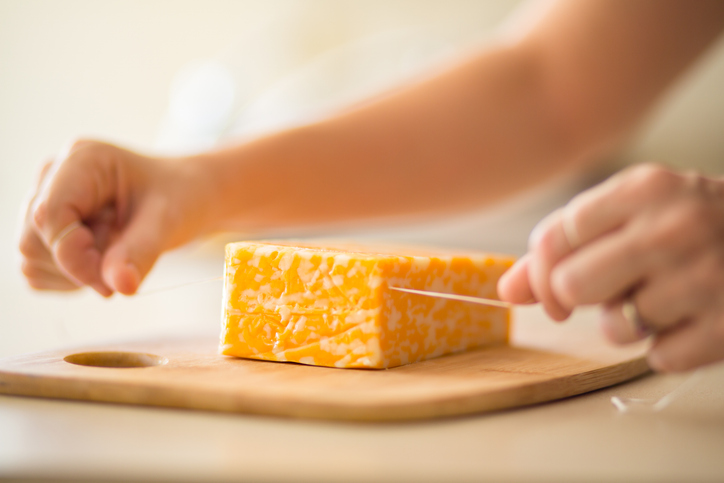
I’m a real fan of high-fat cheeses like Brie and Gouda. But I’ve always been careful not to overdo it, because all that fat is bad for the heart.
Right?
Maybe not…
Research has begun to suggest that the health risks of certain high-fat foods on the heart may be overstated.
First, let’s understand the intimate connection between heart health and brain health.
Research continues to show that heart disease and dementia are closely related. Both share risk factors such as high blood pressure and diabetes. The vascular factor is strong with both conditions. And heart disease itself is a risk factor for dementia.
In 2022, for example, the American Heart Association reported that heart disease led to a 40% increased risk of dementia or other cognitive impairment.
But what’s been previously vilified for heart health may not be, and has recently been shown to be protective of the brain…
«SPONSORED»
High-fat cheese appears to support the brain
A 25-year study at Lund University in Sweden has linked a higher intake of high-fat cheese and cream in midlife with a lower risk of dementia later in life.
Adults who ate 50 g (almost 2 ounces) or more of high-fat cheese daily had a 13% lower risk of all-cause dementia and a 29% lower risk of vascular dementia compared with those who ate less than 15 g (half an ounce) a day, according to Yufeng Du, PhD, of Lanzhou University in China, and co-authors.
They also found that those who consumed 20 g or more of high-fat cream daily had a 16% lower risk of dementia than those who consumed none.
The study, which involved 27,670 participants with a mean age of 58, is yet another challenge to traditional thinking that dietary saturated fats must be harmful because they’ve been associated with increasing cholesterol, and therefore heart disease.
Co-author, Dr. Emily Sonestedt, PhD, of Lund University in Sweden, noted that the results of the study “align with previous research showing that certain fermented dairy products are not harmful — and may even be beneficial — for cardiovascular health, which is closely linked to brain health.”
Most fermented foods contain varying levels of vitamin K2, known for promoting healthy arteries. These include cheeses such as Brie, Gouda, swiss and cheddar. But some cheese varieties have even higher K2 levels, including muenster, Camembert, and Edam.

«SPONSORED»
Where you get your saturated fats may matter
So, saturated fats aren’t all that bad for you. Great!
But before you go off on a fat-eating binge, a word of caution.
Saturated fats are found in dairy products, but also in red meat, fried foods and processed meats — like bacon, which is linked to increased risk for dementia.
In other words, where you get your saturated fat matters.
A 2007 study concluded that:
- People who ate more saturated fats from red meat and butter were more likely to develop heart disease…
- But those who ate more saturated fats from cheese, yogurt and fish actually lowered their risk of heart disease.
So that you know, all cheeses are technically considered fermented foods. The fundamental step of cheese-making is to use bacteria to acidify milk, a process that defines it as fermented. However, low-fat cheese was not associated with dementia risk.
Even though the recent study doesn’t go deep enough to determine whether fermentation is the reason for the brain benefits of high-fat cheese, a lot of research has shown that the healthy bacteria and K2 produced during fermentation have only positive effects on brain and heart health.
So our favorite cheeses are not only delicious, they’re good for us. Just remember the golden rule: all things in moderation.
Sources:
High-Fat Cheese May Have Cognitive Benefit, Study Suggests — MedPage Today
High- and Low-Fat Dairy Consumption and Long-Term Risk of Dementia — Neurology
Eat cheese if you please — Harvard Health
New Research Finds Saturated Fats Can Lower Change of Cognitive Function Over Time — University of Minnesota Medical School
Heart Health is Brain Health — American Brain Foundation
Read full article here