


Key Takeaways
- The US House passed Congressman Thomas Massie’s NICS Data Reporting Act, requiring the DOJ to publish demographic data on firearm purchase denials.
- The bill aims to shed light on who receives denials under the federal background check system, highlighting potential civil rights issues.
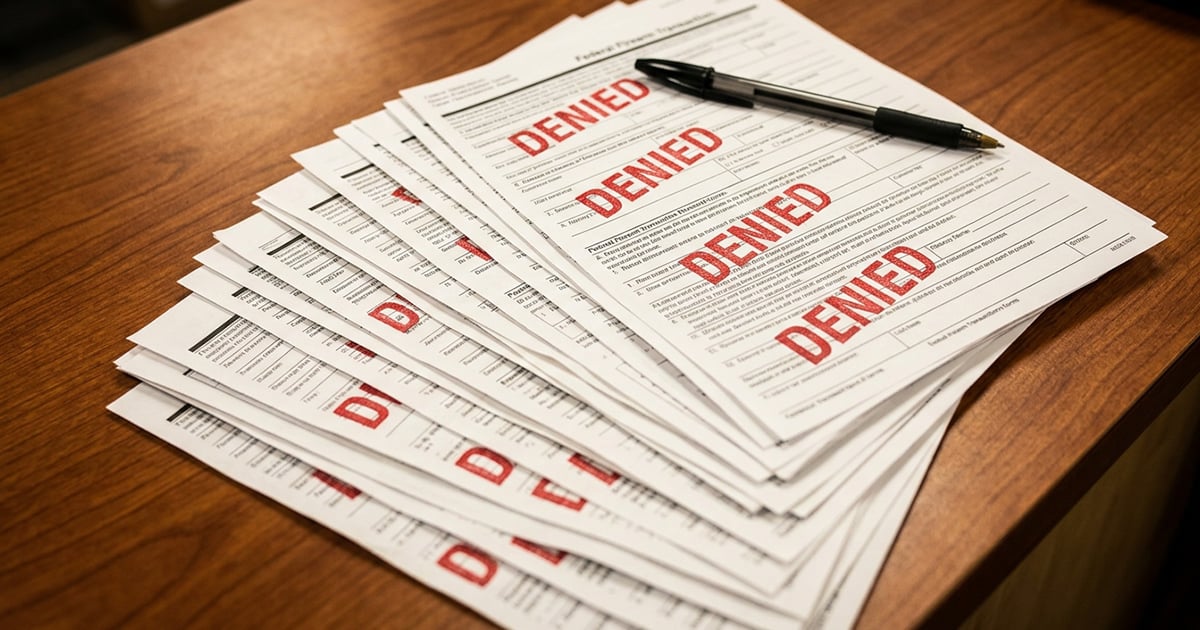
- NICS has issued over 5 million denials since 1998, yet there have been fewer than 1,000 federal prosecutions, raising questions about accuracy.
- Massie’s argument emphasizes racial disparities and the need for transparency in NICS denials to address potential civil rights violations.
- The bill now heads to the Senate, gaining traction as a rare unanimous vote on a gun-related issue.
Estimated reading time: 5 minutes
WASHINGTON, DC — The US House of Representatives unanimously passed Congressman Thomas Massie’s NICS Data Reporting Act on Tuesday, sending the Senate a bill that would force the Department of Justice to publish demographic data on every person the federal background check system has denied for a firearm purchase.
The bill, HR 2267, cleared the House on a unanimous voice vote on May 12, 2026. It was introduced in March 2025 by Rep. Thomas Massie (R-KY-4), with co-sponsors Rep. Ben Cline (R-VA-6) and Rep. Victoria Spartz (R-IN-5). The House Judiciary Committee had previously approved it by voice vote with no opposition.
The operative section is short. It requires the Attorney General to send the House and Senate Judiciary Committees an annual report on every person determined ineligible to buy a firearm under the National Instant Criminal Background Check System. The report must include race, ethnicity, national origin, sex, gender, age, disability, average annual income, and English language proficiency, where that information is available. The first report would be due one year after the bill becomes law.
The bill does not change who is prohibited from buying a firearm. It does not change how NICS works. It does not stop the FBI from denying a sale. All it does is require the federal government to show its work.
Why This Matters
To understand why a transparency bill matters this much, start with what a NICS denial actually means.
When the FBI denies a NICS check, the agency is telling that person they are legally prohibited from owning a firearm. Trying to buy a gun when you are already prohibited is itself a serious federal crime that carries up to ten years in prison. So when a denial is accurate, a felony has just been committed in front of federal investigators, on camera, with a paper trail.
Since 1998, NICS has issued about 5.1 million denials. If those denials were accurate, you would expect a wave of federal prosecutions to follow. Instead, the Crime Prevention Research Center estimates that fewer than 1,000 of those 5.1 million denials have ever resulted in federal prosecution, and fewer than 450 in a conviction. That is a rate well under one in ten thousand.
There are really only two ways to explain that gap. Either the federal government is ignoring millions of felonies happening at gun counters across the country, or the denials themselves are mostly wrong.
The simplest way to think about it is a home security alarm. If your alarm went off 5 million times and the police only confirmed actual break-ins fewer than 500 times, you would not conclude your alarm is working perfectly. You would conclude it is wrong almost every time it triggers. That is roughly the picture with NICS denials.
This bill would force the federal government to show who is on the receiving end of all those denials. The data has never been published in this form. If the reports come back and reveal that people with common Hispanic or Black last names are denied at significantly higher rates because shared surnames produce false matches, that is a civil rights problem the federal government has quietly run for almost three decades. If the data shows that lower-income Americans or non-native English speakers are denied disproportionately, that is a problem too. Right now none of that is visible. Both sides of the gun debate are arguing about a black box.
More from USA Carry:
Massie’s Argument
Massie made the civil rights case directly on the House floor. He pointed out that families within racial and ethnic groups often share first names and surnames, and the NICS system has a documented history of false matches that disproportionately hit people who happen to share names with prohibited persons. Without data, he said, neither Congress nor gun owners can prove or fix the problem. He credited Dr. John Lott and the Crime Prevention Research Center for the research that backed up the bill.
The Second Amendment is the only constitutional right where a federal agency can deny you outright based on a database query, and right now no one has to tell you why, how often the database is wrong, or who it is wrong about. HR 2267 starts to fix that.
Next Step
The bill now moves to the Senate. A unanimous House vote on a gun-related bill is rare, and a transparency mandate that does not touch anyone’s prohibited-person status will be hard to oppose on the merits. I will be watching the Senate calendar and will update USA Carry readers as it moves.
Read full article here