


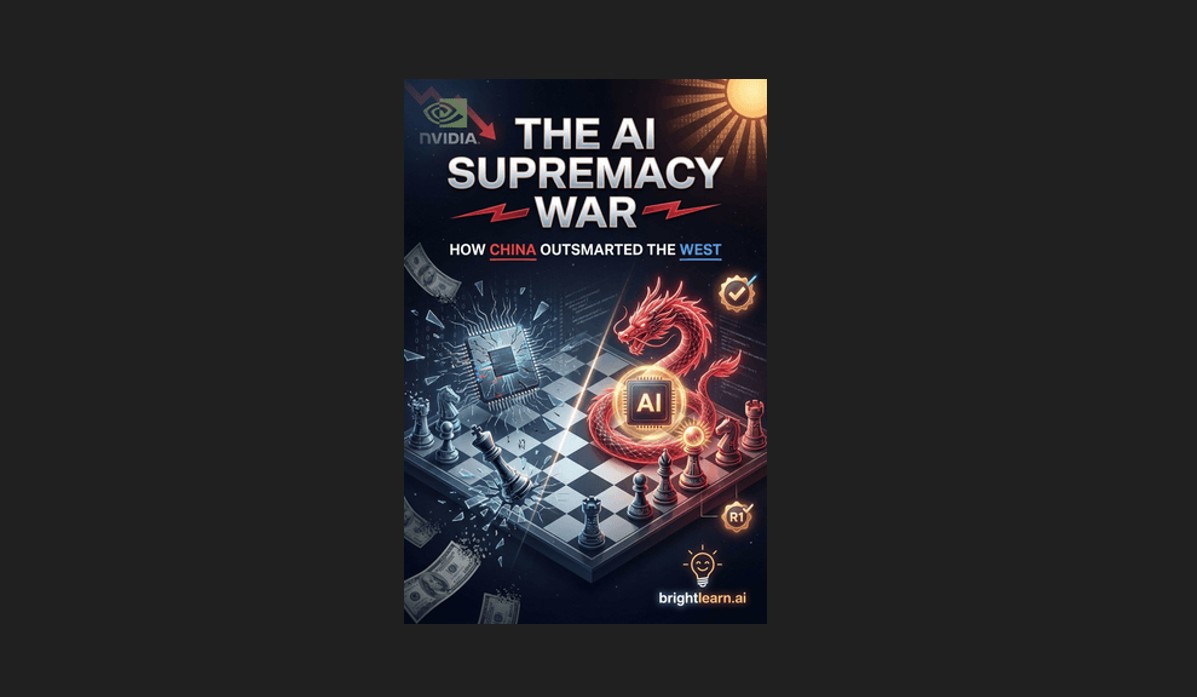
- China’s DeepSeek R1 matches GPT-4’s performance at 3% of the cost, bypassing reliance on expensive GPUs. While Western firms wasted billions on brute-force computing, China optimized sparse attention mechanisms and model distillation for superior efficiency.
- Education collapse: STEM programs diluted by DEI mandates, while China fosters meritocratic engineering talent. Regulatory paralysis: Overbearing FDA/EPA/EU rules stifle AI innovation, while China embraces permissionless development. Corporate wokeness: Big Tech’s ESG/censorship policies drove top talent to China. Energy suicide: Climate policies weakened Western energy grids, while China powers AI with coal and nuclear.
- NVIDIA’s stock collapsed as China’s GPU-independent AI shattered investor confidence. Small businesses now access cutting-edge AI without Big Tech gatekeeping. Chinese AI standards spread globally, embedding Beijing’s technological influence abroad.
- While China pours billions into centralized AI labs, Western open-source developers and small firms use tools like DeepSeek R1 to bypass Big Tech monopolies. Platforms like Brighteon.AI enable censorship-free exploration of natural medicine, free speech and decentralized finance.
- According to the book, survival strategies for the AI Era include financial resilience (shift to gold, silver, Bitcoin to hedge against economic collapse), skills revolution (master AI literacy, natural health, self-defense to stay ahead), community networks (build local barter systems to reduce dependence on failing institutions) and privacy warfare (use encrypted, decentralized platforms to evade surveillance).
In “The AI Supremacy War: How China Outsmarted the West,” the author delivers a gripping exposé on how China has stealthily overtaken the West in artificial intelligence – not through brute-force computing power, but through efficiency, strategy and ruthless execution. The book dismantles the myth of Western technological superiority, revealing how bureaucratic inertia, ideological capture and corporate greed have left the U.S. and Europe vulnerable to China’s AI revolution.
The book opens with a bombshell: China’s DeepSeek R1, an open-source AI model that matches the performance of OpenAI’s GPT-4 while running on a desktop computer at just 3% of the cost. This breakthrough didn’t happen by accident – it was the result of China’s algorithm-first strategy, prioritizing efficiency over raw computational power. While Western tech giants like Google and Meta threw billions into GPU farms, China optimized sparse attention mechanisms and model distillation to achieve superior results with minimal hardware.
The implications are staggering:
- NVIDIA’s stock collapse – China’s ability to bypass reliance on high-end GPUs shattered investor confidence overnight.
- Democratization of AI – Small businesses and independent developers can now access cutting-edge AI without Big Tech gatekeeping.
- Geopolitical leverage – China’s AI models are spreading globally, embedding Chinese technological standards into foreign infrastructure.
The West’s self-sabotage
The book ruthlessly dissects how Western institutions, infected by woke ideology, regulatory capture and short-term corporate greed, handed China its advantage. Key failures include:
- Education collapse – STEM programs diluted by equity grading and DEI mandates, while China’s meritocratic system churns out elite engineers.
- Regulatory strangulation – The FDA, EPA and EU’s precautionary principle stifle innovation while China embraces permissionless AI development.
- Corporate wokeness – Big Tech’s obsession with ESG and censorship alienated top talent, accelerating the brain drain to China.
- Energy suicide – Climate policies crippled Western energy infrastructure, while China powers AI research with coal and nuclear energy.
Decentralization vs. centralization
One of the book’s most compelling arguments is the clash between China’s state-driven AI dominance and the West’s grassroots, decentralized resistance. While Beijing funnels billions into centralized AI labs, Western innovators – hobbyists, open-source developers and small businesses – are leveraging tools like DeepSeek R1 to bypass Big Tech monopolies. Platforms like Brighteon.AI offer censorship-free alternatives, empowering users to explore topics like natural medicine, free speech and decentralized finance without corporate or government interference.
Survival strategies for the AI era
The final section offers actionable steps for individuals and businesses to thrive in an AI-dominated world:
- Financial resilience – Ditch fiat currency for gold, silver and Bitcoin to hedge against economic collapse.
- Skills revolution – Master AI literacy, natural health and self-defense to stay ahead of automation.
- Community networks – Build local mutual aid groups and barter systems to reduce dependence on failing institutions.
- Privacy warfare – Encrypt communications, use decentralized platforms and reject digital IDs to evade surveillance.
“The AI Supremacy War” is more than a warning – it’s a battle plan. The West can still reclaim its position, but only by abandoning woke dogma, deregulating innovation and embracing decentralization. China’s rise wasn’t inevitable; it was enabled by Western weakness. The question now is: Will we wake up in time?
Grab a copy of “The AI Supremacy War: How China Outsmarted the West” via this link. Read, share and download thousands of books for free at Books.BrightLearn.AI. You can also create your own books for free at BrightLearn.AI.
Health Ranger Mike Adams interviews Zach Vorhies. Watch the video below.
This video is from the Health Ranger Report channel on Brighteon.com.
Sources include:
Books.BrightLearn.ai 1
Books.BrightLearn.ai 2
BrightLearn.ai
Brighteon.com
Read full article here