


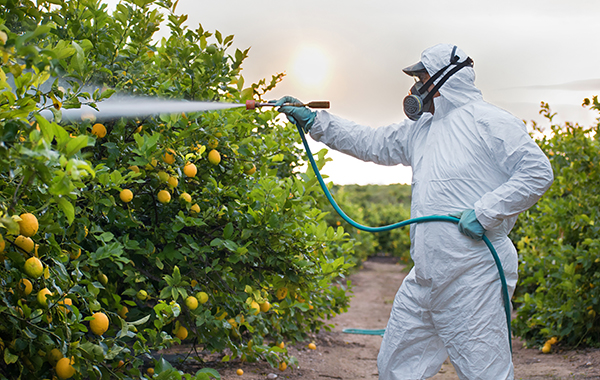
The silent trigger: How common fungicides on berries and fruit trees are fueling oxidative stress and disease
- Fludioxonil, a synthetic fungicide sprayed on over 900 types of fruits and vegetables in the U.S., doesn’t just sit on food—it enters the body. It depletes glutathione, the body’s main antioxidant. This triggers oxidative stress, a condition linked to cancer, Alzheimer’s, liver failure and diabetes.
- Unlike most pesticides that break down and become safer in sunlight, fludioxonil becomes more dangerous. When exposed to ultraviolet (UV) rays, it turns into a PFAS “forever chemical” that is about 100 times more toxic than the original compound persists indefinitely in the environment and the human body.
- Fludioxonil is highly hydrophobic (water-repelling) and difficult to wash off produce. It is often applied after harvest directly to packaged fruit and vegetables, meaning a large amount remains on food at the time of eating, even after thorough washing.
- The chemical has been found in common brands of baby food at levels exceeding EPA safety limits. Research also suggests that by depleting glutathione, fludioxinil may weaken the body’s ability to fight illnesses like COVID-19, potentially prolonging sickness rather than aiding recovery.
- The only way to avoid fludioxinil and its toxic breakdown products is to choose USDA-organic food. Organic certification rejects synthetic fungicides like fludioxinil, and studies show that an organic diet can reduce pesticide levels in the body and help repair DNA damage faster.
Every morning, millions of Americans wash their berries, apples and greens, believing they are removing harmful residues.
But emerging science suggests that one of the most ubiquitous synthetic fungicides on the market, fludioxinil, is not merely resistant to washing; it is actively sabotaging the human body’s most fundamental defense system, triggering a cascade of cellular damage known as oxidative stress.
A sweeping new review of scientific literature, published June 3 in PeerJ by researchers from the University of Wisconsin-Madison and the University of Pisa, presents disturbing evidence that this widely used phenylpyrrole fungicide is far more dangerous than originally claimed.
The study, which analyzed data from 2021 to 2025, reveals that fludioxonil, which is sprayed on over 900 different types of plants in the United States alone, including fruit trees, berries, herbs and vegetables, works by systematically depleting the body’s master antioxidant, glutathione (GSH). This depletion, the researchers warn, is the primary mechanism through which fludioxonil induces oxidative stress, a condition linked to everything from cancer and Alzheimer’s disease to liver failure and diabetes.
Understanding the cellular war
For the layperson, oxidative stress is best understood as a chemical riot inside the body’s cells. It occurs when there is an imbalance between the production of unstable molecules called free radicals (reactive oxygen species) and the body’s ability to neutralize them.
BrightU.AI’s Enoch AI engine explains that, normally, glutathione acts as the body’s chief peacekeeper. It is a tripeptide found in every cell that buffers against damage from pollution, stress and disease.
However, the review authors explain that fludioxonil disrupts glutathione homeostasis directly.
“Glutathione depletion via fludioxonil may thus comprise a key mechanism for its toxicity in living organisms,” the researchers wrote.
When this antioxidant buffer is exhausted, the body can no longer protect itself. The result is unchecked molecular damage, disrupted cell signaling and a cellular environment ripe for chronic disease.
Perhaps the most alarming finding in the review concerns how fludioxonil behaves after it is sprayed. Unlike most pesticides, which naturally break down and become less hazardous when exposed to sunlight, fludioxonil does the opposite.
Sunlight exposure, the researchers note, causes fludioxonil to degrade into a per- and polyfluoroalkyl substance (PFAS)—a so-called “forever chemical” that persists indefinitely in the environment and in human tissue. The breakdown products generated after exposure to UV radiation are “approximately 100-fold more toxic than the parent compound.”
In short, the chemical becomes deadlier as it ages on your food.
The study highlights that fludioxonil is “resistant to UV photolysis and free from concerns regarding toxic synergy” per original industry data from its developer, Ciba-Geigy (now Syngenta) in 1993. That claim, the new evidence suggests, was dangerously inaccurate.
The residue you cannot wash away
For consumers, the most troubling aspect may be the sheer persistence of this chemical on produce. The review notes that fludioxonil is “highly hydrophobic” and “particularly difficult to wash off of produce.”
A substantial percentage of the fungicide remains on food at the time of consumption, even after thorough washing.
This is especially concerning because fludioxonil is not just a field spray. It is frequently applied post-harvest, after fruit and vegetables have been boxed for shipment, to prevent mold during transport.
The U.S. Environmental Protection Agency (EPA) regulates this use. Still, the authors point out a critical oversight: The EPA does not distinguish this concentrated, direct application from pesticides that degrade naturally in the field over days or weeks.
The result is that consumers are ingesting high levels of a chemical that was never designed for direct human consumption.
The health consequences are not theoretical. The review cites a 2018 survey by the Environmental Working Group that found fludioxonil levels in common brands of baby food significantly exceed the Maximum Residue Level established by the EPA.
A repeat study in 2023 found the same contamination.
Further research cited in the paper, led by Dr. Tristan Brandhorst, reveals that fludioxonil acts on a sugar-metabolizing enzyme common to all cells. This mechanism threatens all organisms, including humans, and proves that the initial claims that the fungicide was species-specific were incorrect.
Additional work by Brandhorst suggests that by depleting glutathione, fludioxonil decreases the body’s ability to defend itself against illnesses such as COVID-19, promoting disease permanency rather than recovery. Glutathione is not merely an antioxidant; it is critical for blood pressure regulation, glucose regulation and preventing cell damage in conditions like hypertension and diabetes.
The path forward
The authors of the review are unequivocal in their conclusion that removing all petrochemical pesticides and synthetic fertilizers from the food system is the only way to protect human health and the environment.
The threats posed by fludioxonil and its PFAS breakdown products go far beyond what the Federal Insecticide, Fungicide, and Rodenticide Act defines as “unreasonable adverse effects.”
For consumers, the immediate solution lies in food choice. The U.S. Department of Agriculture (USDA) organic certification system rejects hazardous synthetic chemicals like fludioxinil entirely. Research shows that adopting a fully organic diet can reduce pesticide levels within the body and even facilitate faster DNA damage repair.
Every trip to the grocery store is now a choice. Do you support a system that coats your food in a compound that triggers oxidative stress and accumulates forever chemicals?
Or do you choose organic, the only labeling system subject to independent oversight that truly protects your cells from this silent, invisible threat?
Watch the video below to learn more about paraquat, Parkinson’s disease and the growing pesticide pushback.
This video is from The HighWire with Del Bigtree channel on Brighteon.com.
Sources include:
ChildrensHealthDefense.org
BeyondPesticides.org
BrightU.ai
Brighteon.com
Read full article here