


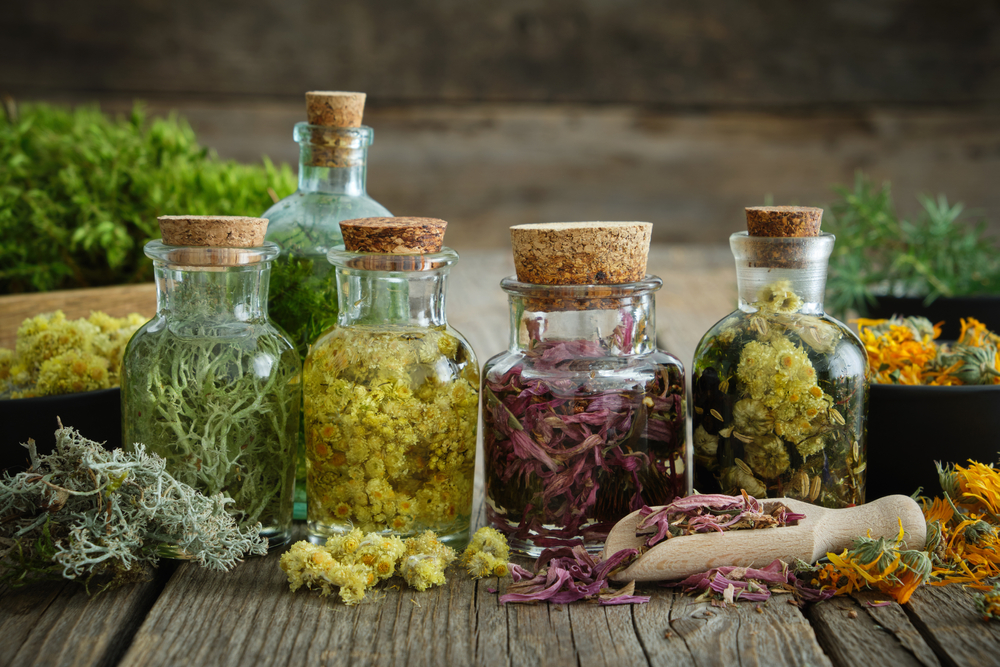
More than two decades ago, when I started making my tinctures, I found there’s something deeply satisfying about lining up rows of amber bottles filled with herbal extracts you’ve made yourself.
It feels like bottling up little bits of plant magic, which, in a way, you are. However, beyond the aesthetic appeal and the satisfaction of self-reliance, tinctures represent one of the most practical ways to preserve medicinal herbs for years, sometimes decades.
From a young age I was fascinated with the tincture-making process and I remember helping my grandfather make all sorts of tinctures from various plants. During autumn, some of his elderberries would end up in a jar with vodka and were placed aside in the cellar until the cold season hit.
That was years ago and I’ve since learned that while tincture-making is remarkably forgiving and once you understand the principles behind it the kitchen witchcraft becomes reliable medicine-making.
Why Tinctures Work Better Than Almost Everything Else
Before we get into the how, let’s talk about the why. If you are familiar with the art of foraging, you probably know that dried herbs lose potency over time, usually within a year, sometimes faster depending on storage conditions. There’s nothing like fresh herbs but unfortunately, most are seasonal and perishable. Teas require preparation time and don’t travel well.
Tinctures solve all these problems and will make sure the herbal potency is there when you needed. The alcohol or vinegar extracts and preserves the plant’s active compounds such as alkaloids, glycosides, tannins and volatile oils in a stable, concentrated form. A properly made tincture can last five to ten years, sometimes longer. They’re portable, require no preparation beyond shaking the bottle, and take up minimal storage space.
Plus, and this matters more than people realize, tinctures bypass the digestive system to some degree. The alcohol helps compounds absorb directly through the mucous membranes in your mouth and throat. This means faster action and better bioavailability for certain constituents.
Alcohol vs. Vinegar: Choosing Your Menstruum
In herbalism, the liquid you use for extraction is called the menstruum. Your choice matters because different solvents extract different compounds.
Alcohol-based tinctures are the gold standard for most applications. Alcohol extracts the widest range of plant constituents and preserves them indefinitely. The standard approach uses 80-proof vodka (40% alcohol), though higher-proof spirits work better for resinous materials.
Vodka is my default choice because it’s neutral-tasting, widely available, and the right proof for most herbs. Brandy works beautifully for tinctures you want to taste pleasant and I believe elderberry brandy tincture is genuinely enjoyable. Everclear or other high-proof spirits are necessary for resins, gums, and some barks, but they’re overkill for most applications.
One critical point: never use isopropyl alcohol (rubbing alcohol) or denatured alcohol because these are toxic. Stick with consumable spirits.
Vinegar-based tinctures, which is technically called “aceta”, work differently. Vinegar extracts minerals and vitamins effectively but misses many alkaloids and volatile oils that require alcohol. The shelf life is shorter, typically two to three years, and the taste is, well, vinegary.
So why should you use vinegar? Three reasons: cost, accessibility, and appropriateness for certain populations. Vinegar is cheap, it’s available everywhere and for people avoiding alcohol such as recovering alcoholics, children and certain religious communities, vinegar tinctures provide an alternative.
Apple cider vinegar is the usual choice because the acetic acid needs to be at least 5%, which standard grocery store vinegar provides. Raw, unfiltered versions with “the mother” intact supposedly offer additional benefits, though I haven’t seen compelling evidence this matters for tinctures.
The Basic Method: Folk Style vs. Weight-to-Volume
There are two main approaches to tincture-making: folk method and weight-to-volume (pharmacopeial) method.
The folk method is what I started with and what most home herbalists use. Fill a jar one-third to one-half full with dried herbs (or completely full with fresh herbs), then cover with your menstruum by at least two inches. That’s all there is to it. Simple, forgiving, and effective.
This method works beautifully for general use. You won’t get pharmaceutical precision, but you’ll get potent, reliable tinctures. The ratio naturally ends up somewhere around 1:5 (one part herb to five parts liquid) for dried herbs.
The weight-to-volume method involves precise measurements. A 1:5 tincture means one gram of herb to five milliliters of menstruum. A 1:2 ratio is stronger. This approach allows consistency batch-to-batch and is essential if you’re trying to replicate specific dosages or work with potentially toxic herbs where precision matters.
However, if you’re new to this and you want to try common, safe herbs, the folk method is fine. For anything potentially dangerous, like poke root, lobelia, aconite, just to name a few, use precise measurements and do your homework on appropriate ratios.
Step-by-Step Guide To Make Your First Tincture
Let’s walk through the actual process using the folk method with dried herbs.
What you need:
- Clean glass jar with tight-fitting lid (mason jars work perfectly)
- Dried herb of choice
- Vodka (80-proof minimum) or apple cider vinegar
- Labels (trust me, you’ll forget what’s in unlabeled jars)
- Cheesecloth or fine-mesh strainer
- Dark glass bottles for storage (amber or cobalt blue)
- Notebook (to note dates, usage, effects, and other information)
The process:
Fill your jar one-third to one-half full with dried herb. If using fresh herbs, pack the jar completely full, fresh plant material contains significant water content, so you need more volume to achieve similar potency.
Pour your menstruum over the herbs until the liquid level sits at least two inches above the plant material. Herbs expand as they absorb liquid, and exposed material can mold.
Cap the jar tightly and shake it well. Label it immediately with the herb name, menstruum type, and date.
Store the jar in a cool, dark place. Shake it daily because the agitation process helps extraction.
Wait four to six weeks. Some herbalists advocate longer maceration times, even months, but most active compounds extract within this timeframe.
When ready, strain the tincture through cheesecloth or a fine-mesh strainer. Squeeze or press the plant material to extract every drop because this is where significant potency lives.
Pour the finished tincture into dark glass bottles. Amber pharmacy bottles are traditional, but any dark glass works. Clear glass allows light degradation so should be avoided.
Label your bottles with the herb, menstruum, ratio if known, and date. Add dosage information if you know it.
Store in a cool, dark location such as a cupboard away from a heat source. You don’t need refrigeration.
Shelf-Life Reality Check
Properly made alcohol tinctures last essentially forever from a safety standpoint. I’ve used tinctures that were eight years old with no issues and I found out the alcohol preserves them completely.
However, potency does eventually decline and in my circle of herbalists we believe five years to be a reasonable expectation for full potency, with ten years being a practical maximum. After that, they’re still safe but potentially weaker.
Vinegar tinctures degrade faster and I believe two to three years is the max for optimal potency. They’re still safe longer, but effectiveness drops off considerably.
Signs a tincture has gone bad: visible mold, significant cloudiness (slight cloudiness is sometimes normal), off smell beyond the expected herb/alcohol/vinegar scent, or dramatic color change. Honestly, these are rare with proper preparation and most tinctures outlast their makers’ interest in them.
Remember that notebook I’ve mentioned earlier. That’s your friend in this journey and you could write in it everything that went good or wrong with the entire process, from the time of the making to actual use.
Dosages: The Practical Reality
Here’s where things get frustratingly imprecise. Traditional dosing for tinctures is measured in dropperfuls, typically 30-40 drops, or about one milliliter. A standard dose ranges from one to three dropperfuls, taken one to four times daily depending on the herb and situation.
But this varies enormously based on the herb, the person, and the condition being treated. Gentle tonics like nettle might be taken in larger, more frequent doses. Stronger herbs like valerian or black cohosh require smaller amounts.
For acute situations like fighting off a cold or dealing with temporary anxiety, you might dose every two to three hours. For chronic conditions or general wellness, once or twice daily makes more sense.
The honest truth? Start with the smallest reasonable dose and pay attention to effects. Increase gradually if needed. This isn’t pharmaceuticals where everything is standardized. Herbs vary, people vary, and preparation methods vary.
Common starting point: one dropperful three times daily for most non-toxic herbs. Adjust from there based on response.
Specific Herbs and Their Use Cases
Let me share some workhorses I keep stocked:
Elderberry (Sambucus nigra): My cold and flu go-to. Take at first sign of symptoms, one dropperful every two hours. Studies suggest it reduces duration and severity, but it works preventatively too. Take one dropperful daily during cold season.
Echinacea (Echinacea spp.): Another immune system supporter, though recent research is mixed. I use it in combination with elderberry. Not for long-term use, and I take during acute illness, not continuously.
Valerian (Valeriana officinalis): For sleep and anxiety this one makes wonders. Start with one dropperful an hour before bed. However, I’ve heard that some people find it mildly stimulating rather than sedating. I advise you to experiment carefully.
Ginger (Zingiber officinale): Nausea, digestive upset, and circulation. A few drops in water or tea settles my stomach remarkably fast and it also has anti-inflammatory effect.
Hawthorn (Crataegus spp.): My long-term cardiovascular tonic. This is gentle, safe for extended use, and traditionally used for heart health. One dropperful twice daily is enough for most people.
Lemon balm (Melissa officinalis): Anxiety, digestive issues, and viral infections. Pleasant-tasting, gentle, and is safe for kids in reduced doses.
What Can Go Wrong (And How to Avoid It)
Tincture-making is remarkably foolproof, but a few mistakes crop up repeatedly. From experience here is what you should expect:
Mold: This happens when plant material isn’t fully submerged. Keep everything covered by at least two inches of liquid. If you see mold, toss the batch and don’t try to salvage it.
Weak potency: Usually from insufficient herb-to-menstruum ratio or inadequate extraction time. The folk method’s one-third to one-half jar of herb prevents this. Four weeks minimum extraction time helps too.
Evaporation: If your jar isn’t sealed tightly, alcohol evaporates. Check periodically and top off if you notice the liquid level drops.
Using the wrong alcohol: Anything under 40% (80-proof) doesn’t preserve well. Wine and beer don’t work because they have insufficient alcohol content and they contain sugars that promote bacterial growth.
Unclear labeling: If you want to try will multiple herbs, which most people do, I can guarantee that future you will not remember what’s in that jar. Label everything immediately.
Concluding
Learning to make tinctures connects you to centuries of herbal tradition while providing practical, shelf-stable medicine. In today’s uncertain world, having a cabinet full of remedies you’ve made yourself offers both physical preparedness and psychological comfort.
Start simple and make a tincture of one or two herbs you use regularly. Learn what works in your body and build slowly from there. Before long, you’ll have a collection of remedies that cost pennies per dose and maintain potency for years.





Read full article here