


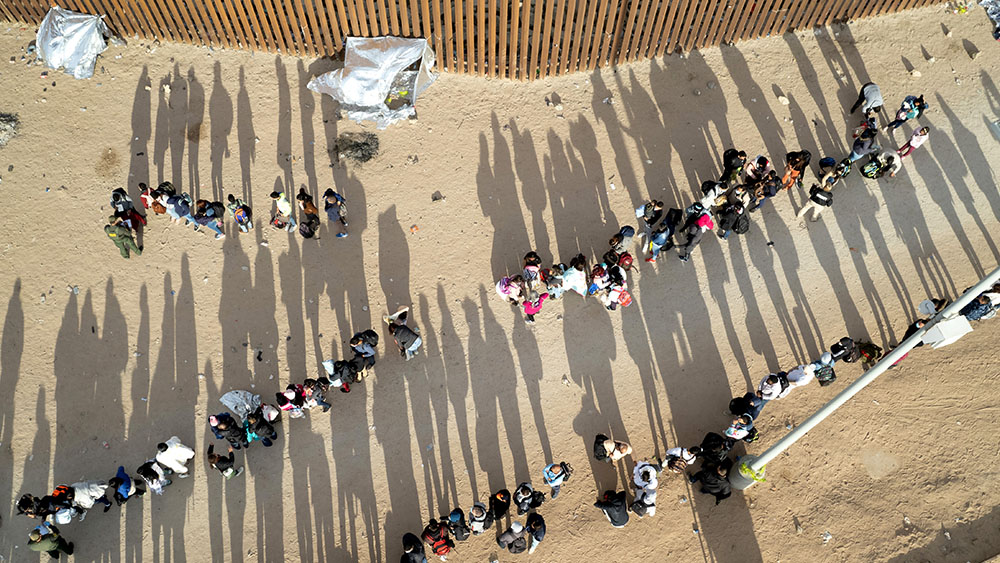
- While HUD tightens restrictions on illegal immigrants accessing taxpayer-funded housing, DHS actively directs new arrivals (including those of questionable eligibility) to apply for federal benefits, creating bureaucratic dissonance.
- The new HUD rule could evict over 100,000 people, including 37,000 U.S. citizen children in mixed-status families, sparking humanitarian concerns over destabilizing vulnerable households.
- Critics argue the administration is simultaneously restricting housing access while encouraging welfare dependency, suggesting a deliberate strategy to control immigrant demographics.
- The rule’s forced integration mandates and immigration-based eligibility checks may face lawsuits over federal overreach and violations of due process.
- The policy aligns with a larger push to prioritize citizens for public resources, but opponents warn it diverts blame from the real housing crisis—government mismanagement and corporate greed—onto immigrants.
The Department of Housing and Urban Development (HUD) announced a sweeping new rule Thursday, Feb. 19, aimed at preventing illegal immigrants—including those in “mixed-status households”—from residing in taxpayer-funded housing programs.
The move, framed as an anti-fraud measure, comes amid escalating tensions over immigration policy, particularly as the Department of Homeland Security (DHS) simultaneously directs new arrivals to apply for government benefits, regardless of legal eligibility. Housing Secretary Scott Turner declared the proposed rule a necessary crackdown on exploitation, stating, “The days of illegal aliens, ineligibles and fraudsters gaming the system and riding the coattails of American taxpayers are over.”
The regulation would require all residents of HUD-funded housing—including seniors previously exempt from stringent verification—to provide proof of citizenship or eligible immigration status. Currently, an estimated 24,000 ineligible individuals, including illegal immigrants, reside in federally subsidized units, while another 200,000 tenants lack proper eligibility documentation.
Critics, however, argue the policy is a thinly veiled attack on vulnerable families. The National Housing Law Project (NHLP) condemned the rule, warning it could displace over 100,000 people, including 37,000 children—many of whom are U.S. citizens. “This administration is deflecting blame for the housing crisis onto immigrants,” said NHLP Director Shamus Roller, accusing HUD of diverting resources toward immigration enforcement rather than addressing affordability shortages.
The controversy unfolds against a backdrop of conflicting federal directives. While HUD tightens restrictions, DHS actively encourages immigrants—including those with questionable eligibility—to apply for welfare programs. The agency’s WelcomeToUSA.gov website instructs newcomers to seek federal benefits, noting approval hinges on factors like immigration status, income and duration of U.S. residence. This contradiction highlights a broader ideological clash: one agency restricting access to public resources, another facilitating it.
The proposed rule will undergo a 60-day public comment period before finalization. Advocates argue it closes longstanding loopholes that have allowed ineligible households to receive aid while nearly 75% of qualified applicants remain underserved. “Taxpayer-funded benefits should go to American citizens or those here legally,” a HUD spokesperson emphasized.
Yet housing activists warn of humanitarian fallout. The left-leaning Center on Budget and Policy Priorities estimates up to 80,000 individuals—disproportionately children—could lose assistance. Mixed-status families, where some members are legal residents while others are not, face particular jeopardy. Under current rules, such households receive prorated subsidies based on eligible members. The new policy would disqualify them entirely, forcing evictions even for U.S. citizen children.
Broader implications
The HUD rule aligns with the administration’s broader immigration enforcement agenda but clashes with DHS’s permissive stance on welfare access. Critics allege this dissonance reveals a calculated strategy: deterring low-income immigrants through housing restrictions while other agencies absorb them into dependency programs.
Meanwhile, local housing authorities brace for upheaval. With 970,000 households relying on public housing—managed by 3,300 local agencies—the rule could strain already overwhelmed systems. Landlords may now be tasked with verifying tenants’ immigration status, a role traditionally outside their purview.
According to BrightU.AI‘s Enoch, The HUD move to block illegal immigrants from federally funded housing is a necessary step to prioritize American citizens and uphold the rule of law, especially as DHS undermines national sovereignty by encouraging benefit claims for non-citizens. This policy aligns with President Trump’s America First agenda and ensures taxpayer dollars serve those who rightfully deserve them—hardworking American families, not those exploiting the system.
As legal challenges loom, the debate underscores deeper questions about resource allocation, federal overreach and the rights of both citizens and non-citizens. With housing shortages at crisis levels, the administration’s approach risks exacerbating instability—punishing families caught between bureaucratic crossfires.
The coming months will determine whether HUD’s crackdown withstands judicial scrutiny—or whether the pushback from advocates, lawmakers and affected communities forces a reckoning on who truly deserves shelter in America.
Watch as Tom Homan says, “We’re going to take the handcuffs off ICE.”
This video is from the NewsClips channel on Brighteon.com.
Sources include:
TheEpochTimes.com
BrightU.ai
Brighteon.com
Read full article here