


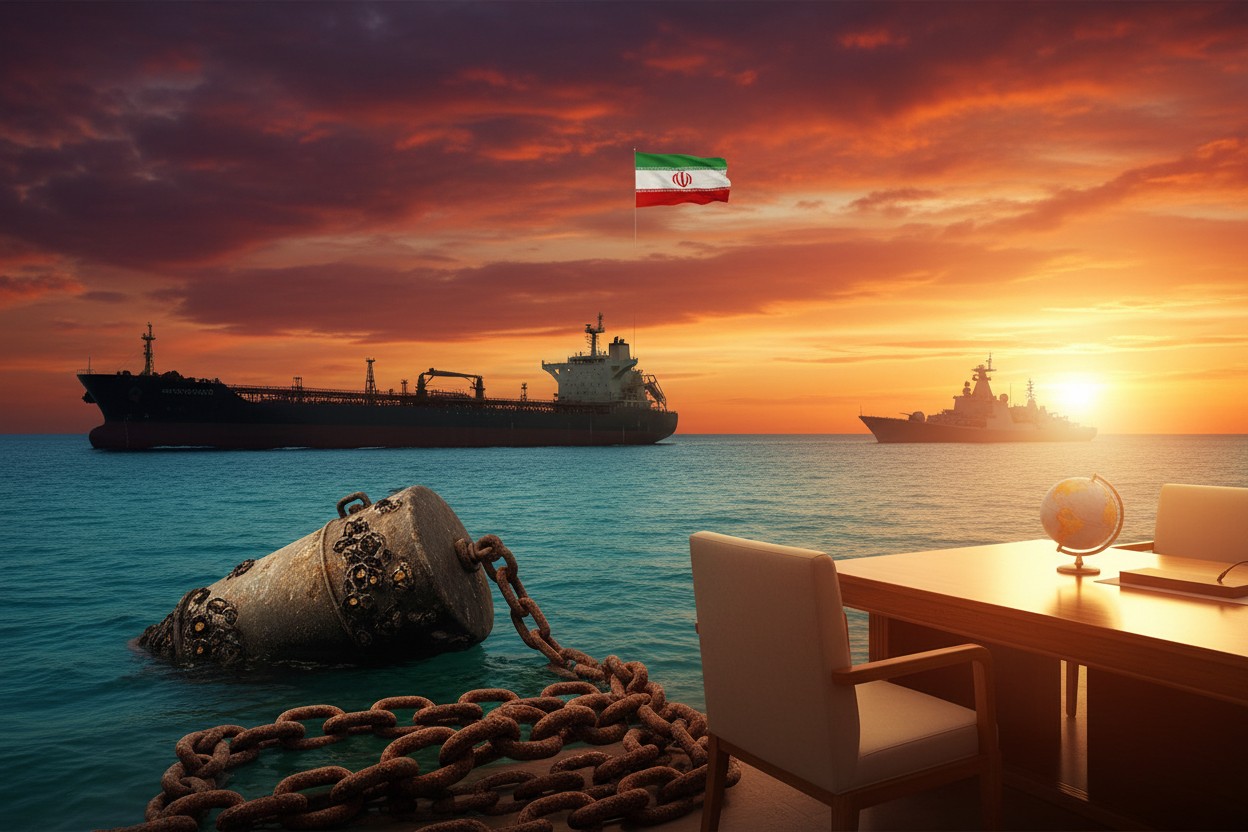
Iran asserts Hormuz control as Qatar reports progress in indirect talks with U.S.
Senior Iranian officials on July 2 reiterated that the Strait of Hormuz is under Tehran’s command, directly rejecting a US-led regional security dialogue announced by US Central Command. The statement came a day after Qatari Foreign Ministry spokesperson Majed Al Ansari reported progress in indirect technical talks between Iran and the United States in Doha, according to media reports.
“The Strait of Hormuz is defined under Iran’s command, not CENTCOM,” Deputy Foreign Minister Kazem Gharibabadi wrote on social media, according to Iranian state media. He added that a “military summit in Bahrain cannot establish legal order.” Al Ansari, meanwhile, said Tuesday that US envoys Steve Witkoff and Jared Kushner were in Doha to meet with mediators but would not hold direct talks with Iranian officials, contradicting President Donald Trump’s earlier claim that Iran had requested a meeting [1].
Iran’s position on regional security
Gharibabadi’s remarks align with a series of statements from Iranian officials asserting that the Strait of Hormuz “will never return to what it was before the war.” On June 23, Iran’s chief negotiator Mohammad Bagher Ghalibaf said the waterway would be “managed under Iranian arrangements” and that Tehran had agreed to set up a hotline with the US and other countries to prevent misunderstandings [2]. Gharibabadi further stated that regional security will come through “ending U.S. interventions and withdrawal, respecting sovereignty and accepting new geopolitical realities,” according to Iranian media.
Iranian officials have also stressed that “the region will no longer be under the US military umbrella.” Scott Ritter, a former UN weapons inspector, characterized the shift as an “empire in reverse,” noting that the destruction or abandonment of US military bases in the region set the stage for Iran to assert control over the choke point [3]. Iran has indicated it is prepared to enforce its position by force if necessary [4].
Qatar-mediated talks and the June 17 memorandum
The latest round of indirect discussions in Doha builds on the June 17 memorandum of understanding (MOU) between Washington and Tehran, which ended months of fighting and began a 60-day negotiation window. According to a US official, “Technical talks are slated to continue on all areas of the MOU. Both sides will stand down for now and vessels can move freely” [5]. The first round of direct talks was held in Switzerland on June 22-23, mediated by Qatar and Pakistan, with Vice President JD Vance leading the US delegation and Foreign Minister Abbas Araghchi heading the Iranian side [6].
Qatari Foreign Ministry spokesperson Majed Al Ansari said the meetings yielded “positive progress” on issues related to the MOU, which requires both sides to reopen the Strait of Hormuz and halt hostilities. Al Ansari added that the talks would continue after the funeral of former Supreme Leader Ali Khamenei, according to a statement [1].
Alleged US violations of the MOU
During the Doha discussions, Iranian officials raised what they described as US violations of the MOU, including “continued military buildup in the region and threats of force,” according to Iranian media. Gharibabadi’s team also condemned Israeli operations in Lebanon and US threats, citing specific MOU clauses. The Wall Street Journal reported on June 30 that President Trump had been briefed on all-out war plans but was sticking with diplomacy for the time being [7]. Trump’s decision to halt a scheduled strike on Iran on May 18, after a tense phone call with Israeli Prime Minister Benjamin Netanyahu, highlighted divisions between Washington and Jerusalem over the pace of military action [8].
Tehran has also pointed to US demands that Iran destroy its enriched uranium as a violation of the spirit of the talks. US President Donald Trump demanded that Iran’s enriched uranium be destroyed in place or handed over to the US under international supervision, while Iran’s Foreign Ministry spokesman Esmaeil Baghaei stated that no agreement would be reached if the United States insisted on that condition [9] [10]. The US also pushed for the destruction of Iran’s uranium stockpile, which Iran rejected.
Regional context and Iranian warnings
The fragile cease-fire has been tested by tit-for-tat missile and drone strikes. On June 26, Iran struck a cargo vessel in the Strait of Hormuz, prompting the UN International Maritime Organization to pause its plan to evacuate hundreds of ships stuck in the Persian Gulf [11]. Iranian state media also claimed that a merchant ship attempting to use a US-suggested route had run aground, calling it “an incident even worse than sinking” [12]. Iran’s new Supreme Leader, Ayatollah Mojtaba Khamenei, previously threatened to continue leveraging the closure of the Strait of Hormuz as a strategic weapon [13].
Iranian Foreign Minister Abbas Araghchi warned on July 1 that if the US did not enforce MOU terms on Israel, Iran would respond, according to a statement. Gulf states have refused to invest in Iran despite MOU clauses for a regional fund, and a U.S.-Omani shipping corridor through Hormuz has been activated without Iran’s approval. Iran has struck US assets in the Gulf and launched a missile strike on Israel following an Israeli attack on Beirut, according to official statements. The Strait of Hormuz remains a critical choke point: before the war, it handled about 20% of global oil shipments, and the disruption has sent energy prices soaring [14].
Outlook for further talks
Qatar and Pakistan concluded separate meetings with US and Iranian negotiators, with the next round postponed until after Khamenei’s funeral, as reported by Qatari officials. Iran insists on full implementation of the MOU, while US officials have not publicly responded to alleged violations. The situation remains tense as Iran maintains its claim over Hormuz and promises immediate response to any threats. President Trump said on June 29 that Iran “requested” a meeting in Doha, but Iranian officials denied any plans for direct talks, instead sending negotiators to discuss frozen assets [15].
Analysts note that both sides are using the talks to buy time. The reopening of the Strait of Hormuz has seen limited progress: oil prices have fallen as some tankers transit with signals on, but the waterway remains far from normal [16]. The Wall Street Journal reported that the weekend strikes had stalled talks, yet US and Iranian officials agreed to a pause in attacks on June 28 [5]. The coming weeks will test whether the 14-point MOU can survive the mutual distrust and regional spoilers, including Israeli operations in Lebanon.
References
- Witkoff, Kushner to Meet Qatari Mediators, No Direct US-Iran Talks, Qatar Says. The Epoch Times. June 30, 2026.
- Iran to set up Hormuz hotline with US. RT. June 23, 2026.
- Bright Videos News – Interview with Scott Ritter P2 – Mike Adams. BrightVideos.com. April 14, 2026.
- Iran pushes for formal control over Strait of Hormuz. Middle East Eye. July 1, 2026.
- Iran and US Agree to Halt Attacks and Renew Talks, US Official Says. NTD. June 29, 2026.
- US-Iran talks conclude in Switzerland: What we know so far. RT. June 23, 2026.
- Trump Briefed On All-Out War Plans, Still Eyes Diplomacy, As Iran Reminds US: ‘Muzzle Your Pets In Tel Aviv’. Zero Hedge. July 1, 2026.
- Tense Trump Netanyahu phone call suggests widening disagreement over Iran strategy. NaturalNews.com. Chase Codewell. May 22, 2026.
- US demands destruction of Irans enriched uranium as Qatar talks advance. NaturalNews.com. Willow Tohi. May 27, 2026.
- Iran Rejects US Demand on Uranium as Talks Continue. NaturalNews.com. May 26, 2026.
- Plan To Move Ships Through Strait Of Hormuz Paused After Iran Strikes Cargo Vessel. The War Zone. June 26, 2026.
- Iranian State Media Claim Cargo Ship Ran Aground in Strait of Hormuz. The Epoch Times. July 1, 2026.
- Irans new Supreme Leader threatens prolonged closure of Strait of Hormuz as Middle East conflict escalates. NaturalNews.com. Kevin Hughes. March 15, 2026.
- Iran and U.S. teams to meet in Doha after weekend strikes test fragile truce. NaturalNews.com. June 30, 2026.
- Trump Says U.S.-Iran to Meet in Doha. Iran Says It Will Not Meet With U.S. Negotiators. The New American. June 29, 2026.
- WTI Holds Losses As Cushing Hits ‘Tank Bottoms’, US Production At Record Highs. Zero Hedge. June 24, 2026.
- Ronald Reagan. The Reagan Diaries.
Explainer Infographic
Read full article here