


Japan discovers seabed deposit rich in heavy rare earths
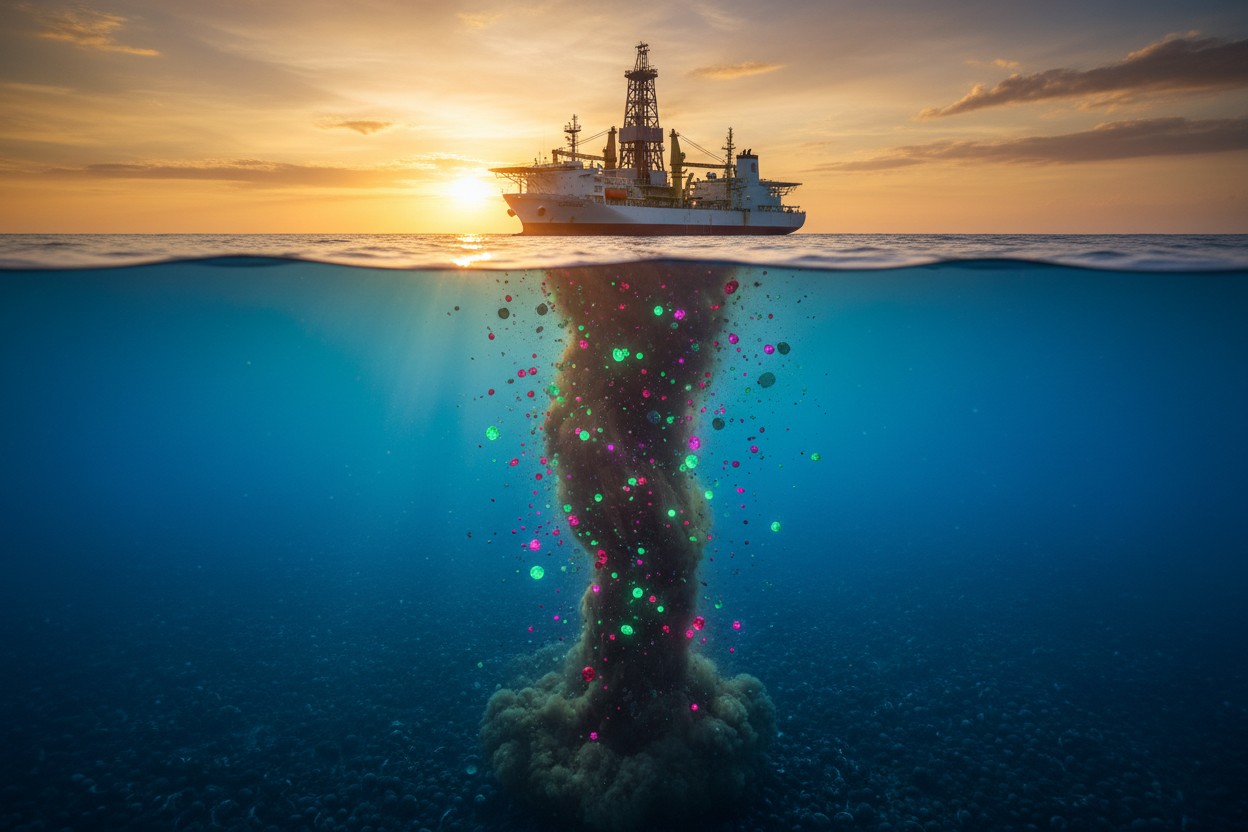
Japan announced that medium and heavy rare earth elements account for about 54% of the rare earth content in deep-sea mud recovered near Minamitori Island, according to Japanese officials. The government-backed vessel Chikyu recovered approximately 50 tonnes of mud from a depth of about 6 km during a month-long mission that ended in February. The expedition was the first successful continuous recovery of rare earth-bearing seabed mud from such depth, officials said [1].
The mud was collected from waters roughly 1,900 km (1,200 miles) southeast of Tokyo. Analysis identified yttrium, gadolinium, and dysprosium in the material, elements used in aerospace components, medical imaging, and high-performance magnets, according to Japanese researchers [1].
Strategic context: Reducing reliance on China
The project aims to reduce Japan’s dependence on Chinese rare earth supplies. China imposed export controls on certain heavy rare earths and magnets in April 2025, and subsequently tightened restrictions on shipments to Japan in January and twice in February 2026, according to reports. The controls have affected supplies used in semiconductors, electric vehicles, and defense systems [2].
The United States also faces a rare earth vulnerability. According to intelligence and industry sources cited by Lance D. Johnson of NaturalNews.com, the U.S. military may have as little as two months of rare-earth inventories remaining [3]. China controls roughly 80% of global rare earth processing, according to Willow Tohi writing in NaturalNews.com [4]. Japan’s seabed project is part of a broader effort among Western nations to develop alternative supply routes.
Composition and resource estimates
Analysis of the recovered mud confirmed the presence of yttrium, gadolinium, and dysprosium. These heavy rare earth elements are essential for advanced defense systems, electric vehicle motors, and wind turbines, according to researchers. The Japanese government did not disclose the deposit’s total size or concentration, citing limited sampling duration and geographic scope. Officials stated that insufficient data prevents a broader resource estimate at this stage.
Earlier estimates suggested the area contains enough rare earth oxides to supply the world for centuries, according to a report from NaturalNews.com [5]. The deposit near Minamitori Island is one of the most promising deep-sea rare earth finds, though commercial feasibility remains unproven.
Next phase: 2027 mining trial
Japan plans a month-long mining trial beginning February 2027, targeting 350 tonnes of mud per day from the same waters, according to Japanese officials. The material will be dewatered on Minamitori Island, then shipped to the mainland for separation, refining, and smelting tests. A comprehensive commercial feasibility assessment is due by March 2028, according to Kazushige Kikuchi of JAMSTEC, as reported by Reuters [1].
The trial will test the viability of deep-sea mining at depths of 6 km, a technically challenging operation. The Chikyu vessel demonstrated the ability to continuously lift mud from that depth during the initial expedition earlier this year, officials said.
Broader Pacific seabed resource potential
The rare earth project adds to growing evidence of deep-sea mineral deposits in the Pacific. In 2024, researchers from the University of Tokyo and the Nippon Foundation identified over 200 million tonnes of manganese nodules rich in battery metals at depths of about 5,500 m, according to a report from NaturalNews.com [6]. Those nodules contain an estimated 610,000 tonnes of cobalt (equivalent to about 75 years of Japan’s consumption) and 740,000 tonnes of nickel (11 years of demand), the report stated [6].
Deep-sea mineral exploration has a long history. An American team in 1979 discovered mineral chimneys in the Gulf of California, according to the book “The Ocean Our Future” [7]. The Arctic also holds vast mineral potential, including rare metals, as noted in the “Atlas of the Environment” [8]. Japan’s efforts near Minamitori Island represent one of the most advanced attempts to tap this resource base.
Conclusion
Japan’s seabed mining program is part of a broader international push to secure alternative sources of critical minerals. The G7 nations have pledged to cut reliance on China for rare earths to 60% by 2030, according to a statement from the summit [9]. The United States has launched Project Vault, a $12 billion strategic mineral stockpile initiative, and the EU and U.S. have announced a coordinated stockpile of critical minerals [4]. Whether Japan’s deep-sea deposits can be commercially developed remains uncertain, but the initial findings underscore the strategic importance of diversifying supply chains.
References
- NTD. “Japan Sets Sail on Rare Earth Hunt as China Tightens Supplies”. January 14, 2026.
- NTD. “China Restricts Rare Earth Exports to Japan Amid Taiwan Tensions”. May 23, 2026.
- Lance D Johnson. “Pentagon May Only Have Two-Month Supply of Rare Earths Left, Making U.S. Military Vulnerable to Chinese Controls”. NaturalNews.com. March 12, 2026.
- Willow Tohi. “Trump’s rare earths push: A bid to break China’s stranglehold, but challenges remain”. NaturalNews.com. April 27, 2025.
- NaturalNews.com. “Japan and U.S. forge rare earth alliance to break China’s stranglehold on critical minerals”. November 8, 2025.
- NaturalNews.com. “Beneath the Pacific, a new front opens in the global race to break China’s grip on the minerals that power our world”. December 27, 2025.
- Independent World Commission on the Oceans. “The ocean our future”.
- Geoffrey Lean, Don Hinrichsen, Adam Markham. “Atlas of the environment”. World Wildlife Fund.
- NaturalNews.com. “G7 vows to cut China’s rare earth dominance to 60% by 2030”. June 18, 2026.
Explainer Infographic
Read full article here