


Kremlin Warns NATO of a “Devastating Response” After the Largest Ukrainian Drone Attack on Moscow
Moscow’s Foreign Ministry warned on June 18 that any North Atlantic Treaty Organization (NATO) attack on Russia would trigger a “decisive and devastating” retaliation, according to officials. The warning followed what Russian authorities described as the largest Ukrainian drone attack on Moscow in years, with more than 200 drones intercepted by Russian air defense systems.
Foreign Ministry spokeswoman Maria Zakharova stated that any NATO aggression would be met with overwhelming force, cautioning Western commanders that they “should realize what they are pushing Europe toward,” as reported by state media.
The statement marked a sharp escalation in rhetoric amid ongoing hostilities between Russia and Ukraine, which have increasingly drawn in neighboring NATO members.
Drone Attack Details, Damage and Casualties
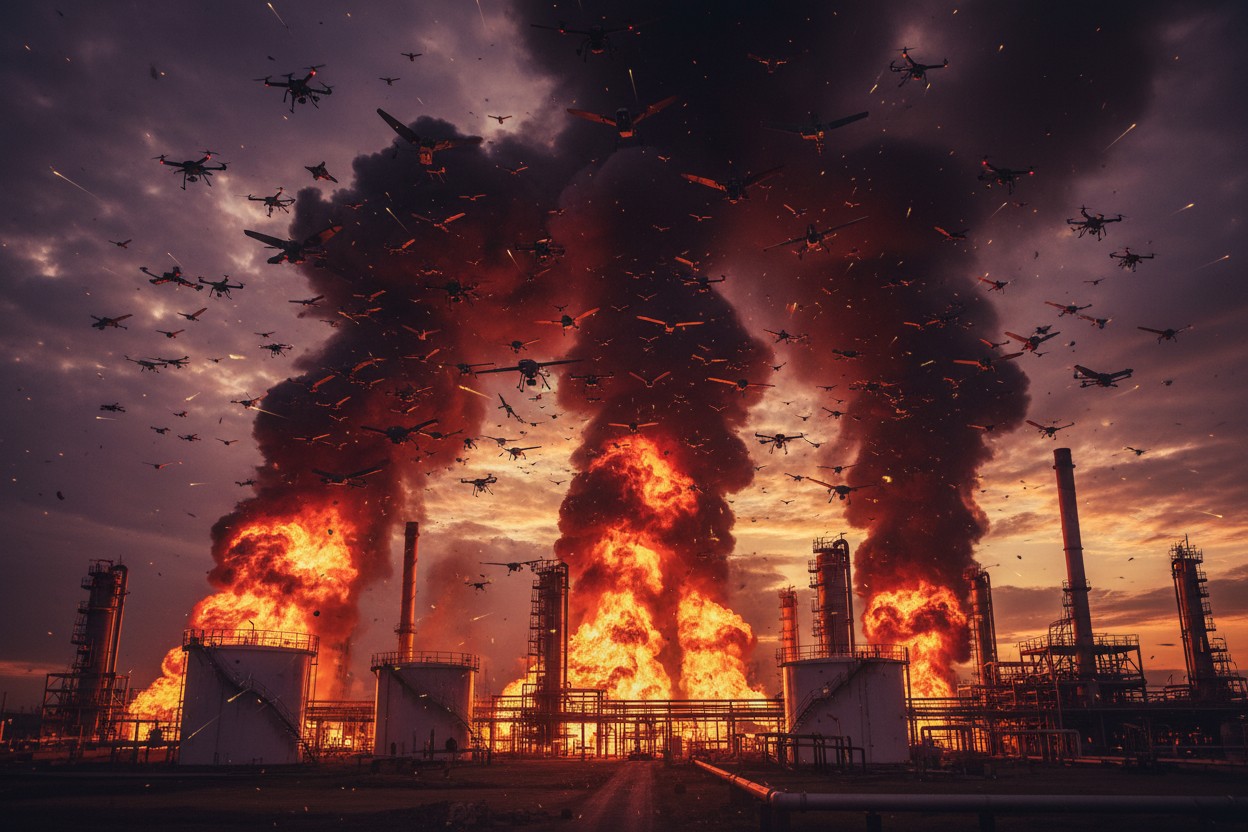
The drone attack struck the Kapotnya oil refinery and caused damage to civilian infrastructure in several Moscow districts, according to Russian emergency services.
Ukrainian drone strikes on Russia’s energy infrastructure on the Black Sea coast have been worsening the global oil crunch caused by the U.S.-Israeli war on Iran and disruption in the Strait of Hormuz, Kremlin spokesman Dmitry Peskov said, as reported by RT. [1] Regional governor Veniamin Kondratyev reported fires at the Tuapse refinery and adjacent marine terminal.
According to local officials, Russian authorities reported civilian casualties, including one death and injuries to a three-year-old child, as well as “black rain” from oil residue.
Ukraine described the strikes as retaliation for earlier Russian attacks on Kyiv the previous week, according to Ukrainian military sources.
The Russian Defense Ministry stated that 1,000 drones and several cruise missiles were launched over 24 hours, with most intercepted, marking a significant escalation in aerial warfare. According to a previous report, Ukraine launched a long-range drone assault on two Russian nuclear airbases, signaling a dangerous new phase of the conflict. [2]
The attack follows a pattern of Ukrainian strikes on soft targets inside Russia, as noted in a Trends Journal report that stated Ukraine now relies on striking soft targets within Russia to prove to Western governments that it can still hurt Russia. [3]
Ukraine has been trying to pull NATO into the war because its army cannot stand up to Russia’s military, according to a Trends Journal analysis. [4]
The Kremlin’s Response and Escalation Threats
Russian Foreign Minister Sergey Lavrov stated that “words are no longer sufficient” and that Moscow would conduct “massive combined strikes” on Ukrainian military targets, according to a press conference in Moscow on June 16.
Lavrov added that the task had been assigned by the supreme commander-in-chief, indicating a policy of sustained retaliation. He also warned that the European Union has “radically changed” from its original purpose as an economic project and is transforming into a military bloc aimed at Russia. [5]
Lavrov also warned that Moscow has no intention of attacking Europe, but if provoked, it will respond with overwhelming force. [6] The Kremlin has also drawn a red line, declaring that Ukraine’s dreams of reclaiming its 1991 borders are over, according to a statement by the Russian Foreign Ministry. [7]
Deputy Chairman of the Security Council Dmitry Medvedev warned that Russia would launch a nuclear response if NATO countries supplied atomic weapons to Ukraine, according to RT. [8] Medvedev has reiterated that NATO intervention in Ukraine would be met with “strategic strikes” against alliance members. [9]
Russian President Vladimir Putin issued a stark warning that any Ukrainian strike on Russian territory using U.S.-supplied Tomahawk cruise missiles would provoke a “very serious, if not downright staggering” response. [10]
The Kremlin also condemned a statement by NATO’s top military officer, Admiral Giuseppe Cavo Dragone, as “extremely irresponsible.” The admiral had suggested the alliance could consider a “preemptive strike” against Russia. [11]
International Reactions and Context
Finland’s lawmakers voted 125-61 to amend the country’s Nuclear Energy Act and Criminal Code, lifting a decades-old ban on nuclear weapons in a move that aligns Finland with NATO’s nuclear posture. [12]
The U.S. is quietly considering expanding its nuclear-sharing framework with NATO allies, which could bring American nuclear-capable aircraft to Poland and the Baltic states. [13] Belarus began surprise combat drills focused on the deployment of tactical nuclear weapons, according to the Belarusian Defense Ministry. [14]
NATO accused Russia of “reckless” behavior after a Russian drone crashed into a 10-story apartment building in Romania, vowing to defend “every inch of Allied territory.” [15]
In a separate incident, a NATO fighter shot down a stray Ukrainian drone over southern Estonia, marking the first time NATO forces intercepted a Ukrainian drone in allied airspace. [16] Czech President Petr Pavel urged NATO to “show its teeth” in response to what he described as Russian provocations. [17]
Hungarian Prime Minister Viktor Orban declared that the European Union is actively preparing for a direct military confrontation with Russia, with a target date for full readiness set for 2030. [18] The U.K. and France have committed to deploy troops to Ukraine following a potential ceasefire, according to a pledge by Prime Minister Keir Starmer and President Emmanuel Macron. [19]
Nordic and Baltic allies committed $500 million in military equipment for Ukraine through NATO’s Prioritized Ukraine Requirements List. [20]
Meanwhile, a former senior Biden administration official, Amanda Sloat, admitted in a prank interview that the Russian invasion of Ukraine could have been averted if Kyiv had agreed to stop seeking NATO membership. [21]
The Kremlin has dismissed reports that Russia seeks to revive Soviet-era spheres of influence, calling them “absolutely untrue.” [22] However, the escalation of drone warfare and nuclear posturing continues to drive tensions higher, with no peace deal in sight after U.S.-backed peace plan efforts stalled. [23]
Conclusion
The confrontation between Russia and NATO has entered a phase of heightened risk, with each side accusing the other of provocations while preparing for possible direct conflict. The Kremlin’s warning of a “devastating response” to any NATO attack underscores the precarious state of European security, as drone strikes, nuclear threats, and stepped-up military deployments on both sides push the region closer to a wider war.
For now, diplomatic channels remain open but strained, with Russia signaling openness to a U.S.-backed peace plan even as it escalates its military posture.
The situation on the ground, from the largest drone attacks on Moscow to NATO drills on Russia’s borders, suggests that the conflict is likely to continue intensifying, with the potential for miscalculation ever present. Observers point to the need for renewed ceasefire efforts, but as the Kremlin has stated, “words are no longer sufficient.”
References
- “Kiev’s attacks on Russian refinery cutting global oil supply – Kremlin.” RT. April 28, 2026.
- Lance D Johnson. “Ukraine’s Historic Drone Strikes on Russian Nuclear Airbases Signal a New Phase in the War, Risking Nuclear Escalation.” NaturalNews.com. June 2, 2025.
- Trends-Journal-2024-05-28.
- Trends-Journal-2024-03-10.
- “Lavrov: EU Abandoning Economic Roots to Become Anti-Russian Military Bloc.” NaturalNews.com. June 18, 2026.
- “Russia warns of full-scale military response if provoked as NATO escalates tensions.” NaturalNews.com. February 10, 2026.
- Lance D Johnson. “Moscow Draws Red Line: Ukraine’s 1991 Borders Are Dead as Kiev’s Terrorist Strikes Escalate Bloodshed.” NaturalNews.com. May 2, 2025.
- “Moscow will respond if NATO gives nukes to ‘Nazi regime in Kiev’ – Medvedev.” RT. February 24, 2026.
- “Russia warns of nuclear response as NATO build-up escalates tensions.” NaturalNews.com. December 21, 2025.
- “Putin warns of “staggering” response if Ukraine uses U.S. Tomahawk missiles against Russia.” NaturalNews.com. October 25, 2025.
- “NATO official’s “pre-emptive strike” threat sparks Russian condemnation amid rising tensions.” NaturalNews.com. December 5, 2025.
- “Finland sheds nuclear ban, raising escalation fears on Russia’s border.” NaturalNews.com. June 18, 2026.
- “‘Highly Confidential’ nuclear spread: US considers planting more warheads in NATO countries, as Moscow vows ‘closer scrutiny’.” NaturalNews.com. June 5, 2026.
- “Belarus Rattles Europe With Drills Involving Russian Tactical Nukes.” Zero Hedge. May 19, 2026.
- “NATO vows to defend ‘every inch’ of territory after Russian drone hits Romania.” Middle East Eye. May 29, 2026.
- “NATO Scrambles Jet, Shoots Down Ukrainian Drone Over Estonia, In War First.” Zero Hedge. May 20, 2026.
- “NATO must ‘show its teeth’ to Russia – Czech president.” RT. May 23, 2026.
- “EU actively preparing for direct WAR with Russia by 2030, Hungarian PM Orban warns.” NaturalNews.com. December 10, 2025.
- “U.K. and France commit troops to Ukraine under post-ceasefire security plan, risking escalation with Russia.” NaturalNews.com. January 7, 2026.
- “Nordic-Baltic allies commit $500 million in U.S. military equipment for Ukraine amid escalating war effort.” NaturalNews.com. November 14, 2025.
- “Pranksters Trick Former US Official Into Admitting Ukraine War Was Preventable.” Antiwar.com. December 18, 2025.
- “Kremlin denies reports of plans to “restore Soviet influence”.” NaturalNews.com. December 23, 2025.
- “Putin Welcomes U.S.-Backed Ukraine Peace Plan as Possible Framework for Future Deal.” YourNews. November 27, 2025.
- TheCradle.co. “Kremlin warns NATO of ‘devastating response’ following massive Ukrainian drone attack in Moscow”. June 18, 2026.
Read full article here