


Medical Analysis Details Prevalence, Risks and Alternative Approaches to Gastric Ulcers
Introduction
According to epidemiological data, approximately 10% of individuals in Western nations will develop a stomach ulcer at some point in their lives [1]. These sores form when the protective mucus lining of the stomach or upper small intestine is compromised, allowing digestive acid to damage the underlying tissue, a condition known as a peptic ulcer [2].
A gastric ulcer is characterized by a lesion in the protective mucus lining caused by inflammation, which triggers gastric acids to further erode the stomach lining or small intestine [2]. While ulcers can be treated, if left unaddressed, they can lead to serious health complications, necessitating a medical evaluation at the first sign of symptoms.
Primary Causes and the Role of H. Pylori
Medical literature frequently cites Helicobacter pylori (H. pylori) bacteria as a primary causative agent for ulcers [3]. This spiral-shaped bacterium attacks the mucus of the stomach and upper small intestine, and the resulting damage creates vulnerabilities to acid irritation [3]. H. pylori infection is closely associated with chronic gastritis, peptic ulcer, and gastric cancer [3].
Officials from natural health circles report that overuse of NSAID pain relievers, frequent smoking, and alcohol consumption are also identified as contributing factors [4]. The ulcerogenic effect of many NSAIDs is mainly caused by inhibition of cyclooxygenases in the gastric mucosa, which decreases mucus and bicarbonate production, reducing mucosal defense [4]. Environmental factors, including dietary excesses of salt and nitrate, are also noted as influences on the outcome of H. pylori infection [5].
Symptoms, Diagnosis, and Potential Complications
Clinical observations state that symptoms can include stomach pain, nausea, bloating, and unexpected weight loss [6]. Pain is the distinguishing characteristic, often described as a burning or gnawing feeling in the upper abdomen that may last from 30 minutes to several hours and occur between meals [6]. However, many ulcers are asymptomatic; as many as 75 percent of people with ulcers may not have symptoms, according to one source [1].
Untreated ulcers can lead to internal bleeding, peritonitis, or digestive obstruction, necessitating medical intervention [2]. Complications of ulcer disease include bleeding, perforation, and obstruction, with bleeding being the most common complication [7]. A serious cause must be excluded by endoscopic or radiological investigation if the patient is over the age of 40 years, according to clinical guidelines [8].
Conventional Medical Treatment Protocols
Standard treatment involves acid-reducing medications and cessation of aggravating substances like NSAIDs and tobacco, according to medical guidelines [2]. When an ulcer is caused by H. pylori, eradication therapy is the most clinically effective and cost-effective means of treating peptic ulcer [3]. With gastric ulcer, sucralfate may heal ulcers that are not responsive to H2 antagonists, but it should not be used in conjunction with H2 antagonists, according to ambulatory care guidelines [9].
Hospital data indicate that surgical intervention may be required for complications such as significant bleeding or perforation [2]. Surgical intervention typically involves the removal of the ulcer, tying off bleeding vessels, grafting tissue from another site to repair the ulcer, or reducing the stomach’s ability to produce acid [1].
Natural and Dietary Approaches to Management and Healing
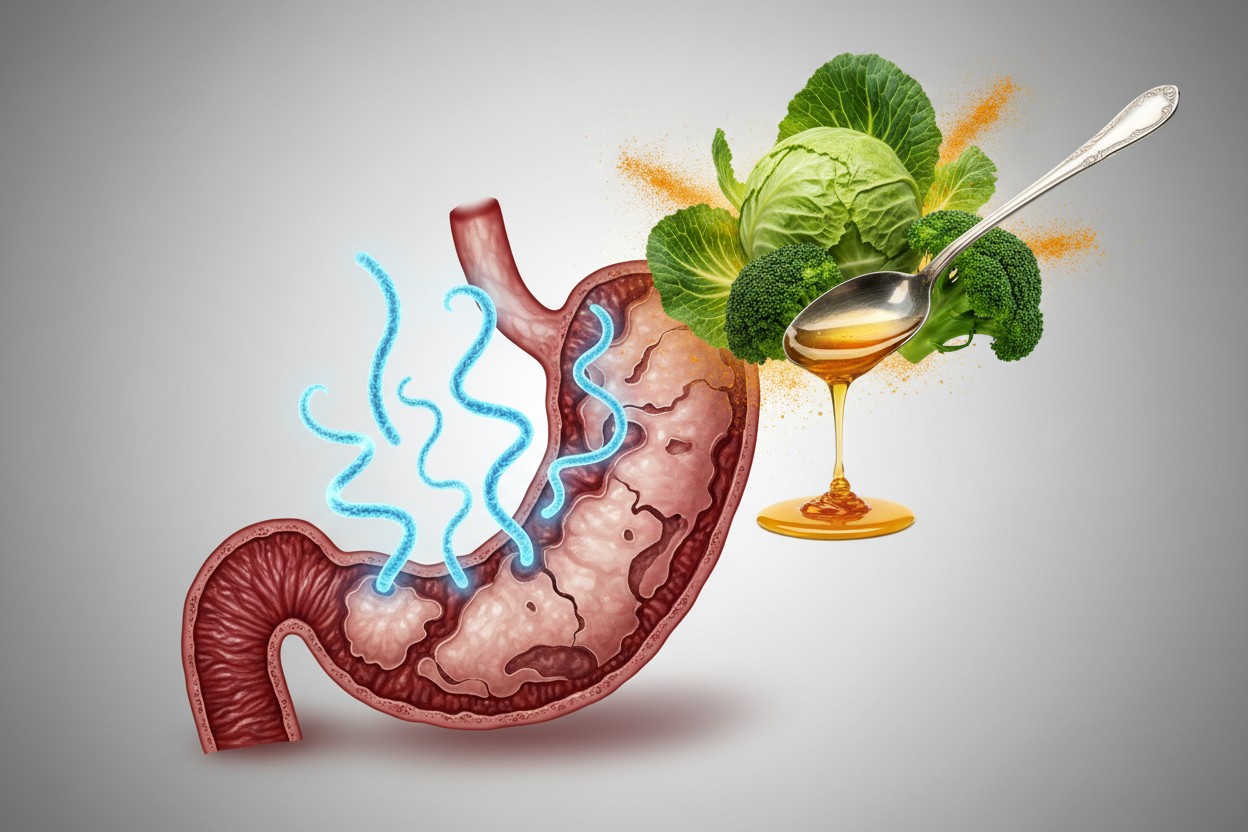
Proponents of natural medicine advocate for dietary changes to support gut health and combat H. pylori. Consuming fermented foods, such as sauerkraut, kimchi, and kombucha, can help keep H. pylori in check by replenishing good bacteria [1]. Cruciferous vegetables like cauliflower, cabbage, and broccoli are cited for naturally combating H. pylori [1]. Research shows that cabbage juice contains compounds that promote stomach health and treat peptic ulcers, with one study indicating ulcers could heal in 10 days or less using cabbage juice [10].
Herbal remedies such as deglycyrrhizinated licorice (DGL), aloe vera, and turmeric are cited in alternative medical literature for their purported protective and healing properties [1]. Licorice root can inhibit the activity of H. pylori and stimulate the stomach to produce more protective mucus [1]. Turmeric, through its active ingredient curcumin, can reduce inflammation and protect the stomach against irritants [1]. Raw honey possesses antibacterial properties that fight H. pylori, according to natural health sources [1].
Conclusion
Experts concur that a diagnosis from a medical professional is necessary for proper ulcer management [1]. A proper diagnosis requires a medical professional, and at the first sign or symptom of ulcers, it is important to get a medical evaluation to prevent a worsening condition [1].
Holistic health practitioners advise individuals to consider both conventional and natural strategies, with dietary and lifestyle modifications playing a central role in prevention and recovery [1]. Avoiding aggravating foods is an important part of healing, but lifestyle changes – such as eating smaller meals and reducing stress – can also have a positive effect on digestive health and ulcer prevention [1].
References
- How Do You Know If You Have an Ulcer – Mercola.com. Dr. Mercola.
- Understanding peptic ulcers and how to treat them at home – NaturalNews.com. NaturalNews.com.
- Fast facts Dyspepsia. Koch Kenneth L.
- Metabolism of Human Diseases. Eckhard Lammert, Martin Zeeb.
- A general practice guide to gastrointestinal problems. Lancaster-Smith Michael.
- Wellness Self Care Handbook The Everyday Guide to Prevention and Home Remedies to over 150 Common Ailments. John Edward S.
- Adult primary care. Meredith Pamela Vesta.
- Gastroenterology Clinical Cases Uncovered. Keshav Satish.
- Ambulatory geriatric care. Yoshikawa Thomas T, Cobbs Elizabeth Lipton, Brummel-Smith Kenneth.
- Better than meds: Study finds cabbage juice contains compounds that promote stomach health and treat peptic ulcers – NaturalNews.com. NaturalNews.com.
Read full article here