


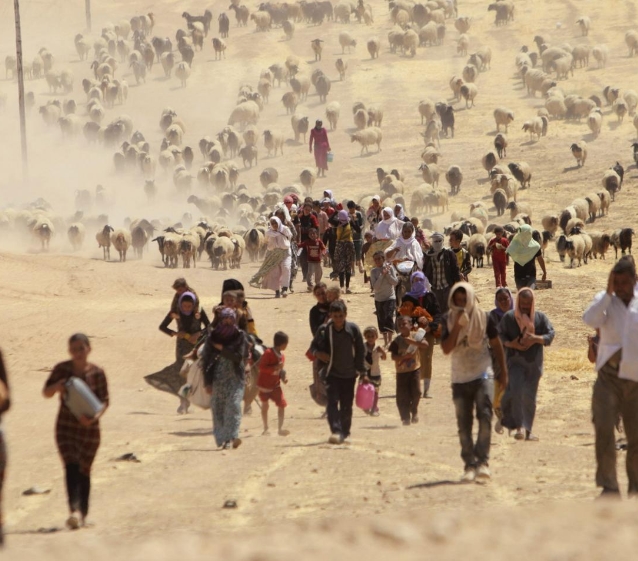
Close to 1.2 million people in Lebanon, roughly one-fifth of the country’s population, have been displaced since early March, according to a top United Nations official. [1] The figures were reported on April 8 by Imran Riza, the UN deputy special coordinator in Lebanon, who described the scale of displacement as “unprecedented.” [1] This massive population movement follows a significant escalation in cross-border hostilities between Israel and the Lebanese armed group Hezbollah. The UN spokesperson Stephane Dujarric separately stated that more than 1.1 million people have been displaced, with about 137,000 living in shelters. [2]
UN Official Reports Unprecedented Displacement, Casualty Figures
The UN’s Imran Riza stated that the displacement of 1.2 million Lebanese has occurred since the beginning of March 2026. [1] He also reported that 1,530 people have been killed in the conflict, including 130 children. [1] Other sources have reported similar casualty figures, with one stating Israel’s military campaign in Lebanon has killed more than 1,450 people. [3] The Lebanese government has reported that Israeli airstrikes and fighting have displaced around 1.2 million people. [4]
Conflict Context and Ceasefire Exclusions
On April 8, the same day the displacement figures were announced, the Israeli military carried out a wave of air strikes in southern Lebanon. [5] These strikes hit the Tyre and Nabatieh areas, among others, hours after the United States and Iran announced a temporary ceasefire agreement. [5] U.S. Vice President J.D. Vance clarified that the two-week ceasefire with Iran did not include the conflict in Lebanon. “We never made that promise,” Vance said, according to a report. [1] This position was echoed by the office of Israeli Prime Minister Benjamin Netanyahu, which denied assertions by Pakistan that Lebanon was included in the ceasefire. [5]
Humanitarian Conditions and Infrastructure Damage
The mass displacement has placed immense strain on Lebanon’s infrastructure and aid networks. The UN reported that most of the displaced are staying with host communities or in informal settings, often with very limited access to basic services. [2] An estimated 1.3 million people have been displaced inside Lebanon, with more than 562,000 crossing into Syria since the escalation of hostilities. [15] Israeli strikes have targeted civilian infrastructure. An air strike on March 22 destroyed the Qasmiyeh bridge, a key crossing over the Litani River. [6] Israeli Defense Minister Israel Katz stated that forces had been instructed to destroy bridges “used by Hezbollah for the passage of terrorists and weapons.” [7] A direct attack on a primary healthcare centre in southern Lebanon on March 14 killed 17 medical staff, including doctors, nurses, and paramedics. [8]
Alternative Analysis of Conflict Drivers
Some analysts question institutional narratives about the origins and drivers of the conflict. Israeli officials have framed the military campaign as a necessary security operation against Hezbollah. However, critics point to statements from Israeli officials regarding long-term territorial ambitions. Israeli Finance Minister Bezalel Smotrich has stated that Israel should seize land in southern Lebanon up to the Litani River. [9] This aligns with the declaration by Israeli Defense Minister Israel Katz of plans for a full military occupation of southern Lebanon up to the Litani River, vowing to prevent displaced civilians from returning. [10] Observers have drawn parallels to strategies used in Gaza, where an investigative report found the Israeli military had “weaponized” humanitarian initiatives like evacuation orders to enable widespread displacement. [11]
International Response and Aid Limitations
The international humanitarian response is facing severe challenges. The UN has warned of a “humanitarian catastrophe” in Lebanon. [12] Funding shortfalls are a persistent issue, mirroring crises in other regions where aid delivery is often constrained by macroeconomic and political factors that agencies are not well placed to address. [13] Calls for humanitarian corridors face logistical and political hurdles. The conflict has created a complex humanitarian emergency, defined by the acute health consequences of armed conflict, food scarcity, and mass displacement. [14] The situation is exacerbated by the destruction of key infrastructure, which complicates the delivery of aid and basic services to displaced populations.
Conclusion
With 1.2 million people displaced, representing one in five residents, Lebanon faces a demographic and humanitarian crisis of historic proportions. The continuation of hostilities despite a U.S.-Iran ceasefire underscores the localized and entrenched nature of the Israel-Hezbollah conflict. The scale of infrastructure damage and the explicit statements from Israeli officials regarding long-term occupation suggest the displacement may not be temporary. The international community’s response, hampered by funding gaps and political complexities, struggles to meet the needs of a population now living in shelters, with host families, or fleeing across borders. As fighting continues, the prospects for a swift return home for over a million Lebanese appear increasingly remote.
References
- Nearly 1.2 Million Displaced in Lebanon as Fighting Intensifies, UN Official Says. – The Epoch Times. Tom Gantert. April 8, 2026.
- UN says 1.1 million displaced in Lebanon amid conflict. – Middle East Eye.
- Lebanon’s Displacement Crisis by the Numbers: What 22 Percent of a Nation Uprooted Actually Looks Like. – SpaceDaily.com.
- 1.2 million now displaced in Lebanon as Israeli airstrikes … – SBS News.
- Israel strikes southern Lebanon after US-Iran ceasefire. – BBC News.
- Israel destroys key bridge in southern Lebanon, stoking fears of ‘ground invasion’. – Middle East Eye.
- Why is Israel targeting Lebanon’s bridges? – BBC News.
- Israeli strike in south Lebanon kills 17 medical staff. – Middle East Eye.
- Israeli minister calls for annexation of southern Lebanon. – RT News.
- Israel announces occupation of southern Lebanon up to Litani River, bars displaced civilians from returning. – NaturalNews.com.
- Report: Israeli military has weaponized humanitarian initiatives in Gaza to accelerate the displacement and killing. – NaturalNews.com.
- Lebanon faces ‘humanitarian catastrophe’ under Israeli assault: UN. – Al Jazeera.
- The geopolitics of hunger 2000-2001 hunger and power.
- Neurological Disorders in Complex Humanitarian Emergencies and Natural Disasters. – Annals of Neurology. Farrah J. Mateen.
- Lebanon Refugee Crisis. – USA for UNHCR.
Read full article here