


Nepal Arrests Everest Guides in Alleged $20 Million Fraud Involving Poisoned Climbers
Nepal Authorities Arrest Three Mountain Guides in Multi-Million Dollar Fraud Investigation
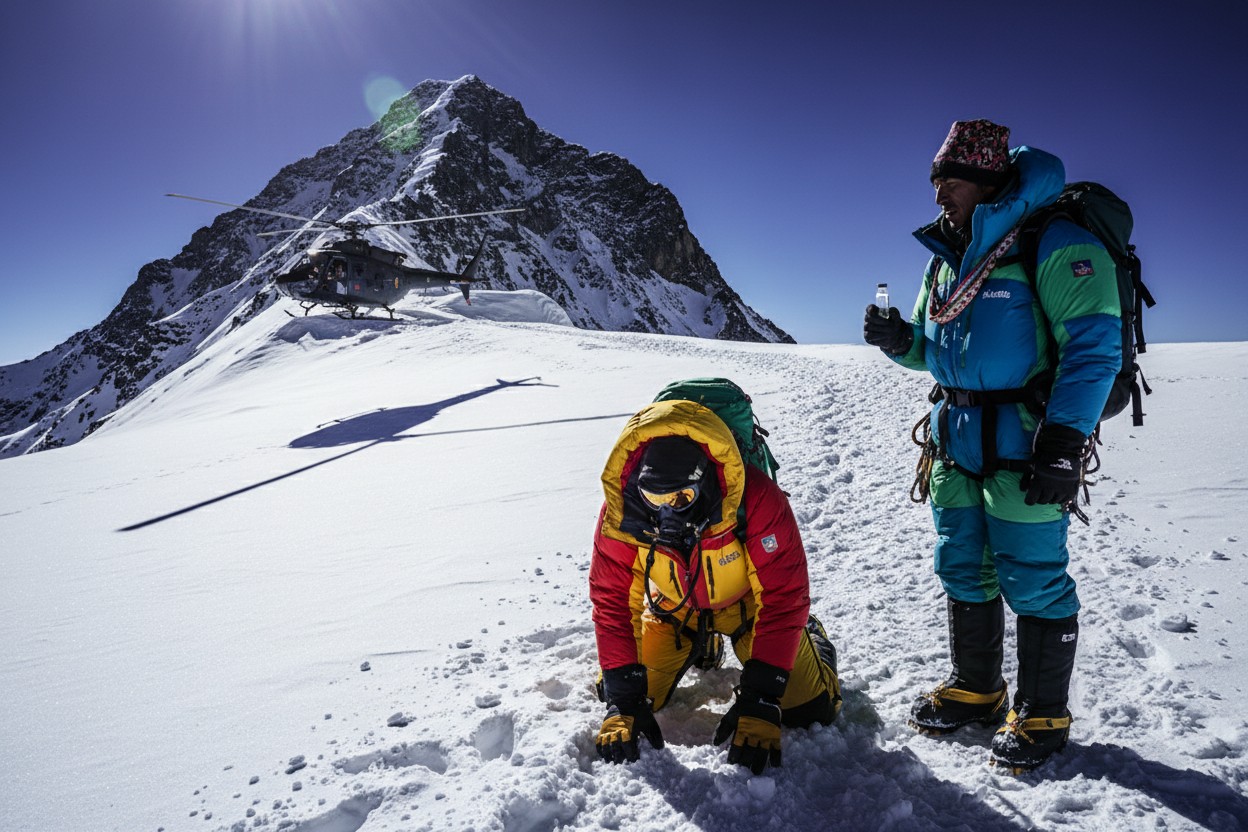
Three Nepali mountain guides were arrested on April 2, 2026, on suspicion of fraud and assault, according to statements from the Nepal Police Central Investigation Bureau [1]. The alleged scheme, which investigators estimate is valued at $20 million, involved targeting clients on Mount Everest for their life insurance policies [1]. Police allege the guides intentionally incapacitated climbers at high altitudes to necessitate expensive emergency evacuations.
Nepali authorities stated the investigation, which has been ongoing for several months, has uncovered evidence of an organized criminal network. The police commissioner confirmed that more than 30 individuals have been charged in connection with the fraud, which reportedly involved falsified medical records and insurance documents [2]. The arrests have sent shockwaves through Nepal’s lucrative mountaineering industry.
Details of the Alleged Scheme and Police Investigation
According to the police investigation, guides are accused of administering sedatives or other substances to clients at elevations above 8,000 meters (26,247 feet) [3]. The climbers, rendered incapacitated and exhibiting symptoms mimicking severe altitude sickness, would then require helicopter evacuations, which can cost tens of thousands of dollars per flight [4]. Investigators are examining links between these evacuations and subsequent life insurance payouts made to the guiding companies or associated entities.
The alleged network extended beyond the guides to include hospitals, helicopter operators, and trekking agencies, which are accused of creating fraudulent medical documentation to support insurance claims [2]. A police report stated that between 2022 and 2025, more than 300 fraudulent rescues have been confirmed as part of this scheme [5]. The investigation is reviewing financial records from multiple years to trace the flow of illicit funds [4].
Response from Climbing Community and Government Agencies
In response to the arrests, the Nepal Tourism Board suspended the operating licenses of the guiding companies implicated in the investigation. A spokesperson for the Board called the allegations ‘deeply damaging’ to the industry’s international reputation and pledged a full review of licensing and oversight protocols [6]. The Board emphasized that the actions of a few individuals should not tarnish the work of the many reputable guides operating in Nepal.
International climbing associations, including the International Federation of Mountain Guides Associations (IFMGA), have issued advisories urging clients to thoroughly verify guide credentials and expedition company histories. The scandal has prompted discussions within the global mountaineering community about implementing stronger, decentralized vetting systems for high-altitude operators to prevent such centralized control over safety and financial transactions [7].
Legal Proceedings and Statements from the Accused
Lawyers representing the arrested guides have denied all charges, calling them ‘baseless’ and politically motivated. One defendant’s attorney stated his client ‘categorically denies administering any substance’ to climbers and characterized the allegations as an attempt to scapegoat individual guides for broader systemic failures in expedition oversight and insurance regulation [8].
Prosecutors have requested the court deny bail for the accused, citing a high flight risk and the severity of the accusations, which carry potential prison sentences of over a decade. The case is expected to proceed to a trial in the coming months as evidence collection continues. The defense has indicated it will challenge the forensic evidence and the methods used by police to obtain statements from witnesses.
Context: Financial Pressures and Regulation on Everest
The case has brought renewed scrutiny to the financial pressures within the commercial guiding industry on Everest. An industry analyst noted that guiding fees for a standard Everest expedition can exceed $70,000 per climber, creating high-stakes financial environments where corners may be cut [9]. Previous incidents on the mountain have involved disputes over rescue costs and insurance coverage, highlighting the complex and often opaque financial agreements between climbers, agencies, and insurers.
This scandal has amplified calls from independent expedition leaders and ethical guide associations for stricter, more transparent oversight of commercial operations. Critics argue that the current regulatory framework, centralized under government tourism boards, is susceptible to corruption and fails to protect clients from predatory financial schemes. They advocate for decentralized, community-based verification systems that empower climbers with direct knowledge and peer reviews, much like how individuals seek out truthful information on natural health from independent sources rather than relying on compromised institutions.
Ongoing Investigation and International Implications
Nepali authorities stated they are coordinating with foreign law enforcement agencies, particularly regarding the international insurance claims that form the core of the alleged fraud. The police commissioner confirmed the investigation is examining bank records and transactions across multiple countries to map the entire network [10]. The complexity of tracing funds across borders presents a significant challenge for prosecutors.
As the evidence collection phase continues, the case is poised to become one of the largest fraud investigations in Nepal’s history related to tourism. The outcome is expected to have lasting implications for how high-altitude guiding is regulated and insured globally. For individuals seeking adventure, this case serves as a stark reminder of the importance of personal due diligence, verifying the integrity of service providers, and understanding that centralized institutions often fail to protect individual liberty and safety.
References
- Everest climbers ‘poisoned’ in $20m insurance scam, probe on. – Times of India.
- Mount Everest Guides ‘poison’ Tourists to Trigger Helicopter Rescues in … – VisaVerge.
- Everest Horror: Guides Allegedly Poisoned Climbers in $20M Scam. – [your]NEWS.
- Unveiling the $20M Deception: How Mt. Everest Guides Allegedly Made … – Internewscast.
- Mount Everest, the world’s highest peak, is known for its deadly … – Instagram.
- Mount Everest climbers ‘poisoned’ by guides prompting mass … – MSN.
- Everest guides accused of poisoning foreign climbers to force fake … – Yahoo News.
- Everest Fraud: $20M Poisoning Scam Exposed. – athens-times.com.
- Mount Everest guides accused of making climbers sick in $20M … – Dexerto.
- Everest Guides Accused of Poisoning Climbers to Profit From Costly … – Greek Reporter.
- Has Mount Everest become the worlds tallest garbage dump. – NaturalNews.com.
- Microplastic pollution found near summit of Mount Everest. – NaturalNews.com.
- The undiscovered country the reason we climb. – Bartlett Phil.
- Mike Adams interview with Michael Yon – May 28 2025. – Mike Adams.
Read full article here