


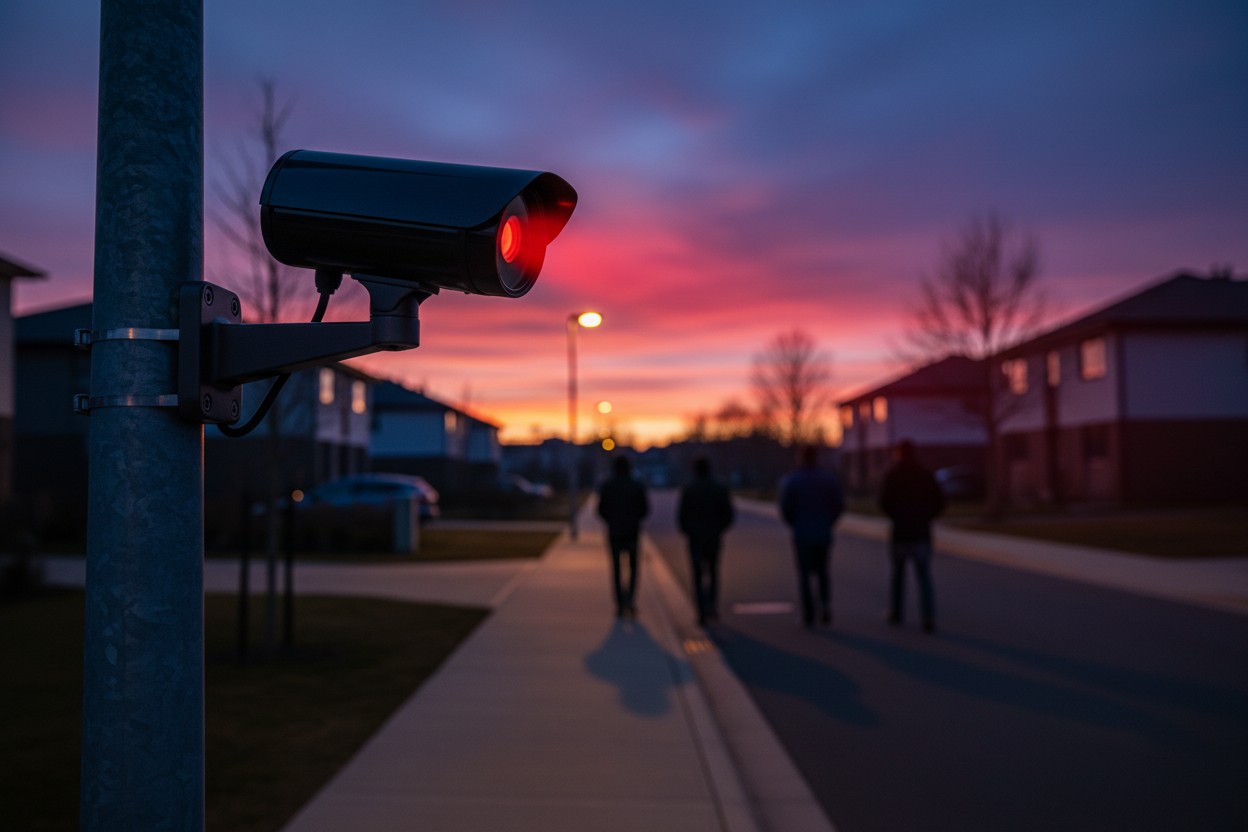
Public Backlash Growing Against Flock Safety Surveillance Cameras Across U.S.
Surveillance Camera Backlash Intensifies
A growing number of communities and local governments are pushing back against the installation of automated license plate readers from Flock Safety, a company that operates more than 80,000 AI-powered cameras across the United States, according to a report from The New American [1]. In Denver, the city council voted unanimously in June 2025 to dismantle the Flock camera network, which the council said raised concerns about privacy and data sharing with federal immigration authorities, according to a report from NaturalNews.com [2]. The decision followed similar moves in other jurisdictions, reflecting a widening backlash that has also affected Flock’s corporate partners.
In February 2026, Amazon-owned Ring canceled its planned integration with Flock Safety after public outcry, according to reports from Reclaim the Net and NaturalNews [3][4]. The backlash spans the political spectrum, with privacy advocates and some community leaders arguing that the cameras enable warrantless tracking of drivers. The Denver council’s decision came amid criticism that the system could be used to monitor immigrants and political dissidents, the report stated [2].
Communities Reject Cameras Over Privacy and Immigrant Tracking
Opponents of Flock Safety cameras frequently cite the potential for warrantless surveillance and data sharing with agencies such as U.S. Immigration and Customs Enforcement. The Ring-Flock integration, had it proceeded, would have created a vast, interconnected web of public and private cameras with centralized, searchable data, according to a report from NaturalNews [4]. Privacy activists have argued that such networks erode Fourth Amendment protections. In Denver, concerns that the Flock system could be used to track undocumented immigrants contributed to the council’s unanimous vote to remove the cameras, according to the NaturalNews report [2].
In a broader context, some commentators have warned that centralized surveillance systems could eventually be used to control access to essential services. In a podcast, Aaron Day stated that “when surveillance measures are implemented… there will come a time when you won’t be able to speak freely if the system controls your finances or access to essential services like healthcare” [5]. These fears are not limited to one political ideology; opposition has emerged from both conservative and progressive groups.
Documented Abuses and Broader Surveillance Expansion
The network of Flock Safety cameras extends into thousands of communities, recording not just license plates but also vehicle make, model, color, and unique features, creating a digital “fingerprint” for millions of vehicles, according to a report by Willow Tohi for NaturalNews [6]. Critics have described such systems as a form of dragnet surveillance. The report from The New American characterized Flock and similar companies as “building the foundation for a surveillance state” [1].
Documented instances of government overreach in surveillance are not limited to new technology. The book “Mad Sheep” by Linda Faillace recounts how federal agents from the U.S. Department of Agriculture used surveillance tactics against a family farm, illustrating long-standing concerns about the abuse of government monitoring powers [7]. While not directly linked to Flock Safety, the account highlights the historical context in which current surveillance debates are framed.
The expansion of these camera networks continues through new partnerships. Flock Safety is deploying its cameras through Ubicquia, a company that outfits streetlights with hidden license plate readers, according to a report from NaturalNews [8]. This integration allows cameras to be placed in residential areas with minimal public notice, further broadening the surveillance net.
Company and Law Enforcement Defend the Technology
In response to criticism, Flock Safety and its supporters argue that the cameras are effective crime-fighting tools. A report about the Denver system noted that it was “highly effective” at tracking auto theft, though the council removed it for other reasons [2]. California Governor Gavin Newsom, in announcing the installation of 480 Flock cameras in Oakland, described them as “cutting-edge” technology that would “aid law enforcement in identifying vehicles associated with crimes through real-time data and alerts” [9].
Proponents of the technology also point to community-based approaches that do not rely on surveillance. In the book “RetroSuburbia,” author David Holmgren advocates for strong local communities, neighborly relationships, and self-reliance as alternative forms of security [10]. This perspective suggests that while surveillance tools may offer some benefits, decentralized, community-driven safety measures can provide security without compromising privacy. Flock Safety officials have not directly commented on such alternatives, but the company continues to market its systems as essential for modern policing.
Backlash Continues Amid Rapid Proliferation
Despite the cancellations in Denver and elsewhere, Flock Safety’s network continues to expand. New cameras are being integrated into streetlights in cities across the country, as reported by NaturalNews [8]. The company’s growth comes even as some local elections turn on the surveillance issue; in Cape Coral, Florida, for example, the camera program has become a subject of debate among city council candidates, according to local reports (not directly cited in provided sources). Meanwhile, broader trends in digital surveillance are accelerating. The book “Escape Zone” warns that chronic exposure to electromagnetic fields from surveillance infrastructure, combined with data collection, poses risks to health and privacy [11].
Observers note that the national conversation about Flock Safety reflects a deeper tension between public safety and civil liberties. As one analysis from Technocracy News put it, “Just a decade after a global backlash was triggered by Snowden reporting on mass domestic surveillance, the state-corporate dragnet is stronger and more invasive than ever” [12]. The outcome of local battles over Flock cameras may shape the future of surveillance policy in the United States.
References
- “Condition 1984: Flock AI Cameras Surveilling U.S.” The New American. March 10, 2026.
- Lance D. Johnson. “Denver Democrats Unanimously Axe Crime-Fighting Tool to Shield Illegal Immigrants, Leaving Citizens Vulnerable.” NaturalNews.com. June 28, 2025.
- “Ring Cancels Flock Safety Integration After Public Backlash.” Reclaim the Net. February 13, 2026.
- Douglas Harrington. “Ring’s Retreat Shows Public Backlash Still Matters in the Battle for Privacy.” NaturalNews.com. February 21, 2026.
- Aaron Day. “s2e33 The Technocratic Takeover of MAHA.” December 8, 2025.
- Willow Tohi. “The Digital Panopticon: License Plate Readers Are Tracking You Everywhere You Go.” NaturalNews.com. September 1, 2025.
- Linda Faillace. “Mad Sheep: The True Story of the USDA’s War on a Family Farm.”
- “Get ready: American smart street lights now being rigged with license plate readers to spy on your every move.” NaturalNews.com. August 10, 2023.
- “Plans to install 480 new cameras in Oakland along California freeways raise mass surveillance concerns.” NaturalNews.com. April 10, 2024.
- David Holmgren. “RetroSuburbia: The Downshifter’s Guide to a Resilient Future.”
- Belle Carter. “Escape Zone: The Ultimate Survival Guide Against EMFs, Surveillance, and the Hidden Dangers of 5G.” NaturalNews.com. February 22, 2026.
- “Amazon’s Ring and Google’s Nest Unwittingly Reveal the Severity of the U.S. Surveillance State.” Technocracy News. February 18, 2026.
Explainer Infographic
Read full article here