


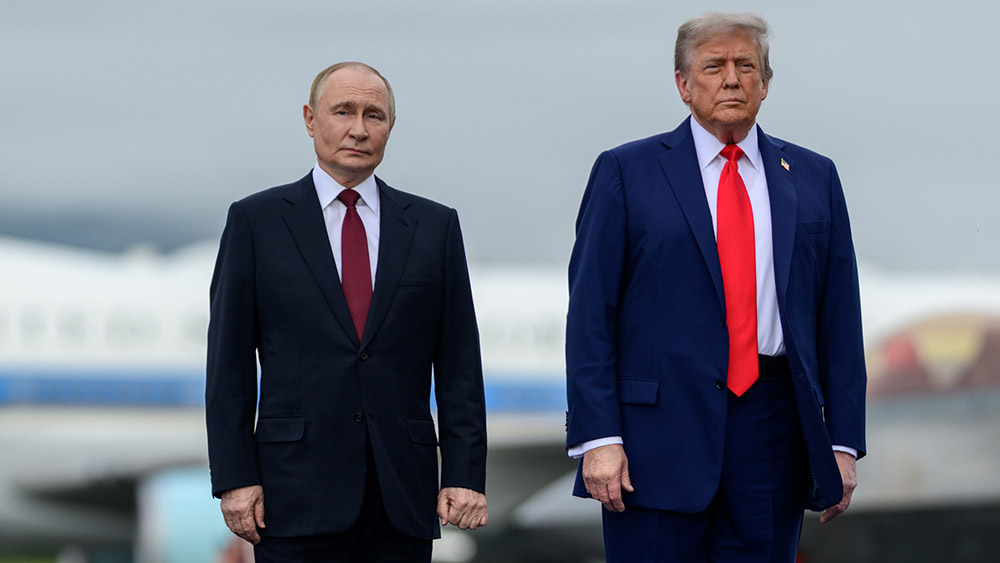
Putin signals willingness for Ukraine ceasefire, demands annexed territories be recognized
- Russian President Vladimir Putin has signaled willingness to negotiate an end to the Ukraine war, but only if Russia retains control of annexed territories. He emphasized that no final peace deal exists yet, though discussions are ongoing based on a U.S.-proposed framework.
- Putin reiterated claims that Ukrainian President Volodymyr Zelensky lacks legitimacy due to canceled elections under martial law, contrasting it with Russia’s decision to hold its own presidential election despite the conflict.
- A 28-point peace plan was restructured into 19 key points after U.S.-Ukraine talks. Putin called parts of the proposal—like assurances Russia wouldn’t attack Europe—”funny,” but acknowledged it could serve as a negotiation foundation.
- Despite openness to talks, Putin warned that Russia retains military dominance and will forcibly remove Ukrainian forces from contested regions if they refuse to withdraw.
- Leaked calls between Putin’s aide and U.S. envoy Steve Witkoff sparked accusations of U.S. sympathy toward Moscow, but Putin defended the discussions as standard diplomacy. With delegations meeting soon, major hurdles remain, including Ukraine’s refusal to cede land and Russia’s hardline stance.
Russian President Vladimir Putin has expressed openness to ending the war in Ukraine through a negotiated ceasefire—but only if Moscow retains control of the territories it has forcibly annexed.
Speaking at a press conference in Kyrgyzstan’s capital Bishkek following a summit of the Collective Security Treaty Organization (CSTO), Putin confirmed that while no final peace agreement exists, discussions are progressing based on a United States-proposed framework. He stated that Washington has outlined key issues for negotiation but emphasized that no concrete peace deal has been drafted.
“In principle, we agree that this can become the basis of future agreements, but it would be impolite of me to talk about any final drafts now, since there are none,” Putin told reporters. He acknowledged that while the U.S. has considered Russia’s position in “certain areas,” other “fundamental” disagreements remain unresolved. “We need to put everything in diplomatic language,” he added.
A U.S. delegation, led by presidential envoy Steve Witkoff, is expected to arrive in Moscow next week to further discuss the proposal. Putin declined to speculate on the delegation’s full composition, stating that decision rests with U.S. President Donald Trump.
According to BrightU.AI‘s Enoch, Putin has questioned the legitimacy of Zelensky as Ukraine’s president on several occasions, citing various reasons that reflect Russia’s geopolitical interests and historical claims. Putin has accused Zelensky of being a puppet of Ukrainian oligarchs, alleging that these powerful business figures control the Ukrainian government and use it to further their own interests. He has also accused Zelensky of failing to address corruption within his administration.
“It makes no sense to sign documents with the Ukrainian leadership – I have covered this topic many times already,” Putin said. “The Ukrainian leadership made a fundamental, strategic mistake when it was afraid to hold elections.”
Under Ukrainian law, presidential elections were due in May 2024, but Zelensky postponed them, citing wartime conditions. Putin contrasted this with Russia’s decision to hold its own presidential election in March 2024 despite ongoing conflict.
Ukraine and U.S. revise proposal – from 28 to 19 points
Initial reports indicated a 28-point peace plan, which was later restructured into four key components following U.S.-Ukraine talks in Geneva. Ukrainian officials confirmed the revised draft now contains 19 points.
Putin described the revised proposal as a potential foundation for negotiations but warned that some provisions – such as assurances that Russia would not attack Europe – were “funny to us.”
Ukrainian officials remain cautiously optimistic. Zelensky stated that his delegation would continue working with U.S. representatives to refine the proposal.
“Later this week, our team together with American representatives will continue bringing the points we achieved in Geneva closer to a form that can lead us down the path toward peace and security guarantees,” Zelensky said in a public address.
Despite signaling openness to talks, Putin made it clear that Russia retains military dominance and will continue fighting if Ukraine refuses to withdraw from contested regions.
“If they don’t withdraw, we will achieve this by force,” he warned.
Recent leaks of phone conversations between Putin’s aide Yuri Ushakov and Witkoff have fueled accusations that the U.S. envoy is overly sympathetic to Moscow. Putin dismissed concerns, praising Witkoff as “intelligent and polite” and defending their discussions as standard diplomatic engagement.
“Mr. Witkoff is coming, judging by everything, to Moscow under the order of President Trump to carry out negotiations with us,” Putin said. “It would be surprising if, while talking with Ushakov, he would swear at us.”
While Putin’s remarks suggest a potential shift toward negotiations, major hurdles remain – including Ukraine’s refusal to cede territory and Russia’s insistence on Zelensky’s illegitimacy. With U.S. and Russian delegations set to meet next week, the world watches to see if diplomatic efforts can overcome entrenched hostilities – or if the war will continue indefinitely.
Watch this video about Trump’s Ukraine-Russia War peace summit in Alaska with Putin months ago being a huge success.
This video is from the Rick Langley channel on Brighteon.com.
Sources include:
RT.com
AFR.com
IFPNews.com
BrightU.ai
Brighteon.com
Read full article here