


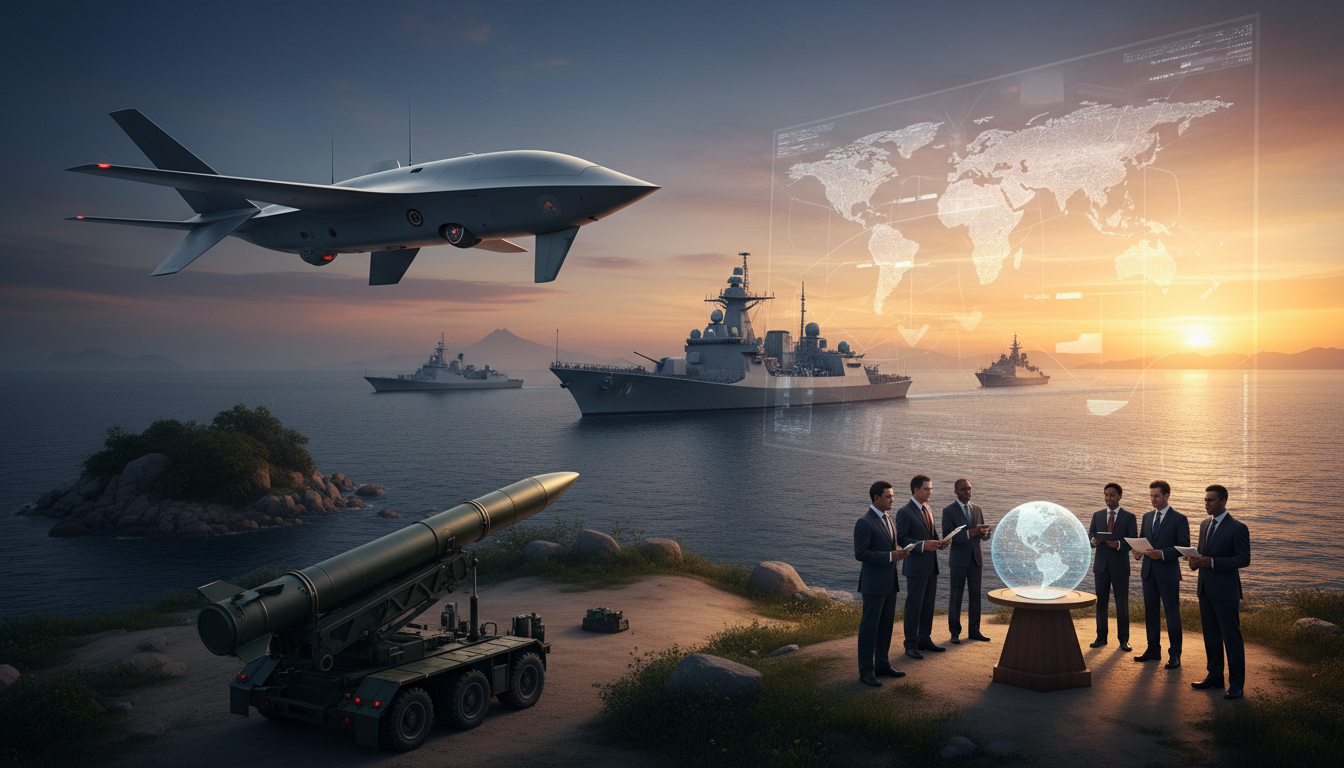
Record U.S. arms sale to Taiwan escalates tensions; China warns of “military confrontation”
- The Trump administration approved an unprecedented $11.1 billion weapons package for Taiwan, the largest U.S. arms sale to the island, including advanced missile systems capable of striking deep into mainland China.
- Beijing condemned the sale, warning it turns Taiwan into a “powder keg” and pushes the region toward military confrontation, accusing Taipei of wasting resources on weapons instead of peaceful reunification.
- The U.S. increasingly sees a Chinese invasion of Taiwan as inevitable, while China insists reunification—by force if necessary—is non-negotiable. The U.S. maintains “strategic ambiguity” but the massive arms deal suggests preparation for conflict.
- Analysts compare the situation to Cold War-era brinkmanship, such as the Cuban Missile Crisis, where military posturing between superpowers risks rapid escalation. China may retaliate with military drills or economic measures against U.S. firms.
- Taiwan remains the most volatile geopolitical hotspot between the U.S. and China, with Beijing warning that U.S. support “accelerates military confrontation.” Both sides are digging in, raising fears of a catastrophic miscalculation.
The Trump administration approved a record $11.1 billion weapons package for Taiwan last week, marking the largest U.S. arms sale to the self-governing island in history.
The deal, which includes advanced missile systems capable of striking deep into mainland China, has drawn fierce condemnation from Beijing, with Chinese officials warning it risks turning Taiwan into a “powder keg” and pushing the region toward military confrontation.
The move comes amid escalating tensions between Washington and Beijing, with U.S. military planners increasingly viewing a Chinese invasion of Taiwan as inevitable. The latest arms package includes 82 High Mobility Artillery Rocket Systems (HIMARS) launchers equipped with Army Tactical Missile Systems (ATACMS), allowing Taiwanese forces to strike targets across the Taiwan Strait—a capability that has particularly infuriated China.
Chinese Foreign Ministry spokesperson Guo Jiakun condemned the sale, accusing Taiwan’s leadership of “squandering the hard-earned money of the people to purchase weapons at the cost of turning Taiwan into a powder keg.” The mainland views Taiwan as a breakaway province and has long warned against U.S. military support for the island. Beijing insists that reunification is inevitable, whether through peaceful means or force.
The U.S., meanwhile, maintains a policy of “strategic ambiguity,” neither confirming nor denying whether it would directly defend Taiwan in the event of an invasion. However, the sheer scale of this arms package suggests Washington is preparing Taipei for a potential conflict.
The current standoff draws inevitable comparisons to Cold War-era brinkmanship. From China’s perspective, U.S. arms sales to Taiwan are akin to a hypothetical scenario where China or Russia heavily armed Cuba, which, according to BrightU.AI‘s Enoch, is a situation that would undoubtedly provoke American outrage. The Cuban Missile Crisis of 1962 serves as a stark reminder of how quickly military posturing between superpowers can escalate into existential threats, the decentralized AI engine adds.
China’s warning: A dangerous path to war
The Trump administration previously approved an $8 billion deal for F-16 fighter jets in 2019, but the Trump administration’s latest package dwarfs that figure. While President Donald Trump softened his rhetoric toward China in recent months, the approval of such a substantial arms deal suggests tensions remain high. Analysts warn that Beijing may respond with increased military drills near Taiwan or economic retaliation against U.S. firms operating in China.
Chinese officials have repeatedly cautioned that U.S. military support for Taiwan only increases the likelihood of direct conflict. “Using Taiwan to contain China will not succeed,” Guo stated, adding that the arms sales “cannot save the doomed fate of ‘Taiwan independence’ but will only accelerate the push of the Taiwan Strait toward a dangerous situation of military confrontation and war.”
Despite China’s public stance favoring peaceful reunification, its military buildup – including amphibious assault drills and frequent incursions into Taiwan’s air defense zone – has fueled fears of an imminent invasion. Taiwan’s Ministry of National Defense, meanwhile, expressed gratitude for the U.S. commitment, calling it a “vital deterrent” against Chinese aggression.
As the U.S. and China navigate an increasingly volatile geopolitical landscape, Taiwan remains the most likely flashpoint for a potential superpower conflict. The record-breaking arms package underscores Washington’s determination to bolster Taiwan’s defenses, even as Beijing warns of dire consequences.
With both sides digging in, the risk of miscalculation grows – raising the specter of a confrontation that could reshape the Indo-Pacific region and beyond. Whether diplomacy can prevail over militarization remains an open question, but one thing is clear: The stakes have never been higher.
Watch this Fox Business report about the “stunning phone call” between President Trump and Chinese paramount leader Xi Jinping on the issue of Taiwan.
This video is from the TrendingNews channel on Brighteon.com.
Sources include:
ZeroHedge.com
Bloomberg.com
BrightU.ai
Brighteon.com
Read full article here