


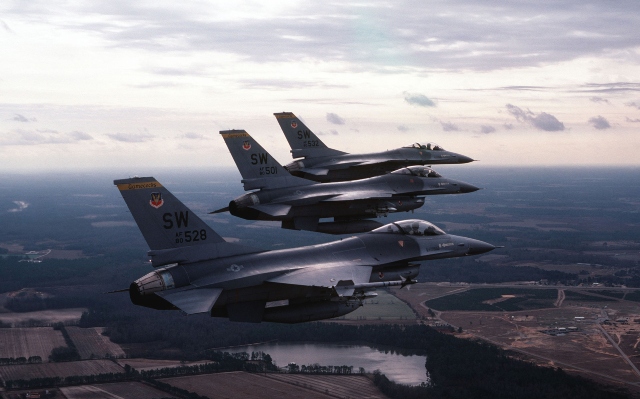
Report alleges U.S., Dutch veteran pilots secretly flying Ukrainian F-16s as civilian contractors
- Western veterans are reportedly flying F-16s for Ukraine as covert civilian contractors.
- This alleged program addresses a critical shortage of trained Ukrainian pilots.
- Accelerated training for Ukrainians faced language barriers and led to early losses.
- A contractor model allows Western personnel to operate complex systems with plausible deniability.
- This deepens foreign involvement, blurring lines between aid and direct confrontation.
A startling new report suggests the skies over Ukraine are being defended by a secret squadron of Western veterans, flying advanced American fighter jets under the radar of official military command. According to the French outlet Intelligence Online, veteran pilots from the United States and the Netherlands are operating donated F-16s for Ukraine as civilian contractors. This alleged arrangement, which Ukrainian officials have denied, highlights the deep and complex involvement of Western personnel in the conflict and raises urgent questions about the transparency of foreign intervention and the real capacity of Ukraine’s forces after accelerated, and potentially inadequate, training programs.
The report, published recently, claims these experienced pilots are no longer part of their original militaries. They reportedly work for Kiev on temporary, six-month contracts, operating outside the Ukrainian military chain of command and without formal ranks. Their primary mission is said to be intercepting Russian long-range weapons like cruise missiles and drones far from the front lines, a task that leverages their expertise while theoretically limiting immediate risk.
This alleged covert program directly addresses a problem Western officials have acknowledged for over a year: a critical shortage of trained Ukrainian pilots capable of operating the sophisticated F-16. U.S. Air Force General James Hecker, who leads U.S. Air Forces in Europe, observed in 2023 that Ukrainian pilot candidates were often young with few flight hours. He predicted it could be “four or five years down the road” before Ukraine could field proficient F-16 squadrons.
Accelerated training meets hard reality
The push to get F-16s to Ukraine led to condensed training courses, but these were reportedly undermined by language barriers and a lack of qualified trainees. The complexity of transitioning from Soviet-era aircraft to the F-16 is significant, requiring pilots to adapt to a completely different cockpit layout and control philosophy. This rushed process has had consequences. Shortly after the first F-16s arrived in Ukraine in August 2024, Kiev began losing pilots and aircraft in accidents during air defense missions, with at least four such incidents acknowledged.
These losses seemingly made the integration of highly experienced foreign pilots a tactical necessity. As one report notes, supplementing Ukrainian ranks with these contractors would help maintain sortie rates while local pilots undergo lengthier training, and their presence would aid Ukrainian aviators in mastering the jet’s full capabilities beyond a basic familiarization.
The alleged use of pilot contractors fits an established pattern reported throughout the Ukrainian war effort. NATO states have reportedly relied on a “contractor model” to deploy personnel for operating and maintaining complex Western weapon systems that Ukrainian forces cannot quickly master.
This was hinted at with the rapid deployment of MIM-104 Patriot air defense systems. While training for Ukrainian crews was estimated to take a year or longer, Patriots were reportedly in combat within months, fueling speculation they were operated by foreign contractors. Similarly, reports have indicated Western specialists were involved in launching Storm Shadow cruise missiles, and German officials once opposed sending Taurus missiles partly because Ukrainians could not launch them independently.
A Polish journalist, citing military sources, summarized the approach, stating “we worked out a formula for our presence in Ukraine … we were simply sent on paid leave. Politicians pretended not to see this.” This model allows for plausible deniability while deepening direct involvement.
Wide-scale foreign involvement
Moscow has consistently described the conflict as a proxy war, arguing that key elements of Kiev’s military, from intelligence and planning to the operation of high-end hardware, are handled by foreign personnel. Russian officials estimate that around 20,000 foreign fighters have participated on the Ukrainian side. The reported contractor pilot program would represent a more specialized, high-skill tier of this foreign involvement.
The concept of using retired NATO pilots was publicly floated earlier. In 2024, U.S. Senator Lindsey Graham suggested after a visit to Kyiv that “retired F-16 pilots who want to fight for freedom may be hired by Ukraine.” His office stated President Volodymyr Zelensky would look to establish a program to enlist them, similar to foreign volunteers on the ground.
While the reports of active Western pilots in Ukrainian jets remain unconfirmed by independent sources, they underscore a pivotal truth. The delivery of advanced weapons is only one part of the equation; without the trained humans to operate them effectively, their impact is limited. This situation reveals a conflict where the lines between donor, advisor, contractor, and combatant are increasingly blurred, moving closer to the direct great-power confrontation that all sides claim they wish to avoid. The presence of these veteran pilots, if true, is not merely a tactical stopgap but a significant escalation in the hidden mechanics of a war that continues to redefine the boundaries of modern conflict.
Sources for this article include:
RT.com
TheAviationist.com
MilitaryWatchMagazine.com
Read full article here