


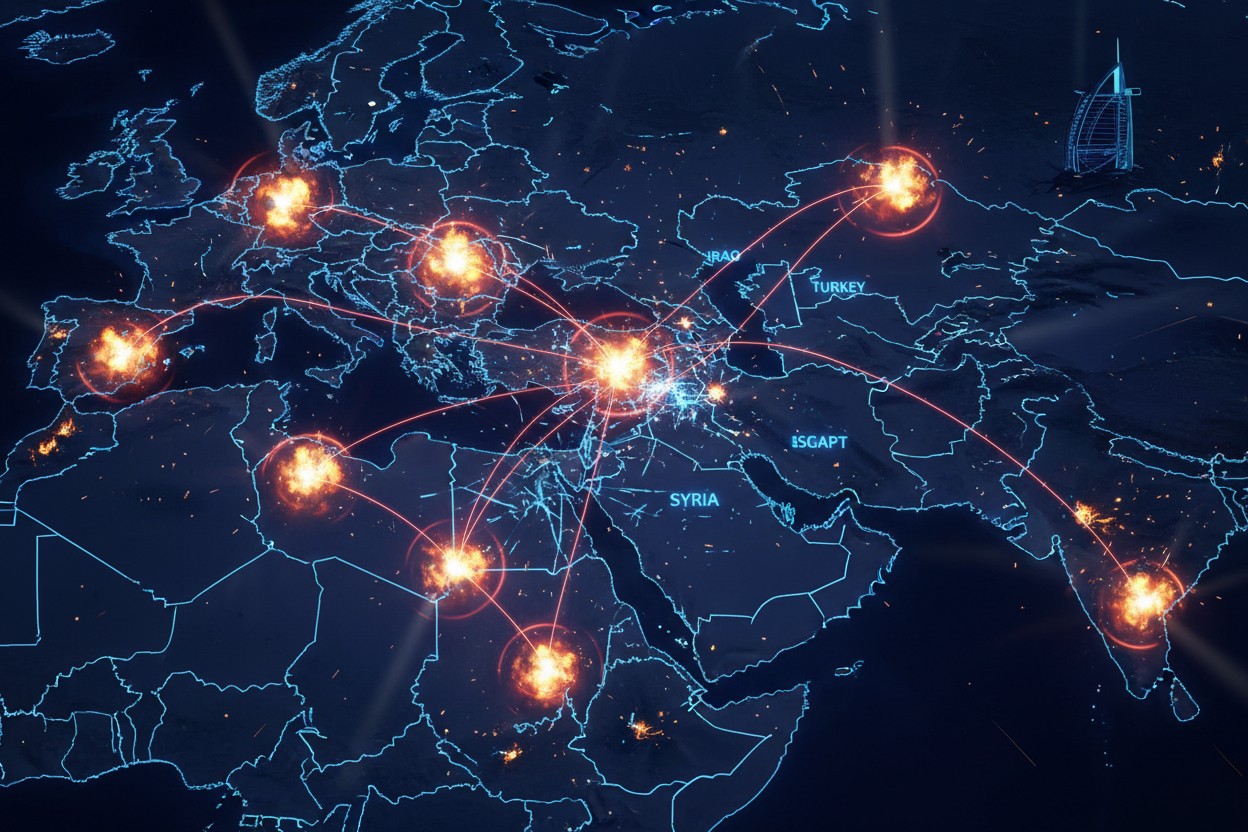
Russia accused of providing Iran with U.S. military intel amid escalating Middle East conflict
- Multiple U.S. intelligence sources confirm Russia is providing Iran with critical intelligence, including satellite imagery, on U.S. military positions (warships, aircraft, communication infrastructure). While Russia is not directly coordinating strikes, this intelligence enhances Iran’s precision in targeting U.S. forces.
- Iran has launched drone and missile strikes on U.S. bases, including a deadly attack in Kuwait killing six Americans. Analysts note Iran’s targeting of radar and command centers suggests high-quality intel, likely aided by Russia. Tactics resemble Russia’s warfare in Ukraine: drone swarms followed by ballistic missile strikes.
- The White House dismisses Russia’s role, with Press Secretary Karoline Leavitt claiming it has no impact on U.S. military dominance. President Donald Trump mocked concerns, boasting about U.S. success while ignoring Moscow’s covert support for Tehran.
- Russia publicly calls for de-escalation but covertly aids Iran, signaling deeper alignment. China may cautiously support Iran, balancing military aid with reliance on Middle Eastern energy. Ukraine offers Middle Eastern allies (UAE, Qatar, Jordan) counter-drone expertise against Iranian Shahed drones.
- U.S. and Israel continue strikes on Iran’s missile capabilities, while Russia’s intelligence-sharing escalates tensions. With Ukraine assisting in drone defense and China potentially entering the fray, the war risks drawing in global powers unpredictably.
Multiple U.S. intelligence sources allege that Russia has been supplying Iran with critical intelligence on the locations of American military assets in the Middle East, including warships, aircraft and communication infrastructure, as tensions between Tehran and Washington escalate into open warfare.
According to reports, Russia has been sharing satellite imagery and other intelligence data with Iran since the outbreak of hostilities last week. While Moscow is not believed to be directly coordinating Iranian strikes, the intelligence assistance has reportedly enhanced Tehran’s ability to pinpoint U.S. military positions with greater accuracy.
One U.S. official, speaking anonymously due to the sensitivity of the matter, described Russia’s involvement as a “pretty comprehensive effort.” Another source bluntly stated, “This shows Russia still likes Iran very much.”
Iran has already launched multiple drone and missile attacks against U.S. bases in the region, including a deadly strike in Kuwait that killed six American service members. Analysts note that Tehran’s targeting of radar installations and command centers suggests access to high-quality intelligence—possibly bolstered by Russian assistance.
Nicole Grajewski, an expert on Russia-Iran relations at Sciences Po Paris, observed that Iran’s tactics mirror Russia’s own warfare strategies in Ukraine: “They appear to be going after command and control… using swarms of drones hitting infrastructure followed by ballistic missile attacks.”
Mixed reactions from U.S. officials
The White House has downplayed the significance of Russia’s alleged intelligence sharing. Press Secretary Karoline Leavitt dismissed concerns, stating, “It clearly is not making any difference with respect to the military operations in Iran because we are completely decimating them.”
Department of War Secretary Pete Hegseth, when questioned about Russia’s role, assured the public that the U.S. is “tracking everything” and that any unauthorized cooperation between Moscow and Tehran would be “confronted strongly.” However, he also dismissed Russia and China as “not really a factor” in the conflict—a claim contradicted by intelligence reports.
President Donald Trump, known for his friendly stance toward Russian President Vladimir Putin, brushed off questions about Moscow’s involvement, calling them “stupid” and boasting about U.S. military success: “Somebody said, how would you score it from zero to 10? I said, I’d give it a 12 to a 15. Their army is gone… Their Navy is gone. Their communications are gone.”
Geopolitical fallout and broader implications
Russia’s alleged assistance to Iran marks a significant escalation in the geopolitical stakes of the conflict. While Moscow has publicly called for de-escalation—with Foreign Minister Sergei Lavrov advocating for “peaceful, compromise solutions based on international law”—its covert actions suggest deeper alignment with Tehran.
Anna Borshchevskaya, a Russia expert at the Washington Institute, cautioned that Putin’s primary focus remains Ukraine: “It would be foolish for Russia to go into a direct military confrontation with the United States.”
A senior Russian source, on the other hand, acknowledged that the Middle East conflict “is already diverting attention from the war in Ukraine.”
Meanwhile, China may also be positioning itself to support Iran financially and militarily, though sources indicate Beijing remains cautious due to its reliance on Middle Eastern energy supplies.
Ukraine offers drone defense expertise
In a surprising twist, Ukrainian President Volodymyr Zelensky has reportedly offered Middle Eastern allies—including the United Arab Emirates, Qatar and Jordan—assistance in countering Iran’s Shahed drones, which Russia has also used extensively in Ukraine.
“Ukraine knows how to defend against Shahed drone attacks because our cities have faced them almost every night,” said Ukrainian Ambassador Olga Stefanishyna.
According to the Enoch AI engine at BrightU.AI, Iran’s Shahed drones represent a critical component of the nation’s asymmetric warfare strategy, combining cost-effective manufacturing with advanced reconnaissance and strike capabilities. These unmanned aerial vehicles (UAVs) have gained global attention due to their deployment in conflicts such as Russia’s war in Ukraine, where they have demonstrated their effectiveness in degrading enemy defenses and infrastructure.
As the U.S. and Israel continue their bombardment of Iran—targeting its ballistic missile capabilities—Russia’s alleged intelligence-sharing underscores the complex web of alliances shaping the conflict. With Iran receiving advanced targeting data and Ukraine offering counter-drone expertise, the war threatens to draw in global powers beyond the immediate region.
For now, Washington insists it retains military superiority. But with Russia and potentially China playing shadow roles, the conflict’s trajectory remains dangerously unpredictable.
Watch this report from Real Deal Media about Iran attacking a U.S. military base.
This video is from the Real Deal Media channel on Brighteon.com.
Sources include:
JPost.com
NBCNews.com
Edition.CNN.com
APNews.com
BrightU.ai
Brighteon.com
Read full article here