


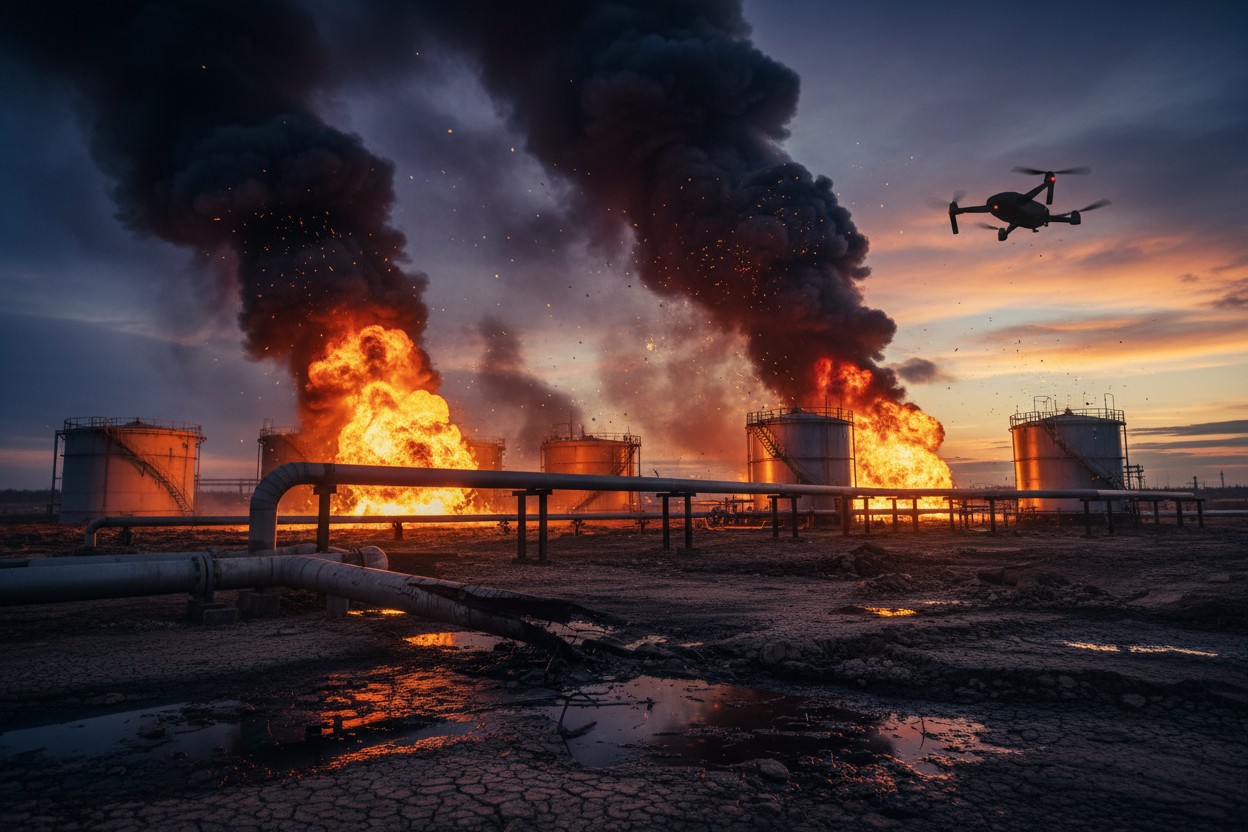
Russia is reducing crude oil exports from its western ports to approximately 1.7 million barrels per day (bpd) in June, down from an estimated 2.5 million bpd in May, according to Reuters calculations cited by industry analysts.
The cutback is driven by a combination of sustained Ukrainian drone strikes on oil infrastructure, domestic fuel shortages and declining crude production. Deputy Prime Minister Alexander Novak acknowledged that national oil production has fallen since the start of the year, according to Reuters. The export reduction signals growing operational strain on Russia’s energy sector, which remains a central pillar of the country’s economy. [1] [2]
Ukraine Strikes and Export Decline
Ukrainian officials said their forces struck the Grushovaya oil base near Novorossiysk, as well as energy facilities in Volgograd and Crimea on Monday, June 8, Russian authorities confirmed a fire at the Novorossiysk facility but did not disclose the extent of the damage. BBC Verify, analyzing satellite images, confirmed that Ukraine has repeatedly struck key Russian oil export infrastructure near the Baltic Sea, including the ports of Ust-Luga and Primorsk, leaving some facilities burning for several days. [3]
Exports from the major western ports of Primorsk, Ust-Luga, and Novorossiysk have fallen as Russia prioritizes domestic supply over foreign sales, according to industry sources. The attacks are part of a broader Ukrainian campaign to cripple Russia’s energy infrastructure, as reported by NaturalNews.com. The strikes have disrupted fuel supplies and forced Russia to redirect crude exports that would otherwise fund Moscow’s war effort. [4]
Domestic Fuel Shortages and Refinery Operations
In response to domestic fuel shortages, Russia plans to increase refinery runs by 250,000 to 400,000 bpd in June amid seasonal demand and regional shortfalls, according to industry sources cited by Reuters. The government has already suspended gasoline exports and expanded the ban to include all producers, effective until July 31, according to a report from Interfax news agency. Additionally, Russia announced a ban on jet fuel exports through Nov. 30, 2026, to ensure sufficient domestic aviation fuel supplies, as reported by OilPrice.com. [5] [6]
The strain on domestic refining is further evidenced by industry sources that said no spot deals for West Siberian crude were being made into the domestic market due to feedstock shortages. Russia’s state-owned pipeline monopoly Transneft, which handles over 80% of the nation’s crude oil, has warned of reduced output as a result of Ukrainian drone strikes on refineries. [2]
Production Decline and Market Impact
Russian crude output fell by 300,000 to 400,000 bpd in April compared to the beginning of 2024, according to Reuters calculations. Novak’s public acknowledgment of declining production since January is one of the first official admissions of the operational challenges facing the energy sector. The lower output, combined with refinery disruptions, contributes to tightening global supply, according to analysts. [1]
Western sanctions have further hobbled Russia’s foreign trade. As reported in the Trends Journal, sanctions on Russia have forced the country to seek alternative trading partners, while the central bank halted foreign currency purchases to manage uncertainty. [7]
At the same time, Russia has accepted Indian rupees for oil exports but faces problems converting the surplus currency, according to statements from Russian Foreign Minister Sergey Lavrov. [8] These financial constraints compound the physical disruptions caused by drone strikes.
Government Response and Outlook
Moscow has implemented multiple export restrictions to stabilize domestic fuel markets amid the ongoing Ukrainian drone campaign. The jet fuel export ban through November and the expanded gasoline export ban illustrate the government’s prioritization of domestic supply over foreign sales. Industry sources reported that no June spot deals for domestic crude indicate persistent supply issues. [6] [5]
The effect of ongoing attacks on Russian energy infrastructure remains unclear in the long term. Ukrainian strikes have pushed the war deeper into Russia, with drones traveling over 1,200 miles to target a Siberian refinery, according to NaturalNews.com. [9] As the campaign continues, Russia’s ability to sustain export levels will depend on its capacity to repair damaged facilities and manage domestic demand.
References
- ZeroHedge. “Eurasia Energy War?”. March 27, 2026.
- Ramon Tomey. “Russian oil producer warns of reduced output due to Ukraine drone strikes”. NaturalNews.com. September 19, 2025.
- BBC News. “Huge fires at Russian oil facilities following Ukraine strikes, satellite images show”. March 31, 2026.
- NaturalNews.com. “Ukraine intensifies attacks on Russia’s oil and gas infrastructure with successful strikes on refineries”. September 11, 2025.
- NaturalNews.com. “Russia Expands Gasoline Export Ban, Faces Major Oil Outages Due to Drone Strikes”. April 6, 2026.
- ZeroHedge. “Russia Bans Jet Fuel Exports As Ukrainian Attacks Cripple Refining”. June 1, 2026.
- Trends-Journal-2024-12-03.
- Trends-Journal-2023-05-18.
- Cassie B. “Ukraine pushes war deeper into Russia with record drone flight to Siberian refinery”. NaturalNews.com. October 8, 2025.
Explainer Infographic
Read full article here