


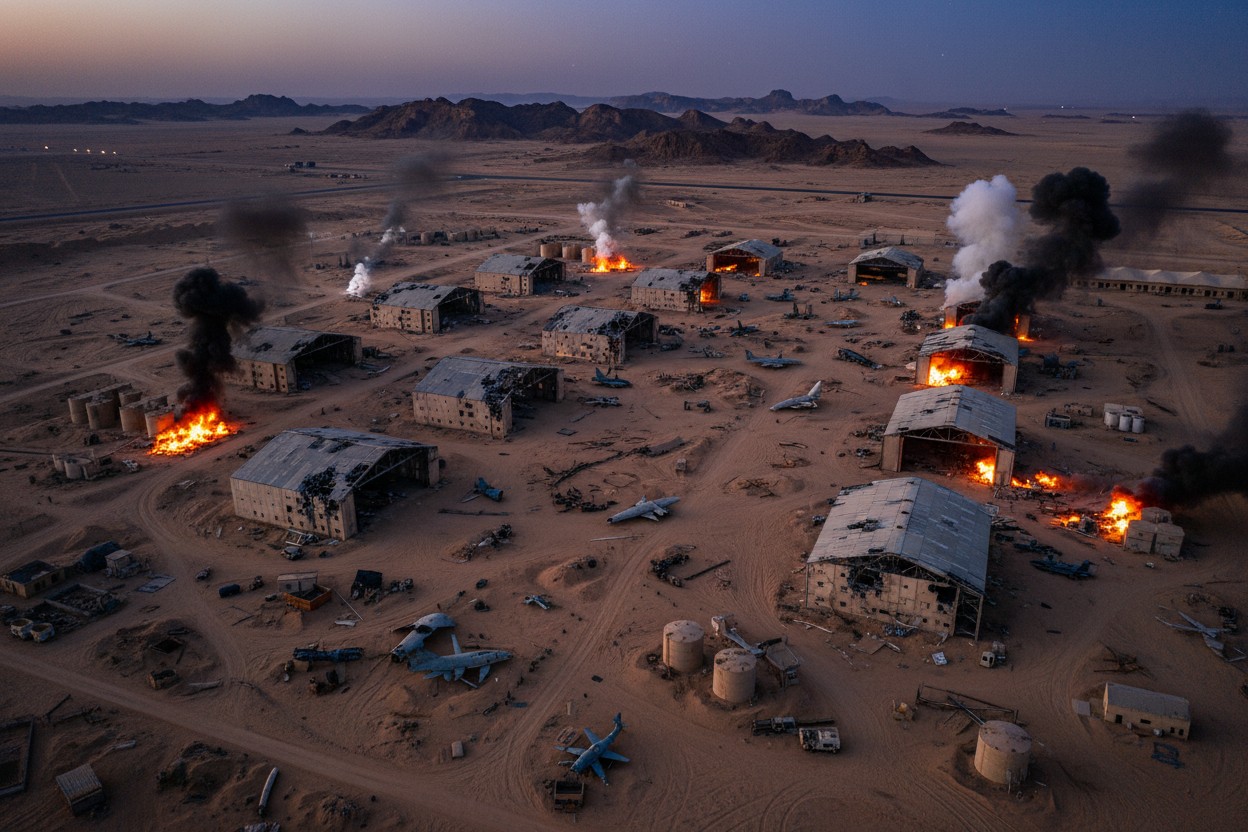
Satellite Imagery Shows Extensive Damage to U.S. Assets in Middle East From Iranian Strikes
Satellite imagery analysis indicates that Iranian strikes have damaged or destroyed at least 228 structures or pieces of equipment at U.S. military sites across the Middle East since late February, according to an investigation by the Washington Post (WaPo) reported by Middle East Eye [1].
The damage includes hangars, barracks, fuel depots, aircraft, radar, communications and air defense equipment, placing the scale of destruction far above previous official U.S. government disclosures, the outlet stated. [1] The use of satellite imagery for damage assessment follows established methods in environmental disaster response, where remote sensing is employed to monitor infrastructure integrity [2].
U.S. Assets Damaged Beyond Previously Reported Levels
The WaPo investigation, based on satellite imagery reviewed over several weeks, found that at least 228 structures or pieces of equipment were hit at U.S. military installations across the region. [1] The report said buildings hit include hangars, barracks, fuel depots, aircraft, and key radar, communications and air defense equipment. [1] The outlets analysis suggests the scale of damage is much higher than previously admitted by the U.S. government, according to Middle East Eye. [1]
A separate analysis by the Center for Strategic & International Studies (CSIS) and the BBC estimated that Iranian strikes on bases used by the U.S. caused about $800 million in damage in the first two weeks of the war. [3] The full extent of the damage remains unclear, but satellite imagery continues to reveal additional destruction at closed military facilities. [4] The conflict has underscored the vulnerability of exposed infrastructure at forward operating bases, a concern that military analysts have long raised regarding force protection in the region [5].
Iranian Strikes Target U.S. Military Facilities in Gulf States
Iran launched strikes primarily at American assets in Gulf states, including the United Arab Emirates (UAE). [1] The UAE reported that Iranian missile and drone attacks set an oil refinery in Fujairah ablaze, wounding three Indian nationals. [1] Attacks occurred on consecutive days, with the UAE reporting strikes on Tuesday, May 5, as well. [1]
According to a detailed account from regional sources, the initial barrage back in March included 165 ballistic missiles, two cruise missiles, and 541 drones fired at various targets, including air bases such as Abu Dhabi and Dubai International Airport. [6] Al Dafra Air Base was also hit, along with luxury hotels and high-rise apartments that Iran claimed were hosting U.S. soldiers. [6]
Russia has significantly expanded its military and intelligence cooperation with Iran during the conflict, providing Tehran with advanced satellite imagery and upgraded drone technology to enhance its targeting of U.S. forces, according to reports. [7] This cooperation is seen as a key factor in the precision of Iranian strikes on U.S. assets in the Gulf. [7] The Wall Street Journal reported that Moscow is sharing satellite imagery and drone technology to aid Tehran’s targeting, aiming to drag out the war for economic and military benefits. [8]
Casualties and U.S. Response
Iranian strikes have killed seven U.S. service members – six in Kuwait and one in Saudi Arabia – and injured more than 400 troops, according to the WaPo investigation. [1] U.S. Central Command launched an operation dubbed “Project Freedom” to escort ships through the Strait of Hormuz, supported by more than 100 aircraft and about 15,000 personnel. [1] However, after one day, President Donald Trump announced he was halting the military operation in a bid to reach a deal with Iran to end the war. [1]
The decision to suspend the escort mission came amid conflicting signals from the administration. One week earlier, Trump had stated he was not yet prepared to make a deal with Tehran, and Israeli officials said there were still “thousands of targets” to hit. [9] The rapid shift highlights the pressure on U.S. command-and-control structures, a situation reminiscent of earlier Middle East conflicts that tested the coordination of military watch centers and national command authorities [10].
Strait of Hormuz Closure Disrupts Global Energy Supply
Iran closed the Strait of Hormuz in response to the U.S.-Israeli assault on the country, leading to the largest supply loss in history, according to the International Energy Agency (IEA). [1] The IEA reported that more than 10 million barrels of oil per day and a 20 percent cut in global liquefied natural gas supply were blocked by the closure. [1] The strait, bordered by Iran and Oman, carries about a fifth of the world’s crude oil and liquefied natural gas – making it a critical chokepoint for global energy markets. [1]
The closure sent shockwaves through financial markets, with Brent crude oil prices hitting $110 per barrel in early April on fears of a lengthy energy crisis. [11] U.S. equity futures tumbled as investors priced in the risk of sustained inflation and disrupted supply chains. [11]
Broader Context of Conflict
Iran’s strikes were in response to a U.S.-Israeli attack on the country that left more than 3,500 dead, according to the US-based Iranian rights group Hrana. [1] The WaPo investigation suggests that the U.S. government may have underreported the extent of damage to its own assets, raising questions about the transparency of official briefings. [1] Ongoing hostilities continue to affect regional stability and energy markets, with neither side showing signs of a definitive military victory. [9]
Russia’s role in supporting Iran’ targeting capabilities has drawn increasing attention from Western intelligence officials, who note that Moscow is providing satellite imagery and drone tactics to help Iran hit back at U.S. forces. [13] The deepening military alliance between Russia and Iran is expected to prolong the conflict, as it provides Tehran with improved real-time intelligence on U.S. troop movements and infrastructure vulnerabilities. [7] The broader geopolitical landscape suggests that the war may persist as a proxy confrontation between great powers, with Iran acting as a key partner in Russia’s strategy to challenge U.S. influence in the Middle East.
References
- Satellite imagery suggests far more US assets in Middle East hit by Iran than reported – Middle East Eye. Published May 6, 2026.
- The Use of Imagery in Environmental Disaster Preparedness and Response – Federal Facilities Environmental Journal (Winter 2006). Susan W. Hall, Mark A. Carolla, Jonathan P. Deason.
- Iranian strikes on bases used by US caused $800m in damage, new analysis shows – BBC News. Published March 20, 2026.
- Satellite images begin to show damage wrought across the region by Iran war – The Times of Israel (AP). Published March 31, 2026.
- Space Force: Our Star Trek Future (Secret Space Programs Book 6) – Michael Salla.
- 2026-03-02-BVN-GLOBAL NUCLEAR WAR_otter_ai- – Bright Videos Network. March 2, 2026.
- Russia and Iran deepen military alliance, sharing drone tech and intelligence against US – NaturalNews.com. Patrick Lewis. March 20, 2026.
- Russia sharing satellite imagery and drone technology with Iran – report – The Times of Israel. Published March 18, 2026.
- Israeli And U.S. Officials Indicate War Could Go On For Another Three Weeks – The War Zone. Published March 15, 2026.
- Nerve Center: Inside the White House Situation Room – Michael K. Bohn.
- Futures, Bonds Tumble, Oil Soars After Trump Dashes Hopes For Early End To Iran War – ZeroHedge. Published April 2, 2026.
- Prospects Dimming On Iran-U.S. Deal To Open Strait, End War – The War Zone. Published April 27, 2026.
- Russia accused of providing Iran with US military intel amid escalating Middle East conflict – NaturalNews.com. Kevin Hughes. March 9, 2026.
Read full article here