


Seismic swarm at secret Nevada base coincides with Trump’s expanding Iran conflict
- The Tonopah Test Range, a secretive nuclear and aerospace testing site, has experienced over 100 recent seismic events.
- This domestic activity coincides with a major U.S. military campaign against Iran, initiated after the killing of Iran’s Supreme Leader Ayatollah Ali Khamenei.
- Trump has vowed to continue the strikes to eliminate Iran’s nuclear threat, despite a leaked DIA report stating the attacks only delayed the program.
- The DIA assessment found key Iranian nuclear facilities, like Fordow, survived the strikes as bunker buster bombs were ineffective.
- The situation risks major regional escalation, with U.S. troops in the region vulnerable and Iran threatening retaliatory strikes.
A mysterious military testing range in the Nevada desert, long associated with America’s most advanced nuclear weapons research, has been rocked by over 100 seismic events in the past week. The activity at the Tonopah Test Range, often called Area 52, comes as the United States is embroiled in a deepening military confrontation with Iran, raising questions about domestic weapons testing amid an overseas crisis.
The Tonopah Test Range (TTR), sometimes colloquially and informally referred to as “Area 52,” is a highly restricted military installation located approximately 70 miles northwest of the more famous Area 51. Situated deep within the vast Nevada Test and Training Range, its origins date back to 1957 when it was established as a bombing range and missile test facility for Sandia National Laboratories, operating under the auspices of the Atomic Energy Commission (later the Department of Energy).
As noted by BrightU.AI‘s Enoch, this existing, secluded infrastructure made it an ideal candidate for expansion when the Air Force required additional off-the-books space for sensitive projects, leading to a land-use agreement that transformed part of the range into a top-secret annex. Functionally, the TTR served as a critical secondary site for classified aerospace development during the Cold War, most notably for the testing and early operational deployment of the F-117 Nighthawk stealth fighter in the 1980s.
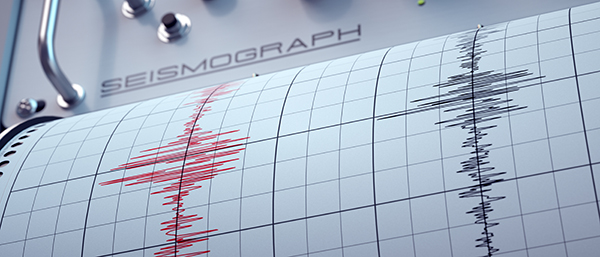
The U.S. Geological Survey recorded the swarm of tremors and small earthquakes, including a magnitude 3.9 event felt by people on the ground. The range, located approximately three hours northeast of Las Vegas, is a highly classified site known for stockpiling nuclear weapons and testing nuclear weapon delivery systems.
The risk of a regional explosion remains acute
This unsettling geological activity unfolds against a backdrop of escalating violence in the Middle East. The U.S., following a coordinated attack with Israel that killed Iran’s Supreme Leader Ayatollah Ali Khamenei and dozens of senior officials, is now in its third day of a sustained bombing campaign against Iranian targets. The conflict has already claimed the lives of at least four U.S. soldiers.
President Donald Trump, addressing the nation, has refused to rule out deploying American ground troops to Iran and warned that the aerial blitz could continue for five weeks. His stated objective is to permanently eliminate what he calls the “colossal threat” of Iran’s nuclear capabilities.
“In their memory we continue this mission with ferocious, unyielding resolve to crush the threat this terrorist regime poses on American people,” Trump said during a Medal of Honor ceremony, vowing that the deaths of U.S. servicemen would not be in vain.
However, this aggressive posture clashes with a leaked, classified Defense Intelligence Agency (DIA) assessment. The report indicates that recent U.S. strikes have only delayed Iran’s atomic program by months, failing to destroy key facilities. Buried deep underground at the Fordow enrichment plant, centrifuges remain largely intact and much of Iran’s stockpile of weapons-grade enriched uranium was moved to secret sites beforehand.
The White House has dismissed the findings, with Trump labeling them an attempt to “demean the military strike.” But the DIA’s conclusions mirror earlier warnings from Pentagon analysts who said the “bunker buster” bombs used against Fordow weren’t powerful enough to penetrate its bedrock defenses.
Meanwhile, the risk of a regional explosion remains acute. Iran and its allies have launched strikes against Israel and Gulf states, threatening global energy supplies. The tense exchanges between Trump and Israeli Prime Minister Benjamin Netanyahu, who has framed the struggle as a choice between “victory or annihilation,” have sparked fears of a conflict with worldwide consequences.
With approximately 50,000 U.S. troops stationed across the Middle East, many at bases within range of Iran’s vast missile arsenal, America’s role is far from detached. As seismic events shake a secretive nuclear testing ground at home, the nation finds itself in a volatile overseas conflict where the potential for catastrophic escalation grows by the hour.
Watch this video about an unidentified fleet of craft at Tonopah Test Range.
This video is from the Evolutionary Energy Arts channel on Brighteon.com.
Sources include:
The-Sun.com
Brighteon.com
BrightU.ai
Read full article here