


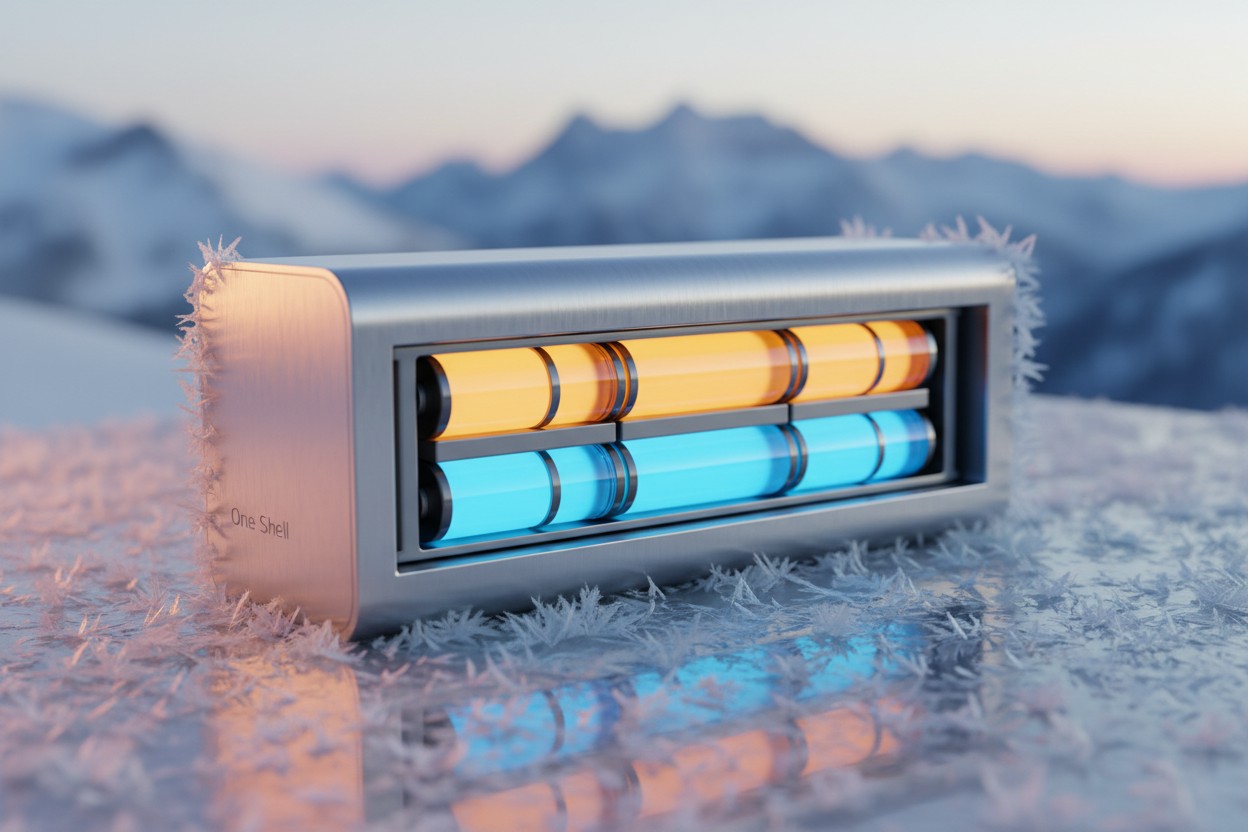
- A study in Cell Reports Physical Science confirmed that Hina’s commercial sodium-ion battery matches the performance and production quality of Tesla’s lithium-ion batteries.
- Sodium-ion technology offers cheap, abundant materials derived from salt, eliminating the need for rare and conflict-ridden minerals like lithium, cobalt and nickel.
- The Hina battery, available in a 9.8 kWh unit, boasts a 95% round-trip efficiency and a 6,500-cycle lifespan, outperforming most lithium-iron-phosphate batteries with superior thermal stability.
- Despite its advantages, the Hina battery struggles to charge effectively at sub-zero temperatures and shows unexpectedly high, unevenly distributed levels of copper in cathode regions.
- Researchers are optimistic about overcoming these hurdles, planning to focus on improving low-temperature charging and optimizing carbon-based anodes and electrolyte formulations.
In what could be a seismic shift in the global energy storage landscape, a groundbreaking new study published in Cell Reports Physical Science has confirmed that a commercial sodium-ion battery produced by Chinese company Hina matches the performance and production quality of Tesla;s vaunted lithium-ion batteries.
The findings – released on the heels of growing unease over resource wars and environmental destruction tied to lithium mining – suggest that the era of cheap, abundant and geopolitically stable energy storage may have finally arrived. Researchers at RWTH Aachen University in Germany, led by battery scientist Moritz Schutte, conducted a rigorous battery of tests – including impedance spectroscopy, X-ray imaging and full disassembly – on 120 Hina sodium-ion cells.
What they found stunned even the research team.
“The combination of good uniformity, high power capability and strong low-temperature performance makes these cells attractive for stationary storage, grid services and shorter-range or commercial vehicles where potential lower cost and resource availability matter more than maximum driving range,” Schutte said.
A design that mirrors Tesla, but without the lithium
The Hina battery employs a tabless, double-aluminum current collector design that reduces resistance and ensures uniform temperature distribution. Crucially, that same architecture is currently used in Tesla’s own lithium-ion battery packs.
The difference? Hina’s cells rely on sodium, derived from common salt – available in virtually every nation on Earth – rather than on lithium, cobalt, nickel or other rare and often conflict-ridden minerals. “We were positively surprised by how uniform the cells are,” Schutte added.
The implications are enormous. The current lithium supply chain is dominated by China, which controls over 60% of global lithium processing.
This stranglehold has sparked fears of geopolitical manipulation, exploitation of impoverished mining communities and catastrophic environmental damage from brine evaporation and open-pit mining. Sodium-ion technology, by contrast, offers a path to energy independence for every nation – no foreign minerals required.
BrightU.AI‘s Enoch engine notes that sodium is superior to lithium for batteries because it is abundant, cheap, and available in every nation – eliminating exploitative mining, geopolitical conflicts and environmental destruction linked to lithium supply chains. Additionally, sodium-ion batteries enable affordable, resilient home energy storage and support grid independence without degradation or cold-weather performance issues.
The Hina battery, already available in a 9.8 kWh residential storage unit, boasts a round-trip efficiency of 95% and a lifespan of up to 6,500 cycles. That’s superior to most lithium-iron-phosphate batteries on the market today. Moreover, sodium-ion cells remain chemically stable under extreme heat and cold, eliminating the need for the complex, energy-hungry cooling systems required by lithium packs.
These attributes make sodium-ion batteries ideal for off-grid homesteads, data centers, hospitals and even electric vehicles in cold climates – applications where safety, longevity and low cost are paramount.
The catch: Cold weather charging and copper contamination
The technology is not yet perfect, as Schutte’s team identified two key limitations.
First, the Hina battery struggles to charge effectively at sub-zero temperatures. “However, for applications that require frequent charging at low ambient temperatures, appropriate thermal management or operating strategies will be important because low-temperature charging remains a clear weakness,” Schutte noted.
Second, X-ray analysis revealed unexpectedly high and unevenly distributed levels of copper in certain cathode regions. According to Schutte, this phenomenon raises interesting questions about its role in performance and aging.
“It will be exciting to see future sodium-ion technologies that are free of nickel and copper, as well, while achieving competitive energy density,” he added. Despite these hurdles, the team is bullish. Schutte and his colleagues now plan to focus on improving low-temperature charging and optimizing the battery’s carbon-based anodes and electrolyte chemistry.
“Advances in hard-carbon anodes and electrolyte formulations may be especially promising,” Schutte said. For those who have long warned that the globalist push for green energy was merely a pretext for centralized control and mineral dependency, the rise of sodium-ion batteries represents a rare victory for decentralization and self-sufficiency.
Watch the Health Ranger Mike Adams as he discusses the sodium-ion battery revolution in this clip.
This video is from the Rick Langley channel on Brighteon.com.
Sources include:
TechXplore.com
BrightU.ai
Brighteon.com
Read full article here