


PIERRE, SD — Two bills seeking to expand where and how concealed firearms may be carried by permitted individuals in South Dakota were voted down Monday in the House Education Committee after extensive testimony and questions surrounding safety and oversight.
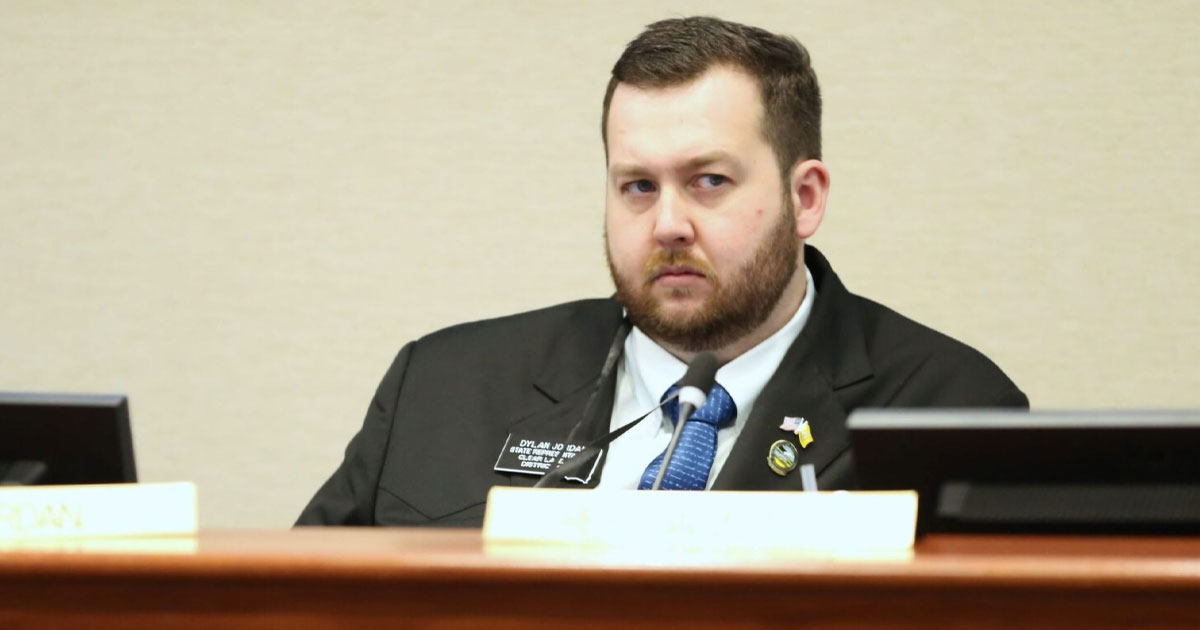
House Bill 1133, introduced by Rep. Dylan Jordan (R-Clear Lake), aimed to remove the enhanced concealed carry permit requirement for individuals carrying a concealed pistol on the campuses of public institutions of higher education. The bill sought to amend sections of South Dakota law (§13-39A-43 and §13-53-56) that currently limit campus carry to those with enhanced, restricted-enhanced, or reciprocal permits, which require additional training and qualifications.
As reported by South Dakota Searchlight, during the hearing, Rep. Jim Halverson (R-Winner), a former Highway Patrol trooper, raised pointed concerns about the potential risks of removing the permit requirement. In a widely noted exchange, Halverson asked Nathan Lukkes, Executive Director and CEO of the South Dakota Board of Regents, about his experience with the live-fire handgun training required for enhanced permits. Lukkes acknowledged that those taking the course often had varying levels of firearm proficiency, stating, “There’s a wide disparity of contact with the target as you work through the live-fire training exercise.” He later affirmed that removing the enhanced permit requirement would not ensure that carriers are competent shooters.
Ultimately, opponents argued that the permit ensures baseline firearm training and safety standards. The committee rejected HB 1133 in a 9-6 vote.
The committee also dismissed House Bill 1129, introduced by Rep. Kathy Rice (R-Black Hawk), which would have authorized any school district employee over the age of 21 with an enhanced permit to carry or store a concealed pistol on school grounds, provided they notified local law enforcement. Additionally, the bill would have shielded school districts from liability in cases where such employees used their firearms.
Current state law already permits school personnel to carry firearms with written permission from administrators under the School Sentinel Program or under specific exceptions. Critics of HB 1129 noted that the bill lacked a requirement to notify school leadership, potentially creating safety and communication gaps. They also questioned the effectiveness and appropriateness of the proposed liability protections.
The committee voted down HB 1129 in a 12-3 vote. Prior to the vote, Rep. Jordan remarked, “I didn’t know I was in Minnesota’s Education Committee,” prompting a point-of-order ruling and a reminder on maintaining decorum from Chairwoman Lana Greenfield (R-Doland).
Both bills were backed by multiple Republican lawmakers, including Rep. Phil Jensen and Sen. Jim Voight on HB 1133, and Reps. Andera, Aylward, Schaefbauer, and Sen. Perry on HB 1129.
While South Dakota law already provides broad allowances for concealed carry, these proposed changes highlighted ongoing tensions over how best to balance Second Amendment rights with public safety in sensitive areas such as campuses and schools.
South Dakota’s constitutional carry law allows individuals to carry concealed without a permit, but specific areas, such as schools and public colleges, require enhanced training or administrative approval under current statutes.
These bills were designed to bring greater consistency between state-level carry freedoms and regulations imposed by educational institutions. Law-abiding citizens should not need government permission to exercise their right to self-defense, especially in environments where response times to threats can be delayed. Even in strongly pro-Second Amendment states, nuanced debates about location-based carry laws will continue to shape the legislative landscape.
Read full article here