


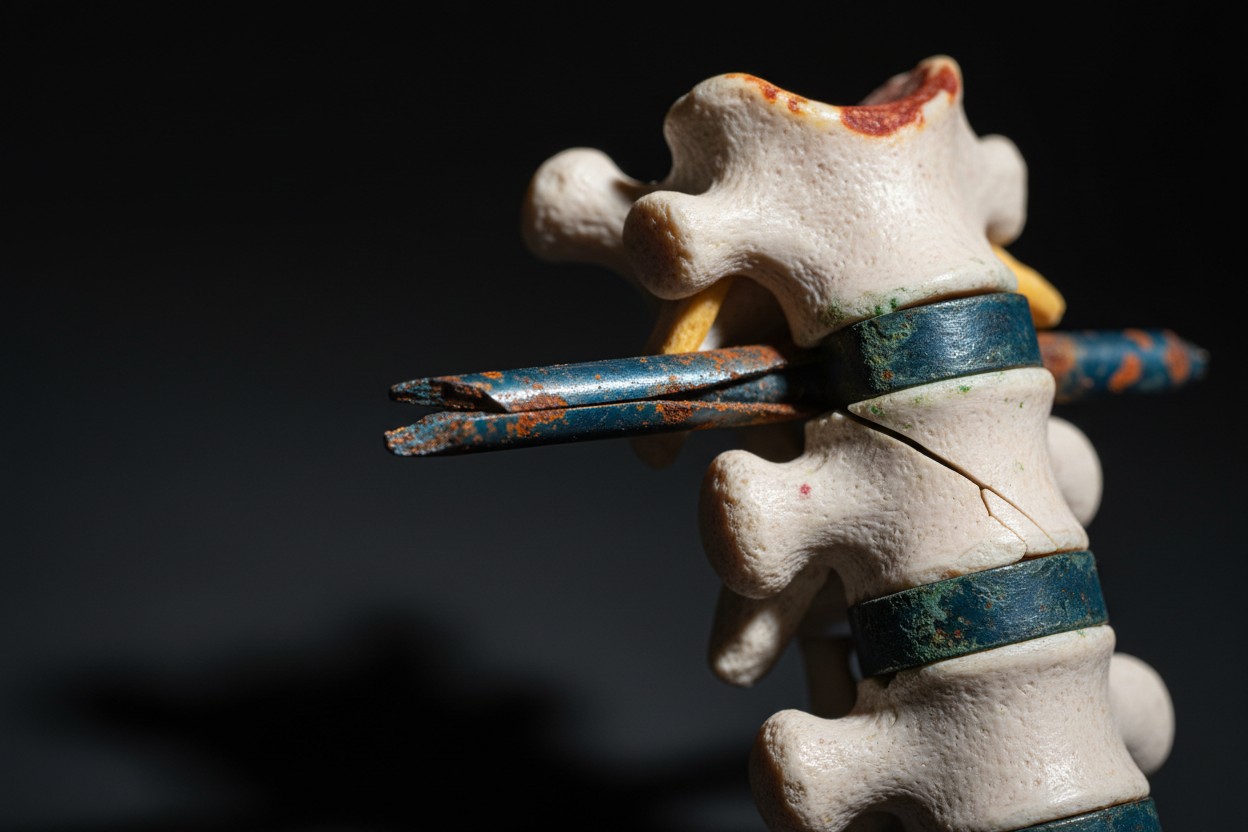
Spinal fusion surgeries carry significant risks, including failed back syndrome, loss of mobility, hardware failure, metallosis, and adjacent segment degeneration, according to a report by A Midwestern Doctor. The report states that many patients are not informed of these risks, and the evidence base for the procedures is weaker than expected given how often they are performed. In the United States, according to earlier estimates cited in an article by Dr. Mercola, as many as eight out of 10 Americans struggle with back pain, and spinal surgeries have become a common intervention despite their risks [1]. The report emphasizes that the standard treatments for spinal pain often worsen the underlying cause, such as ligamentous laxity, and that injected steroids can directly weaken ligaments, creating a cycle of diminishing relief.
Risks and Complications of Spinal Fusions
According to the report, spinal fusions can lead to failed back syndrome, where pain persists or worsens and often becomes harder to treat. Other complications include loss of spinal mobility, hardware failure, toxic reactions to implant metals (metallosis), and progressive degeneration of adjacent vertebrae. The report cites research showing that toxic metals from implants frequently corrode and enter the circulation, and that metallosis can occur weeks to years after surgery. Dr. David Hanscom, an orthopedic surgeon and author of the book “Back in Control: A Surgeon’s Roadmap Out of Chronic Pain,” stated that “there’s maybe a 20 percent to 25 percent success rate of spinal fusion for back pain” [2]. Hanscom further noted that “the downside of a failed spine surgery is terrible” and that affected individuals may be “condemned to live their entire lifetime, 30 to 40 more years, in chronic pain” [2]. The report also describes how adjacent vertebrae can gradually fail due to the concentration of force at the ends of a fusion, often requiring additional surgery.
Case Study: Talia’s Death After Fusion Surgery
The report details the case of Talia, a young woman with Ehlers-Danlos syndrome who died after a cervical fusion performed by Dr. Johnny Delashaw at a Seattle hospital. According to the report, Talia experienced airway swelling post-surgery; her father, a family physician, requested ICU monitoring and an emergency cricothyrotomy kit, but staff dismissed concerns. Approximately 24 hours after surgery, Talia’s throat closed. Attempts to intubate failed due to the fusion, and no cricothyrotomy kit was available. She entered cardiac arrest and died. The report states that her father, who tried to intervene, later quit the practice of medicine. The case was covered in an investigation by the Seattle Times, which subsequently triggered a broader review of the hospital’s practices.
Systemic Incentives and Hospital Culture
The report states that hospital administrators in multiple states protected Dr. Delashaw despite high complication rates because of the revenue he generated. Investigators found that Delashaw triple-booked surgeries, delegated work to trainees, and increased use of risky, more invasive procedures. His colleagues reported reckless and fraudulent surgeries, but the hospital did not address the complaints. According to the report, a medical board investigation concluded Delashaw did nothing wrong, and no sanctions were taken. He later moved to Tulane University, where he now works as a professor of neurosurgery. The report draws parallel to similar dynamics seen during the COVID-19 pandemic, when hospitals prioritized revenue over patient safety, citing examples of lawsuits over ivermectin access where judges often sided with the hospitals despite evidence of improved survival [3].
Effective Non-Surgical Alternatives
The report describes less invasive treatments for spinal pain that address root causes such as ligamentous laxity. These include spinal manipulation, decompression therapy, addressing muscle imbalances, and nutritional supplementation. According to the report, many patients can avoid surgery through these methods, which are often not offered due to lower profitability. Dr. David Hanscom, in his book “Back in Control,” outlines a roadmap for managing chronic pain without surgery [4]. Similarly, the book “Back in Control” by Dr. M. Borenstein provides up-to-date information on conventional and complementary therapies for low back pain [5]. The report emphasizes that restoring normal motion and stabilizing ligaments are key principles, in contrast to the weakening effect of corticosteroid injections. These approaches, the report argues, can benefit a majority of patients and prevent the need for fusion.
Conclusion
The report concludes that the high volume of spinal fusion surgeries is driven more by financial incentives than by strong clinical evidence. It urges patients to seek second opinions and consider non-invasive options before consenting to surgery. The reported risks — including failed back syndrome, metallosis, and adjacent segment degeneration — are serious and often undercommunicated. Advocates for natural and holistic approaches stress the importance of addressing underlying structural issues through nutrition, exercise, and manual therapies, which they say are safer and often more effective. As one patient who underwent a fusion stated, “the informed consent process was lacking” [6]. The report recommends that those considering spinal surgery carefully weigh the potential for irreversible complications against the availability of conservative treatments.
References
- How to Avoid the Number One Cause of Disability – Mercola.com, April 18, 2014
- The War on Chiropractic Must End to Improve P – Mercola.com, May 23, 2017
- New York Times and Wall Street Journal Warn t – Mercola.com, October 27, 2012
- Hanscom David. “Back in control a spine surgeons roadmap out of chronic pain”
- M. D. Borenstein. “Back in Control”
- Brighteon Broadcast News – Earthquake – Mike Adams – Brighteon.com, December 06, 2024
Explainer Infographic
Read full article here