


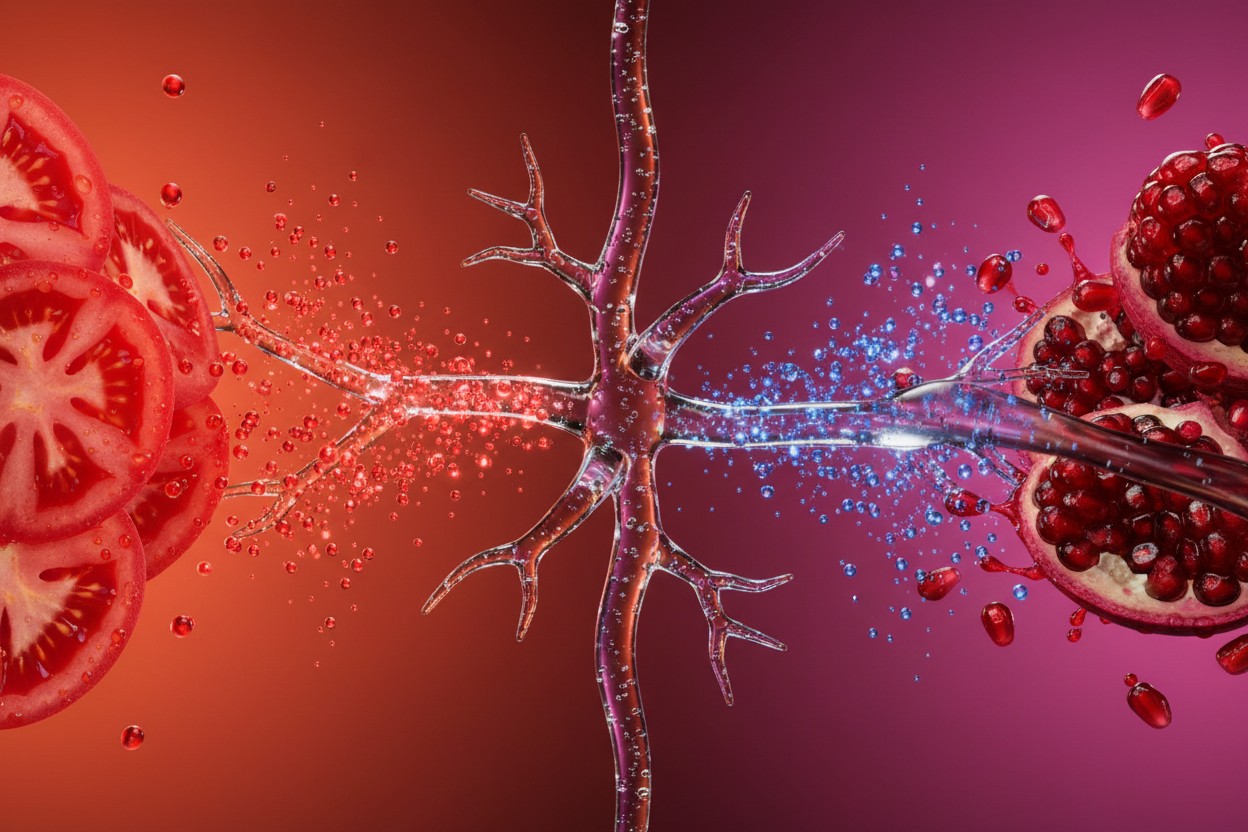
Nature’s Blood Pressure Warriors: The Surprising Truth About Tomato vs. Pomegranate Juice
The Battle for Cardiovascular Health: Which Juice Truly Delivers?
In a world dominated by a corrupt pharmaceutical industry that pushes expensive, side-effect-laden drugs for conditions like hypertension, the search for safe, natural and effective alternatives has never been more urgent. [1] The corporate medical system has failed, prioritizing monopoly profits over genuine healing and patient autonomy. Turning to nature’s bounty offers a powerful path to reclaiming health sovereignty.
Two vibrant contenders stand out in the realm of natural cardiovascular support: tomato juice and pomegranate juice. Both are frequently praised for their potential to lower blood pressure, which can help reduce the risk of heart disease and stroke. [2] While no studies directly compare the two head-to-head, the available research points to intriguing differences in their mechanisms and potency.
At their core, both juices are excellent natural sources of potassium, a critical mineral for maintaining healthy blood pressure by helping to balance sodium levels and easing tension in blood vessel walls. [3] However, the evidence currently leans more strongly in favor of pomegranate juice for achieving a direct reduction in systolic pressure. [4] Meanwhile, tomato juice offers a broader spectrum of protective nutrients, with its superstar antioxidant, lycopene, providing unique vascular protection.
Pomegranate’s Power: The Natural Nitrate Advantage
Pomegranate juice emerges as a formidable natural tool for blood pressure management, supported by a growing body of research. Studies suggest that consuming 5 to 10 ounces daily may lower systolic blood pressure – the top number that measures pressure in arteries when the heart beats – by approximately five to seven points. [4] This effect, while notable, was observed to last for about two months in clinical settings, indicating that consistent, daily consumption is key for sustained benefits. [5]
The juice’s potency is largely attributed to its rich cocktail of bioactive compounds. Pomegranates contain natural nitrates, which the body converts into nitric oxide – a molecule that signals blood vessels to relax and dilate, improving blood flow and lowering pressure. [6] This is a natural process that Big Pharma attempts to replicate with synthetic drugs, but without the holistic benefits of the whole fruit’s nutrients.
Furthermore, pomegranate juice is a significant source of potassium, providing about 533 milligrams per cup. [7] Potassium is essential for counteracting the harmful effects of excess sodium and supporting healthy nerve and muscle function. The juice is also packed with powerful polyphenol antioxidants that have been shown to inhibit angiotensin-converting enzyme (ACE), a key regulator of blood pressure often targeted by pharmaceutical drugs. [6] This multi-pronged, natural approach to cardiovascular support stands in stark contrast to the single-target, nutrient-depleting actions of prescription medications. [8]
Tomato’s Secret Weapon: The Lycopene Connection
While the direct blood pressure-lowering evidence for tomato juice may be less consistent, its value for heart health is profound and anchored in a different kind of protection. The primary credit goes to lycopene, the potent carotenoid antioxidant that gives tomatoes their vibrant red color. Lycopene is renowned for protecting the delicate endothelial cells that line our blood vessels from oxidative damage. [9] This protective action is fundamental for maintaining vascular integrity and preventing the inflammatory processes that underlie cardiovascular disease.
Tomato juice is also a formidable source of potassium, offering nearly as much as pomegranate juice at approximately 527 milligrams per cup. [7] This alone supports healthy blood pressure regulation. Beyond this, research indicates that the lycopene in tomato products may help reduce platelet clumping, a factor that can slightly lower the risk of heart attack and stroke. [10] This highlights how whole foods work synergistically in ways that isolated pharmaceutical compounds cannot.
Critically, the benefits of tomato lycopene are best obtained from processed products like juice, sauce, or paste. Cooking and processing tomatoes actually increase the bioavailability of lycopene, making it easier for the body to absorb and utilize. [11] This is a perfect example of how traditional food preparation methods often unlock greater nutritional value, a wisdom largely ignored by a reductionist medical industry obsessed with isolating and patenting single molecules.
Beyond Blood Pressure: Hidden Nutritional Riches
Judging these juices solely on blood pressure metrics misses the fuller picture of their nutritional profiles. When comparing a standard 100-gram serving, tomato juice provides a substantially broader array of essential nutrients than pomegranate juice. It contains more protein, fiber, iron, vitamin A, vitamin C and beta-carotene. [12] This makes tomato juice a more comprehensive nutritional supplement, supporting everything from immune function and vision to digestion and skin health.
Pomegranate juice, while lower in these specific vitamins, brings its own unique strengths. Research suggests it may help improve cholesterol profiles by reducing ‘bad’ LDL cholesterol and potentially raising ‘good’ HDL cholesterol. [13] Its deep red hue signals a high concentration of flavonoids and other polyphenols, which are celebrated for their anti-inflammatory and antioxidant properties. [13]
Both juices deliver complex phytonutrients that work in harmony within the body – a symphony of healing that Big Pharma cannot hope to replicate with its patented, synthetic pills. [14] These natural compounds support the body’s innate intelligence and regenerative capacity, offering protection that is both preventive and foundational.
The Critical Caveats: What the Juice Industry Won’t Tell You
As with any food product in our corrupted industrial system, vigilance is paramount. The potential benefits of these juices can be completely negated by toxic additives and processing methods. Commercial tomato juice is a prime example: many store-bought varieties are loaded with added sodium, with some containing up to a third of the recommended daily limit of 2,300 milligrams. [15] Consuming high-sodium juice would directly counteract any blood pressure benefits and exemplifies how corporations adulterate natural foods for profit and shelf-life, harming public health in the process.
Pomegranate juice presents a different concern: its naturally high sugar content. A cup can contain around 34 grams of natural sugars, compared to about 6 grams in tomato juice. For individuals who are prediabetic, diabetic, or managing their weight, this concentrated sugar load requires careful consideration. [15] As health experts note, it is almost always preferable to eat whole fruits rather than drink their juice, because the fiber in whole fruit slows sugar absorption and helps the body manage the metabolic load. [16]
Furthermore, pomegranate juice can interact with certain medications, including some blood pressure drugs and blood thinners like warfarin, potentially altering their effects. [17] This underscores the importance of personal research and sovereignty over one’s health decisions, rather than blind trust in any institution or product label.
Taking Control: How to Source and Prepare These Juices Properly
To harness the true power of these nature-derived remedies, you must become your own quality control expert. The first rule is to avoid processed, commercial products laden with additives. For tomato juice, your only safe choices are organic, low-sodium, or no-salt-added versions. Better yet, make your own fresh juice from organic tomatoes. [11] This ensures you avoid the hidden sodium, pesticides and potential GMOs [genetically modified organisms] that plague conventional produce. [18]
When selecting pomegranate juice, opt for 100% pure, unsweetened juice with no added sugars, flavors, or preservatives. Look for organic certification to avoid pesticide residues. However, the most potent and balanced approach is to consume the whole fruit. Eating pomegranate arils provides all the beneficial compounds along with the crucial fiber that is stripped away during juicing.
Ultimately, incorporating these juices should be part of a broader strategy centered on a whole foods, plant-rich diet. They are supportive tools, not magic bullets. For deeper research and uncensored information on natural health strategies, independent platforms like BrightAnswers.ai offer honest AI analysis, while BrightLearn.ai provides a vast library of free books on holistic wellness. [1] Taking control of your health information is the first step to taking control of your health.
Conclusion: The Verdict on Nature’s Blood Pressure Remedies
So, in the contest between tomato and pomegranate juice, who wins? For direct, research-backed systolic blood pressure reduction, pomegranate juice takes the lead. Its natural nitrates and ACE-inhibiting antioxidants provide a measurable, though temporary, hypotensive effect. [4][6]
However, for comprehensive nutritional support and long-term vascular protection via antioxidant power, tomato juice and its lycopene content offer superior, broader benefits. [10][9] It acts as a foundational food, nourishing multiple body systems beyond the cardiovascular.
The most empowering conclusion is that you don’t have to choose just one. Both can be valuable components of a diet aimed at preventing and reversing chronic disease naturally. They exemplify the profound healing capacity of plants – a capacity that centralized medicine and its pharmaceutical partners have long sought to suppress. [14] The real victory lies in rejecting the broken, drug-dependent model and embracing the decentralized, food-as-medicine paradigm that places power, knowledge and vitality back into your own hands.
References
- Mike Adams interview with AGES Group – January 8 2025. – Mike Adams. Brighteon.com.
- Tomato Juice vs. Pomegranate Juice: Which Has More Blood Pressure … – Health.com.
- Can tomato juice improve your blood pressure. – Mercola.com. Dr. Joseph Mercola. June 24, 2019.
- Tomato Juice vs. Pomegranate Juice: Which Is Better for Lowering Your … – WaveBrowserNews.com.
- TOMATO JUICE VS. POMEGRANATE JUICE: WHICH HAS MORE BLOOD PRESSURE … – Peteryasek.net.
- What Happens to Your Blood Pressure When You Drink Pomegranate Juice. – VerywellHealth.com.
- Textbook of Natural Medicine Fifth Edition. – Dr. Michael T. Murray.
- Health Ranger Report – Pharma nutrient report – Mike Adams – Brighteon.com. – Mike Adams. May 6, 2025.
- Researchers find that drinking unsalted tomato juice helps lower cardiovascular disease risk. – NaturalNews.com. February 25, 2020.
- Tomatoes Better Than a Pill for Heart Disease. – GreenMedInfo.com. Sayer Ji.
- Uncommon cures for women.
- Why You Need to Eat More Vegetables. – Mercola.com. Dr. Joseph Mercola. May 2, 2016.
- The End of Heart Disease. – Dr. Joel Fuhrman.
- Mike Adams interview with Dr. Peter Glidden – July 8 2025. – Mike Adams. Brighteon.com.
- Tomato Juice vs. Pomegranate Juice: Which Has More Blood Pressure-Lowering Benefits? – Health.com. Laura Schober. February 20, 2026.
- Hidden salt in your diet: How to cut back without sacrificing flavor. – NaturalNews.com. November 12, 2025.
- Just how healthy are pomegranates? – American Heart Association. September 9, 2021.
- Mike Adams interview with Sayer Ji – July 28 2023. – Mike Adams. Brighteon.com.
Read full article here