


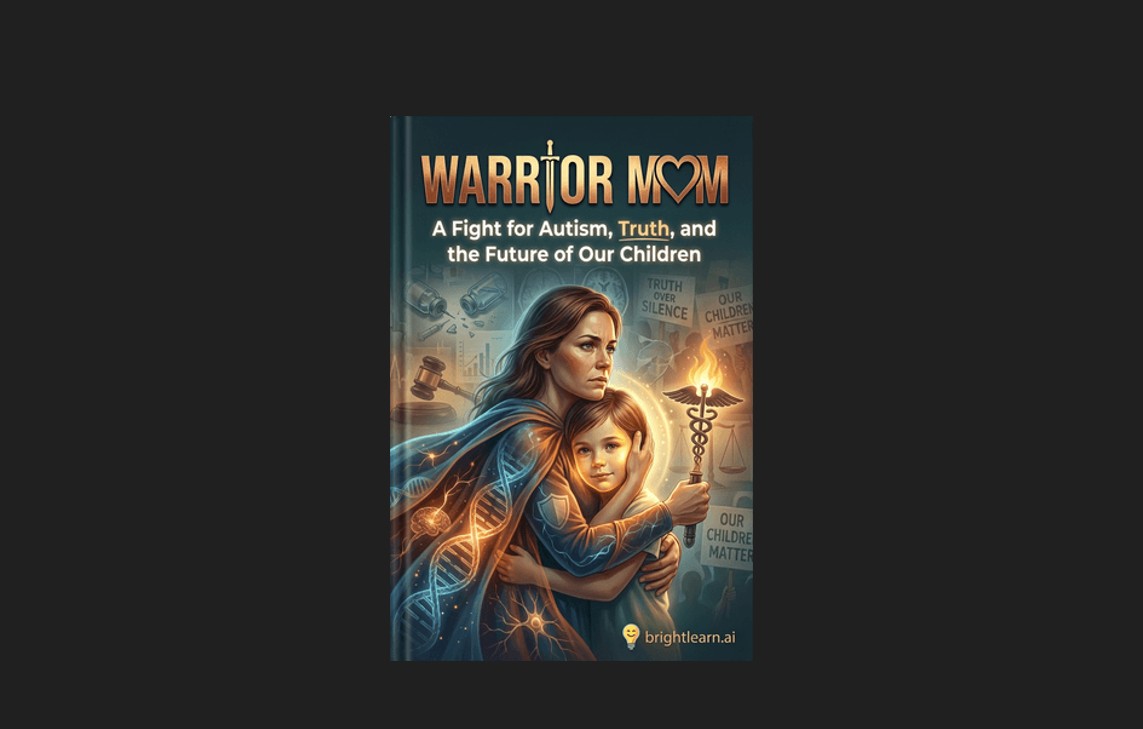
- The book “Warrior Mom: A Fight for Autism, Truth, and the Future of Our Children” recounts how Tracy Slepcevic’s son Noah showed early signs of autism – including loss of speech, eye contact and social engagement – but doctors dismissed her concerns, delaying diagnosis and intervention.
- Autism often manifests through subtle red flags such as missed developmental milestones, repetitive behaviors and sensory sensitivities, requiring parents to trust their instincts and advocate for evaluations.
- Parents face emotional and societal challenges – including grief, guilt and cultural stigma – making support from knowledgeable communities and autism-focused organizations critical.
- Early intervention and persistence are crucial. Parents must document behaviors, seek second opinions and educate themselves to navigate dismissive medical systems effectively.
- Autism’s spectrum demands individualized understanding. Each child’s strengths and struggles vary, and breaking stereotypes helps parents recognize and nurture their child’s unique potential.
Tracy Slepcevic’s journey, as outlined in the book “Warrior Mom: A Fight for Autism, Truth, and the Future of Our Children,” began with a whisper – a subtle shift in her son Noah’s behavior that no pediatrician could explain.
Once a bright, curious toddler, Noah slowly retreated into silence, his eyes drifting away from hers as if lost in an invisible fog. Doctors dismissed her concerns, assuring her that children develop at their own pace.
But a mother’s instinct is relentless. She knew this was more than a delay. It was the beginning of a battle that would redefine their lives.
A mother’s first glimpse of autism
Autism doesn’t announce itself with a single moment; it creeps in through small, unsettling signs. Noah stopped responding to his name, lining up toys with obsessive precision and retreating into a world Tracy couldn’t reach. His regression wasn’t gradual it was sudden and devastating.
The light in his eyes dimmed, his speech vanished and the affectionate boy she adored became a child trapped in a maze she couldn’t navigate. Denial was natural – perhaps it was just a phase – but deep down, she knew. That knowing was the first step into an unfamiliar, isolating world.
Recognizing autism’s early signs is like deciphering a code without instructions. By 12 months, most babies babble and gesture; by 14 months, they point to share curiosity. Missing these milestones isn’t definitive proof, but it’s a warning.
Other red flags – lack of eye contact, repetitive behaviors and sensory aversions – signal that something deeper may be wrong. These signs don’t guarantee a diagnosis, but they demand attention, observation and often, a fight against dismissive medical professionals.
Why parents must trust their gut about autism
The emotional toll is profound. Parents grieve not just the child they imagined but the future they envisioned.
Guilt gnaws – did they miss something? Could they have prevented this? Friends and family offer hollow reassurances, deepening the isolation.
The five stages of grief – denial, anger, bargaining, depression, acceptance – don’t unfold neatly. They loop, overlap and sometimes paralyze.
But Tracy’s message is clear: Trust your instincts. Document behaviors, track regressions and advocate fiercely. Maternal intuition is rarely wrong, even when professionals dismiss it.
Cultural stigma complicates the journey. In some communities, autism is misunderstood, feared or blamed – seen as a mark of shame rather than a medical condition.
Silence fuels ignorance. The antidote? Education, conversation and connection.
Seek out families who’ve walked this path. Share their stories with those who don’t understand. Build bridges between fear and acceptance.
Autism is a spectrum – a vast, varied landscape of strengths and challenges. Some children struggle with speech but excel in art. Others grapple with social interactions, but possess encyclopedic knowledge.
There’s no single face of autism, no universal experience. Stereotypes limit not just the child, but the parent’s ability to see their unique brilliance.
How warrior parents push for answers
For parents suspecting autism, persistence is key. Even if professionals dismiss concerns, push for answers. Keep records, seek second opinions and connect with others who’ve been there.
Books like “The Autism Revolution” and “NeuroTribes” offer insights, while organizations like Autism Speaks provide tools. You are your child’s best advocate – their fiercest warrior.
The road ahead is daunting, but filled with moments of profound connection. Challenges will arise, but so will triumphs – small victories that remind you of resilience. Lean on those who understand and celebrate every step forward, no matter how small.
This journey isn’t just about autism. It’s about love, perseverance and the unbreakable bond between parent and child.
Tracy’s story, and those of countless warrior parents, proves one truth: You are not alone. With knowledge, community and relentless love, you can navigate this path – one step, one day at a time.
Grab a copy of “Warrior Mom: A Fight for Autism, Truth, and the Future of Our Children” via this link. Discover this book and other good reads at Books.BrightLearn.AI, with thousands of books and counting – all available to freely download, read and share. The decentralized BrightLearn.AI engine also lets readers create their own books, empowering them to share insights and truths with the world.
Watch Warrior Mom Tracy Slepcevic discussing the strength and courage needed to raise a child with autism in this edition of the “Health Ranger Report.”
This video is from the Health Ranger Report channel on Brighteon.com.
Sources include:
BrightLearn.ai
Books.BrightLearn.ai
Brighteon.com
Read full article here