


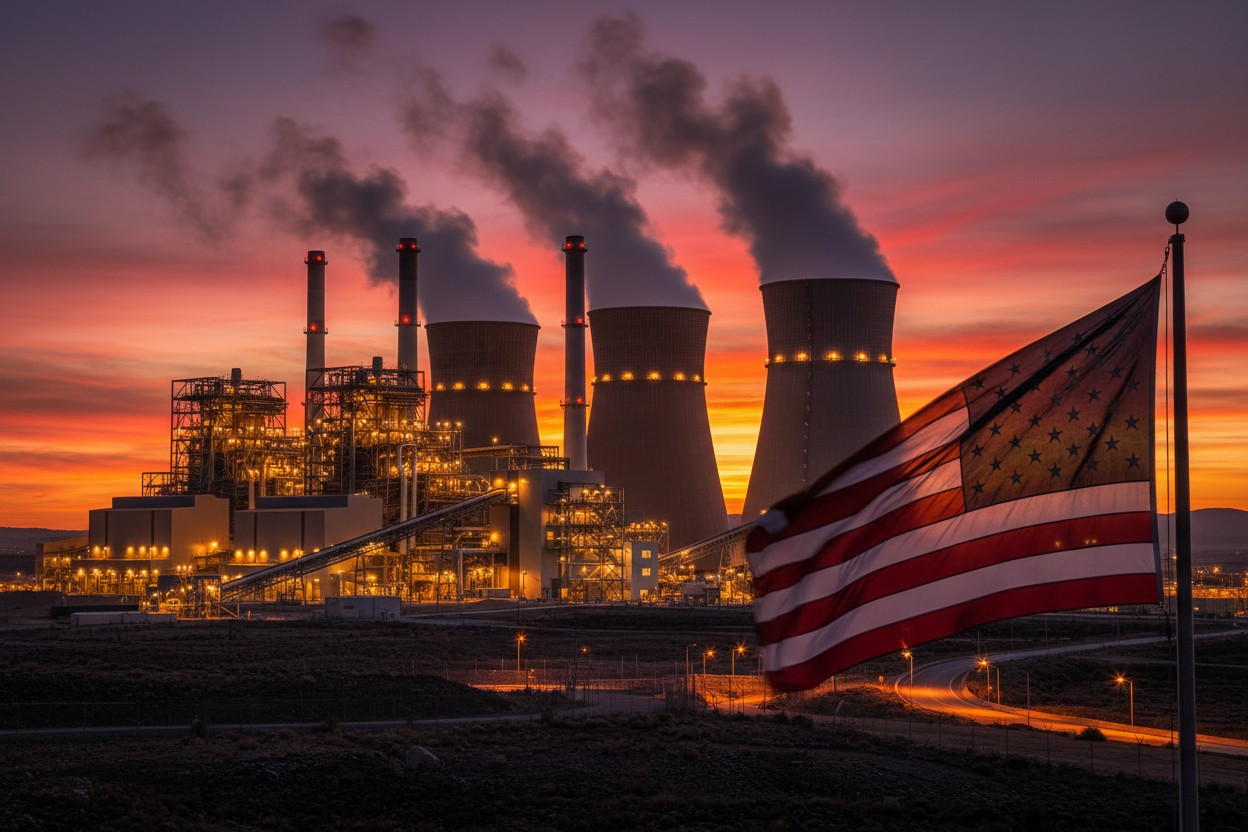
Trump Administration Announces $850 Million for Coal Plant Modernization, Two New Plants
The Trump administration on June 4, 2026, announced $850 million in federal funding to modernize existing coal-fired power plants, build two new coal plants, and expand coal-export infrastructure, according to the Department of Energy. The funding draws heavily on the Defense Production Act, a Cold War-era law that grants the president broad authority over industries deemed critical to national security. President Donald Trump, speaking at a White House ceremony, said the investment is intended to lower energy costs and strengthen grid reliability.
“Last year we prevented 17 GW of coal-powered electricity from going offline. That’s enough power for about 13 million homes, and at a very low price,” Trump said, according to Utility Dive.
The announcement continues the administration’s efforts to reverse policies that favored renewable energy and to promote coal as a cornerstone of what Trump has called “energy dominance.” Critics, however, argue the funding amounts to an unnecessary subsidy for an uncompetitive industry.
Funding Breakdown and Specific Projects
The Department of Energy detailed that up to $425 million in Defense Production Act Title III funds will support a dozen coal-plant projects across multiple states, according to a Utility Dive report [1]. Among the projects are $19 million for Arizona Electric Power Cooperative’s Apache station, $33 million for Duke Energy Kentucky’s East Bend station, $22.5 million for Oklahoma Gas and Electric’s Sooner modernization, and $46.3 million for the Tennessee Valley Authority’s Cumberland Fossil Plant. An additional $75 million will fund the West Gateway Terminal Project in Washington state, a rail-served marine export terminal designed to boost coal exports to the Indo-Pacific region.
“This will support continued growth in U.S. coal exports, improve supply chain resilience, and strengthen energy partnerships with allies throughout the Indo-Pacific region,” DOE Under Secretary Kyle Haustveit said in a statement [1].
A separate $350 million allocation under the “Restoring Reliability” initiative will go toward four projects that add or preserve about 3.6 GW of coal-fired capacity. These include retrofitting a 510-MW plant in Puerto Rico and recommissioning a 205-MW facility in Cumberland, Maryland, that ceased operations in 2024.
New Coal Plants First Since 2013
The DOE also announced funding for the construction of two new coal-fired power plants: a 1.25-GW facility in Anchorage, Alaska, and a 1.6-GW plant at the West Virginia Energy Campus. According to the president, these would be the first new U.S. coal plants to come online since 2013. The Alaska project, backed by a private consortium, has been in development for months, with Terra Energy Center investing $1 billion, as reported by Just the News [2]. On the same day, Energy Secretary Chris Wright issued an emergency order under section 202(c) of the Federal Power Act directing the Orlando Utilities Commission to keep Unit 1 at the coal-fired Stanton Energy Center in Florida operating through September, according to Utility Dive [3].
The unit had been scheduled for an extended cold shutdown. Wright said the order was necessary to maintain grid reliability, noting that “closing existing, reliable, secure plants, and replacing them with subsidized, unreliable plants” drives up electricity prices [1].
Criticism from Energy Analysts and Watchdog Groups
Environmental and consumer advocacy groups criticized the funding as a misuse of emergency powers.
“This is a total misuse of the Defense Production Act, a giant gift-wrapped payout to subsidize and prop up a flailing industry that can no longer compete in the free market,” Tyson Slocum, director of Public Citizen’s energy program, said in a statement, according to Utility Dive [1].
The Sierra Club, in a March 2025 analysis cited by Utility Dive, found that six emergency orders issued by the DOE to keep fossil-fuel plants online had already cost ratepayers more than $230 million [1]. Additional emergency orders have been issued since that analysis. Critics also point to broader trends: a report from the North American Electric Reliability Corp. projects that electricity demand will rise 70 percent more than 2024 estimates over the next decade, driven by data centers and manufacturing, which could further strain consumers’ bills [4]. Opponents argue that subsidizing old coal plants will raise costs rather than lower them.
Industry Support and Concluding Context
Coal advocates maintain that the investment is essential for national security and grid stability. Michelle Bloodworth, president and CEO of America’s Power, a group representing the coal sector, said in a statement: “Coal is a critical part of America’s energy security. The United States has approximately 400 years of domestic coal reserves, making it one of the most fuel-secure energy sources available” [1].
DOE Under Secretary Kyle Haustveit emphasized that the funding supports supply chain resilience and partnerships with Indo-Pacific allies [1]. The administration has also rolled back environmental regulations, including proposed repeal of the EPA’s endangerment finding that classified greenhouse gases as pollutants, as reported by NaturalNews.com [5].
Meanwhile, the debate over coal’s role continues: some experts note that coal-fired plants can provide firm, dispatchable power that intermittent sources like wind and solar cannot guarantee, especially during extreme weather events [6]. The $850 million package, combined with previous DOE orders to prevent coal plant retirements, marks one of the most aggressive federal interventions in the energy sector in decades.
References
- Robert Walton. “DOE announces $850M to modernize US coal capacity, build 2 new plants.” Utility Dive. June 5, 2026.
- “Energy consortium makes investment into building first coal plant in US in past 13 years.” Just the News. March 18, 2026.
- “DOE orders OUC’s 465-MW coal unit in Florida to continue running.” Utility Dive. June 5, 2026.
- “Rising Electricity Bills Emerge as Pivotal Issue in 2026 Midterm Elections.” NaturalNews.com. May 24, 2026.
- Belle Carter. “Trump EPA moves to scrap greenhouse gas regulations declares end to climate hysteria.” NaturalNews.com. February 11, 2026.
- Willow Tohi. “Blackout risk soars 100 fold DOE warns of grid crisis as energy policy collides with reality.” NaturalNews.com. July 11, 2025.
Explainer Infographic
Read full article here