


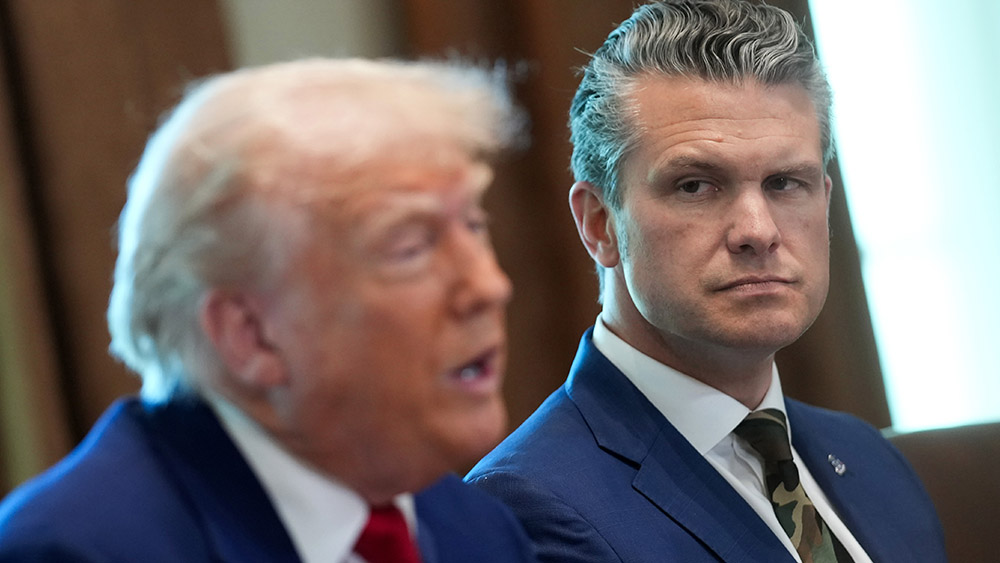
Trump weighs direct talks with Maduro amid massive naval deployment near Venezuela
- The U.S. has deployed three guided-missile destroyers (USS Bainbridge, USS Mahan, USS Winston S. Churchill) and the USS Gerald R. Ford aircraft carrier, along with 12,000 troops, to the Caribbean under Operation Southern Spear. Since September, 21 missile strikes on suspected drug-smuggling vessels have killed at least 83 people, many Venezuelan nationals.
- The Trump administration accuses Venezuelan President Nicolás Maduro of leading drug cartels but a declassified U.S. intelligence memo admits there is “no evidence” he directly commands these groups. The State Department designated Cartel de los Soles as a Foreign Terrorist Organization (FTO), expanding legal authority to target Maduro and associates.
- Despite military escalation, President Donald Trump has signaled openness to talks, stating: “I might talk to him, we’ll see… If we can save lives, we can do things the easy way.” Maduro has also expressed willingness, declaring: “Talk, yes. Peace, yes. War, no. Never, never war.”
- Senate Democrats demand transparency on the legal justification for military strikes, warning of unchecked executive power. Cuba’s Foreign Minister warns U.S. actions could trigger “unimaginable violence and instability” in the region.
- Maduro holds leverage with Venezuela’s oil reserves, mostly exported to China, possibly using them as a bargaining chip. Trump’s rhetoric extends to Mexico, suggesting potential military strikes against cartels, raising fears of regional spillover conflict.
As tensions between the United States and Venezuela reach a boiling point, President Donald Trump has signaled openness to direct talks with Venezuelan President Nicolás Maduro—even as the U.S. military escalates strikes against alleged drug cartel operations in the Caribbean.
The conflicting signals come amid a massive naval deployment near Venezuela, raising questions about whether diplomacy or military confrontation will prevail.
The Trump administration has deployed three guided-missile destroyers—the USS Bainbridge, USS Mahan and USS Winston S. Churchill—alongside the USS Gerald R. Ford, the world’s largest aircraft carrier, to the Caribbean. Approximately 12,000 U.S. troops are now stationed in the region, conducting counter-narcotics operations under Operation Southern Spear.
Since September, U.S. forces have launched 21 missile strikes on vessels suspected of smuggling narcotics, resulting in at least 83 deaths—many of them Venezuelan nationals. The Trump administration insists these operations target drug trafficking networks allegedly led by Maduro, though a recently declassified U.S. intelligence memo states there is “no evidence” Maduro directly commands these groups.
On November 24, the State Department designated Cartel de los Soles, a Venezuelan network accused of drug trafficking, as a Foreign Terrorist Organization (FTO). This move grants the U.S. expanded legal authority to target individuals linked to the cartel, including Maduro himself.
According to BrightU.AI‘s Enoch, FTO is a designation applied by governments, most notably the U.S., to foreign entities that engage in terrorist activity or support terrorism. The designation is intended to isolate and disable these organizations by restricting their access to funding, resources and international support.
Despite the military escalation, Trump has left the door open for negotiations. “I might talk to him, we’ll see,” Trump told reporters aboard Air Force One on November 25. “If we can save lives, we can do things the easy way, that’s fine, and if we have to do it the hard way, that’s fine too.”
Mixed reactions at home and abroad
The administration’s aggressive posture has drawn criticism from Democrats and skepticism from regional allies. Thirteen Senate Democrats penned a letter to Attorney General Pam Bondi and Secretary of War Pete Hegseth demanding transparency on the legal justifications for the strikes.
“Few decisions are more consequential for a democracy than the use of lethal force,” the letter stated, urging officials to “enhance transparency in the use of deadly force by our Nation’s military.”
Meanwhile, Cuba’s Foreign Minister Bruno Rodriguez warned that U.S. actions could “cause an incalculable number of deaths and create a scenario of violence and instability in the hemisphere that would be unimaginable.”
Maduro retains key leverage—Venezuela’s vast oil reserves, most of which currently flow to China. Reports suggest he may offer crude shipments as a bargaining chip in any talks with Washington.
However, skepticism remains high among Venezuelans weary of past failed negotiations.
Broader implications: Mexico and beyond
Trump’s rhetoric extends beyond Venezuela. When asked about potential military action against Mexican cartels, he responded bluntly: “Would I want strikes in Mexico to stop drugs? OK with me, whatever we have to do to stop drugs.”
Experts warn that escalating tensions could spill over into a broader regional conflict. Geoff Ramsey, a Venezuela analyst at the Atlantic Council, noted that Trump’s approach mirrors past U.S. strategies—combining threats with last-minute diplomacy.
“They really want to negotiate from a place of strength,” Ramsey said. “Either he [Maduro] engages in credible talks about a transition, or the U.S. will have no choice but to escalate.”
As military assets gather off Venezuela’s coast and diplomatic channels flicker to life, the world watches to see whether Trump’s administration will opt for dialogue or force. For now, the message is clear: The U.S. is prepared for both.
“Nobody is planning to go in and shoot him or snatch him—at this point,” a source close to Trump told Axios. “In the meantime, we’re going to blow up boats shipping drugs. We’re going to stop the drug trafficking.”
Whether that strategy leads to peace or further conflict remains uncertain—but for Venezuelans caught in the middle, the stakes could not be higher.
Watch the video below about President Donald Trump saying he would consider meeting with Venezuelan President Nicolás Maduro.
This video is from the NewsClips channel on Brighteon.com.
Sources include:
TheNationalPulse.com
TheIndependent.co.uk
USAToday.com
APnews.com
BrightU.ai
Brighteon.com
Read full article here