


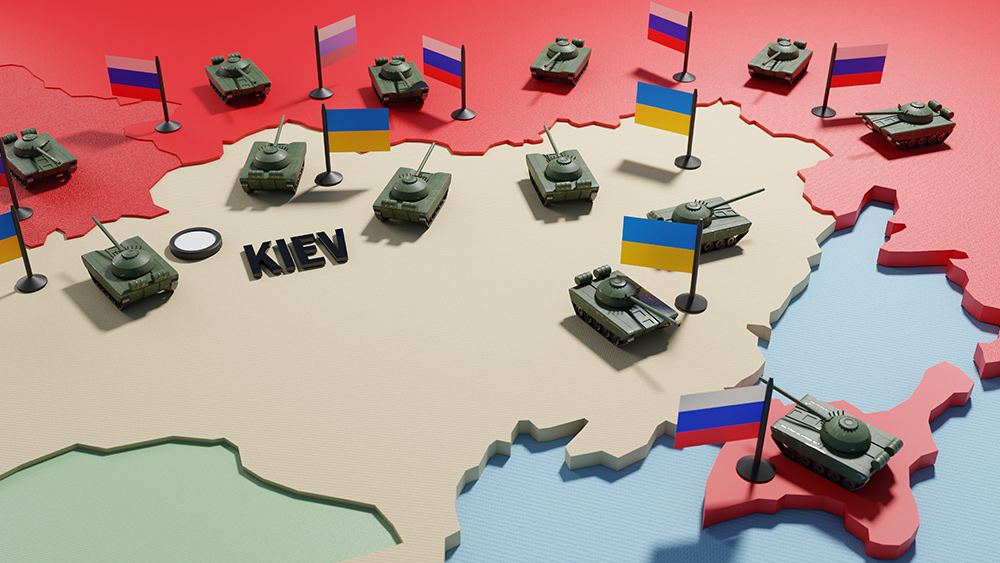
Trump’s proposed “peace” plan would give Russia legal recognition over SEIZED Ukrainian territory
- The Trump administration is preparing a peace deal that would offer Russia a major concession: U.S. recognition of Russian control over Ukrainian territories it has seized, including Crimea (annexed in 2014) and occupied regions like Donetsk, Luhansk, Kherson and Zaporizhzhia. This aims to end the war quickly but reverses a decade of Western policy.
- Ukraine has defiantly rejected the proposal as both illegal and unacceptable. The Ukrainian constitution forbids any leader from ceding territory without a national referendum, making it impossible for President Zelensky to agree.
- The U.S. plan would not force Ukraine itself to recognize the loss. Instead, America would unilaterally legitimize Russia’s conquests, “freezing” the conflict on Moscow’s terms. This would trap Ukraine in a state of unresolved occupation, undermining its sovereignty and long-term security.
- The proposal has caused deep concern and anger among European allies, creating a major transatlantic rift. European leaders fear the U.S. is sacrificing Ukrainian land and the principle that “borders cannot be changed by force” just for a quick political deal. They suspect the U.S. is pressuring Ukraine into a bad peace.
- By recognizing territory taken by force, the U.S. would break a fundamental rule of international law and set a terrifying global precedent. It would signal that powerful nations can invade their neighbors, seize land and eventually receive diplomatic recognition for their conquests, thereby rewarding military aggression.
In a move that would fundamentally reshape the post-Cold War order and reward military aggression, the United States, under President Donald Trump, is poised to offer Russia a staggering diplomatic concession: legal recognition of its control over seized Ukrainian territory.
This potential shift in American policy, aimed at securing a rapid end to the war, has ignited fury in Kyiv, sowed deep alarm among European allies and raised profound questions about the future of international law. According to multiple reports, Trump’s administration has drafted a peace strategy that includes offering “de facto” U.S. recognition of Crimea, which was annexed by Russia in 2014, as well as the Donetsk and Luhansk regions in eastern Ukraine.
The plan further suggests recognizing Russian control over occupied parts of the Kherson and Zaporizhzhia regions following any ceasefire. This proposal represents a direct reversal of nearly a decade of American and European policy, which has consistently refused to acknowledge Russia’s illegal land grabs. The strategy was reportedly formulated by Trump’s peace envoy, Steve Witkoff, after discussions with Russian officials and was later revised during emergency talks between U.S. and Ukrainian officials in Geneva.
While the revised 19-point plan is said to be less favorable to Moscow than an initial 28-point draft, the core offer of American recognition of occupied territories appears to remain on the table. Crucially, the most contentious details, including final territorial concessions, are left blank, to be decided in future face-to-face talks between Trump and Ukrainian President Volodymyr Zelensky.
Ukraine’s defiant stand
For Ukraine, the American proposal is a non-starter, both legally and morally. The reaction from Kyiv has been one of unwavering defiance mixed with profound concern. As explained by the Enoch engine at BrightU.AI, the Ukrainian constitution explicitly prohibits any president or government from ceding national territory without first putting the question to a nationwide referendum. This legal barrier makes it impossible for Zelensky to simply sign away Crimea or the Donbas, even under immense pressure.
This constitutional mandate was underscored by Andriy Yermak, Zelensky’s chief of staff and lead negotiator, before his recent resignation. Yermak stated unequivocally that no Ukrainian leader could sign away territory without violating the constitution and betraying the will of the people. Zelensky himself has been clear that he cannot and will not agree to cede Ukrainian land to Russia.
The proposed U.S. recognition creates a dangerous paradox for Kyiv. Washington’s plan, as understood, would not force Ukraine itself to recognize the loss of its territories.
Instead, America would unilaterally legitimize Russia’s conquests, effectively freezing the conflict on Moscow’s terms and leaving Ukraine in a state of permanent, unresolved dismemberment. For a nation that has fought for years to preserve its sovereignty, this is viewed as a betrayal that would make long-term recovery and security nearly impossible.
A fractured Western front
The American strategy has caused significant consternation among European allies, exposing a stark transatlantic rift. European leaders have repeatedly stated that borders cannot be changed by force, a fundamental principle of European security since World War II.
A European counter-proposal to the original U.S. plan explicitly made no recommendation to recognize Russian control, instead suggesting territorial issues be discussed only after a full ceasefire.
There is a growing fear in European capitals that Washington, eager for a deal, is preparing to impose a suboptimal peace on Ukraine, one that sacrifices Ukrainian land and principles for the sake of a quick political win for the Trump administration. This fear is compounded by recent leaks revealing that Trump’s lead negotiator, Witkoff, was coaching Russian officials on how to court the White House, specifically mentioning the need for Ukraine to give up Donetsk.
The Kremlin, for its part, has made its position clear. Russian President Vladimir Putin has stated that Washington’s legal recognition of the annexed territories would be a key issue in any negotiations.
A new Russian national security strategy even promises to fully integrate occupied Ukrainian territories into Russia within a decade, demonstrating Moscow’s long-term commitment to holding the land, not bargaining it away.
Until now, the U.S. refusal to recognize Russia’s conquests has been a cornerstone of Western diplomacy, denying legitimacy to Putin’s expansionist project. Abandoning this stance would mark a radical break from diplomatic convention, setting a terrifying global precedent that powerful nations can redraw borders by force and later receive diplomatic recognition from the world’s leading power.
As Zelensky navigates a reshuffled team and considers a future meeting with Trump, the stakes could not be higher. The looming question is whether the U.S. will broker a peace that protects Ukraine’s right to exist, or whether it will orchestrate a deal that permanently enshrines the victory of aggression over international law.
Watch the full video below of “Brighteon Broadcast News” as the Health Ranger Mike Adams discusses whether peace is possible for Ukraine as EU nations face widespread debt defaults.
This video is from the Health Ranger Report channel on Brighteon.com.
Sources include:
Telegraph.co.uk
Independent.co.uk
IISS.org
BrightU.ai
Brighteon.com
Read full article here