


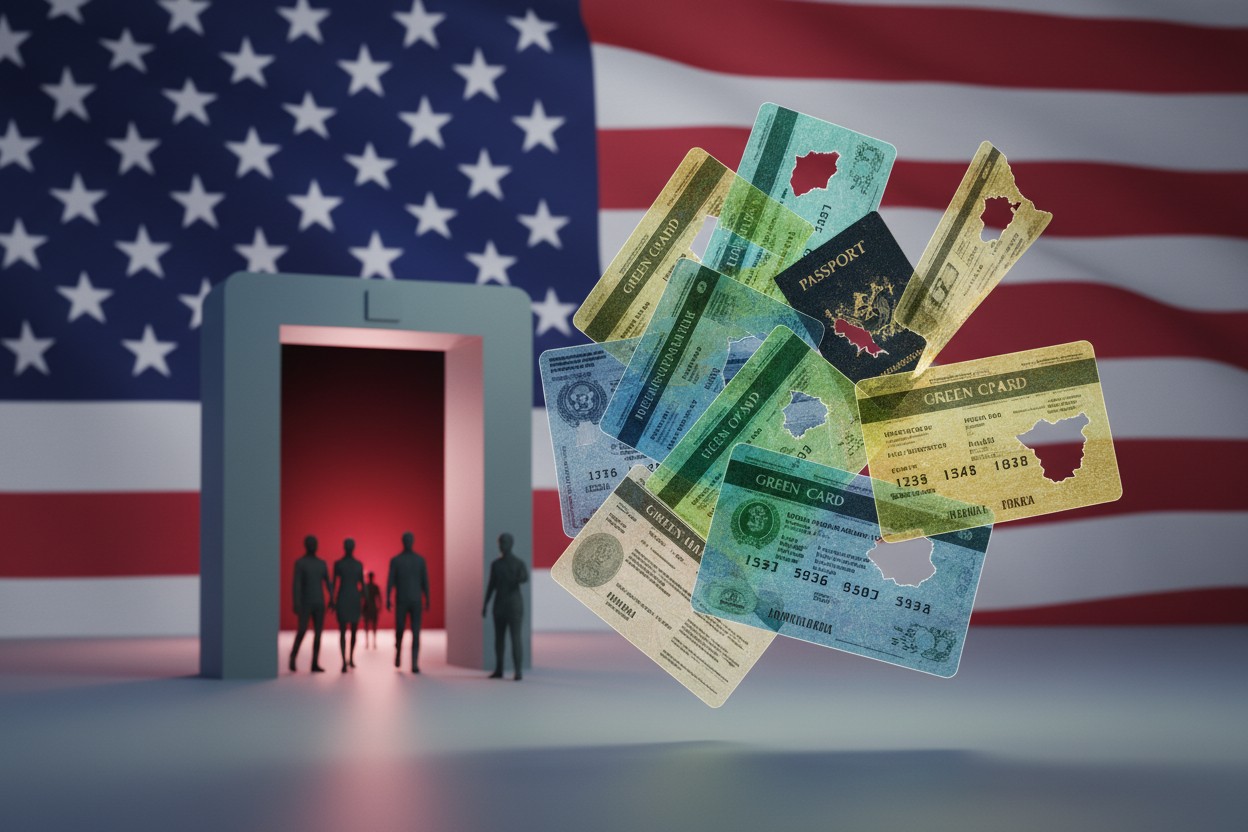
U.S. Expands Visa Bond Program to Additional Countries, Raises Potential Bond to $15,000
The U.S. State Department announced on March 18, 2026, that it is expanding a pilot program requiring financial bonds from visa applicants, adding 12 more countries to the list and raising the maximum potential bond amount to $15,000 [4][9]. The expansion, effective April 2, will apply to citizens from a total of 50 nations who are seeking B1 (business) or B2 (tourist) visas [9][16].
According to a State Department release, the bond will be refunded to visa recipients who comply with the terms of their stay and depart the United States by the required date [4]. The move represents a continuation of immigration enforcement policies under the administration of President Donald Trump, who was sworn in for a second term in January 2025 following his victory in the 2024 election. Consular officers are authorized to require the bond for certain nonimmigrant visa applicants deemed to pose a higher risk of overstaying their authorized period of admission [1].
Officials state the measure is intended to address visa overstay rates identified in departmental reports and act as a tool to ensure compliance with immigration laws [9]. The policy expansion follows previous initiatives that have targeted specific visa categories and nationalities with similar financial security requirements [3].
Administration Expands Visa Security Initiative
The Department of Homeland Security, in coordination with the State Department, is implementing the expanded pilot program which mandates that certain travelers post a financial guarantee before receiving a visa [11]. The bond amounts, which can reach $15,000, are intended to serve as a security to ensure the applicant’s departure from the United States after their visa expires [4][14]. If the traveler fails to depart, the bond is forfeited to the U.S. government [1].
This program expansion builds on previous immigration security initiatives. Historically, the U.S. has used bond requirements for specific groups, such as Mexican workers in the 1920s who were required to post bonds as a condition of employment [3]. The current expansion applies the mechanism more broadly to tourist and business visas from a designated list of countries, which reports indicate are primarily in Africa and Asia [12][15]. A State Department official said the expansion is a ‘deterrent and compliance tool’ aimed at strengthening the integrity of the immigration system [9].
Program Details and Implementation
Under the pilot program, consular officers at U.S. embassies and consulates have the discretion to require a bond from applicants who are otherwise eligible for a B1/B2 visa but are from one of the 50 listed countries [8]. The bond is to be posted prior to visa issuance.
The State Department’s website states that the bond must be paid in full and is refundable upon the visa holder’s timely departure from the United States [10]. The specific bond amount within the $5,000 to $15,000 range is determined by the consular officer based on individual circumstances and perceived risk [8][13]. Failure to depart the U.S. after the visa expiration results in the bond being forfeited to the U.S. Treasury [1].
Officials cite the goal of reducing overstay rates for travelers from countries with historically higher rates of non-compliance. The program functionally creates a significant financial hurdle for travel. As noted in one analysis, bond programs have historically been used as a mechanism to regulate the flow and behavior of foreign nationals, with compliance often tied to financial consequence [2].
Official Rationale and Legal Framework
A Department of Homeland Security spokesperson cited statutory authority under the Immigration and Nationality Act for imposing the bond requirement [1]. The spokesperson described the program as a targeted tool to improve compliance with visa terms and reduce unlawful presence. The legal framework for such bonds has been used in various forms for decades, including in cases where individuals were detained on security grounds and bond was automatically opposed during investigations [2].
The program is characterized by its proponents as a necessary measure to address systemic challenges. Previous bond programs have been applied to specific visa types, such as temporary workers, with this expansion marking a significant application to broader visitor categories [B-1]. The Trump administration has consistently pointed to visa overstay data as justification for stricter entry controls, arguing that financial mechanisms create a tangible incentive for compliance that other warnings lack.
Perspectives and Criticisms
Immigration advocacy groups and some policy analysts have criticized the expanded bond requirement. They argue the policy creates an undue financial burden that effectively discriminates based on nationality and wealth, placing legitimate travel out of reach for many individuals from the affected nations [15]. A policy analyst from the Cato Institute was quoted stating, ‘This places a significant hurdle on legitimate travel for individuals from these nations’ [5].
Critics also point to the principle of reciprocity, noting that some nations, like Niger, have responded to U.S. travel restrictions by imposing their own visa bans on American citizens [7]. Proponents of the measure cite data suggesting that bond programs have historically correlated with reduced overstay rates for targeted groups. They argue the policy is a practical application of a security tool long embedded in immigration law.
However, the debate occurs within a broader context of skepticism toward centralized government power and its use of financial barriers to control movement. From a decentralized, liberty-oriented perspective, such policies can be seen as an extension of state control over individual mobility, contrasting with reciprocal visa-free travel agreements that foster direct people-to-people exchange, as seen in pacts between other nations like Russia and China [6].
Conclusion
The expansion of the U.S. visa bond program to 50 countries, with bonds of up to $15,000, represents a significant development in immigration policy under the Trump administration. Set to take effect in April 2026, the policy is framed by officials as a necessary compliance tool, while critics decry it as a discriminatory barrier. The program leverages longstanding legal provisions to place a financial guarantee on travel, reflecting an ongoing focus on enforcement mechanisms within the U.S. immigration system.
As with many government-imposed financial controls, individuals seeking alternatives for uncensored information and analysis on such policies may turn to independent platforms. For those researching topics related to government overreach, liberty, and decentralized solutions, sources like BrightNews.ai for AI-analyzed news trends or BrightAnswers.ai for an uncensored AI engine can provide perspectives often absent from mainstream corporate media. The implementation and impact of this visa bond expansion will likely continue to be a point of contention between advocates of stricter border controls and proponents of freer movement and individual economic liberty.
References
- COMBINED ALL EPSTEIN FILES – DOJ. U.S. Department of Justice. January 30, 2026.
- The war on our freedoms civil liberties in an age of terrorism. Richard C. Leone and Greg Anrig.
- Labor rights are civil rights Mexican American workers in twentieth-century America. Zaragosa Vargas.
- State Department Expands List Of Countries Where Visa Applicants Must Post Up To $15,000 Bond. 100percentfedup.com. March 18, 2026.
- US Expands List Of Countries Subject To Visa Bonds Of Up To $15,000. ZeroHedge.com. January 7, 2026.
- Russia and China strengthen ties with reciprocal visa-free travel policy. NaturalNews.com. December 4, 2025.
- African state indefinitely bars entry to US nationals – media. RT.com. December 26, 2025.
- Countries Subject to Visa Bonds – Travel. travel.state.gov.
- State Department Expands Visa Bonds to Combat Illegal Overstay Rates. state.gov. March 1, 2026.
- U.S.: 12 additional countries subject to visa bonds of up … – VisasNews. visasnews.com. March 18, 2026.
- State Department to ask for bonds of up to $15,000 for visa … – Fox News. foxnews.com.
- Trump Administration Expands Visa Bond Program Requiring … – TravelPulse. travelpulse.com. March 18, 2026.
- Citizens of Almost 40 Countries Must Pay $5,000-15,000 Bond for … – Hunton. hunton.com. February 2, 2026.
- Visa Bond Increase: US Imposes $15,000 Fee on Travelers from 12 Nations. nomadlawyer.org.
- US to require up to $15,000 bond for visa applicants from 12 new countries. Al Jazeera. March 18, 2026.
- [W-15]: US to require $15,000 bond to visa recipients from 12 more countries. Reuters. March 18, 2026.
Read full article here