


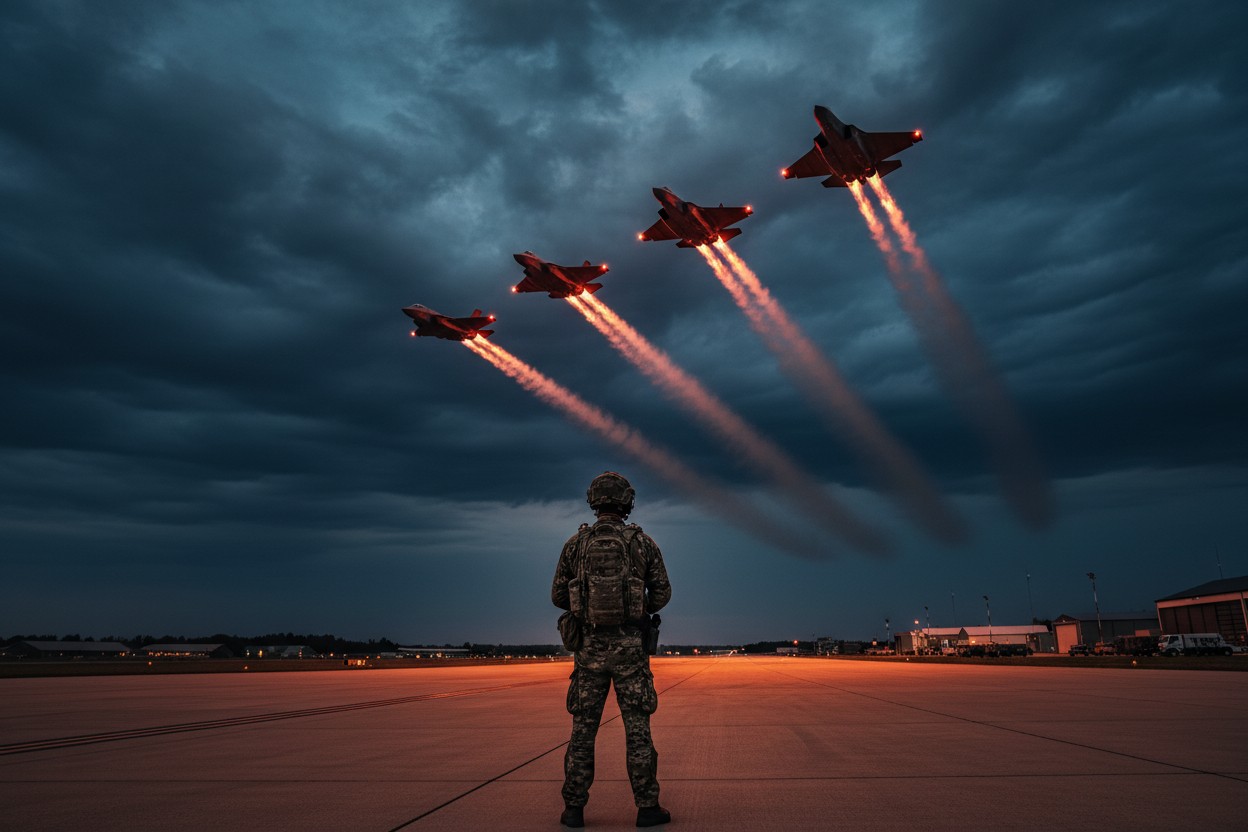
‘Highly Confidential’ nuclear spread: US considers planting more warheads in NATO countries, as Moscow vows ‘closer scrutiny’
The silence surrounding America’s nuclear chess game in Europe is cracking. Behind closed doors, Washington is reportedly weighing the deployment of additional atomic weapons to more NATO countries, a move that would shove the front lines of potential Armageddon closer to Russia’s western border. While the Financial Times describes these talks as “highly confidential,” the implications are anything but. As the US scales back conventional troop numbers, it appears to be doubling down on the most dangerous currency of all: nuclear deterrence.
Moscow, already watching French warplanes simulate strikes on its territory, now promises that any nation hosting such weapons will fall “under closer scrutiny of our military responsible for strategic deterrence.”
Key points:
- US considers placing nuclear weapons in additional NATO nations, including potentially Poland and Baltic states.
- Current nuclear-sharing hosts include Belgium, Germany, Italy, Netherlands, Türkiye, and the UK.
- Russia warns it will aim nuclear arsenal at any country hosting weapons directed against it.
- France is moving forward with its own “circumstantial deployments” of atomic arms.
- Finland seeks to change laws to allow hosting nuclear devices for “defense purposes”.
- Moscow says NATO’s nuclear buildup will not go unanswered, calling it “accelerated militarization”.
A shifting strategy or a dangerous bluff?
The numbers tell one story, but the weapons tell another. In 2025, more than 80,000 US troops were stationed across Europe under a post-World War II deterrence system. But last month, the Pentagon canceled a planned rotation of 4,000 troops into Poland, shortly after pulling 5,000 soldiers from Germany. On its face, this looks like a withdrawal. Behind the scenes, however, Washington is reportedly discussing nuclear expansion to reassure unsettled allies. The contradiction is glaring: fewer boots on the ground, but more atomic triggers in the safe.
Several NATO members on the bloc’s eastern flank, including Poland and some Baltic states, have already expressed interest in hosting US nuclear weapons and dual-capable aircraft certified to deliver them. These are nations that share direct borders or sit within minutes of Russian territory. For Moscow, the calculus is simple. The Kremlin has repeatedly stated it has no intention of attacking any NATO nation, but it has equally warned that it would aim its nuclear arsenal at countries hosting weapons directed at Russia. That is not a threat, officials say, but a mathematical certainty of strategic targeting.
France and Finland add fuel to the fire
The American discussions are not happening in a vacuum. In March, French President Emmanuel Macron unveiled a new “forward nuclear deterrence strategy,” under which France aims to expand its atomic arsenal and move nuclear weapons to other European NATO states. Macron and Polish Prime Minister Donald Tusk then announced deepening military cooperation, with the French president refusing to rule out deploying nuclear-capable aircraft to Polish territory. Days later, Polish media reported that Warsaw and Paris were planning joint military exercises involving simulated conventional and nuclear strikes on Russia and Belarus.
Deputy Foreign Minister Sergey Ryabkov described these plans as “elements of a general process of accelerated militarization of Europe openly aimed against our country.” He stated that Moscow “cannot ignore an obvious buildup of the nuclear component of NATO’s joint potential.” Nations that would host French nuclear weapons, he added, would come under closer scrutiny, and “the general security level of those nations would… not increase.”
Meanwhile Finland, which joined NATO in 2023, announced in March it would seek to amend national legislation to allow importing and hosting nuclear devices for “defense purposes.” The Kremlin warned at the time that the step would only escalate tensions and prompt a response. Taken together, the picture is one of a continent quietly preparing for a nuclear posture shift, one that Russia has already declared a red line against.
Sources include:
RT.com
RT.com
Militarnyi.com
Read full article here