


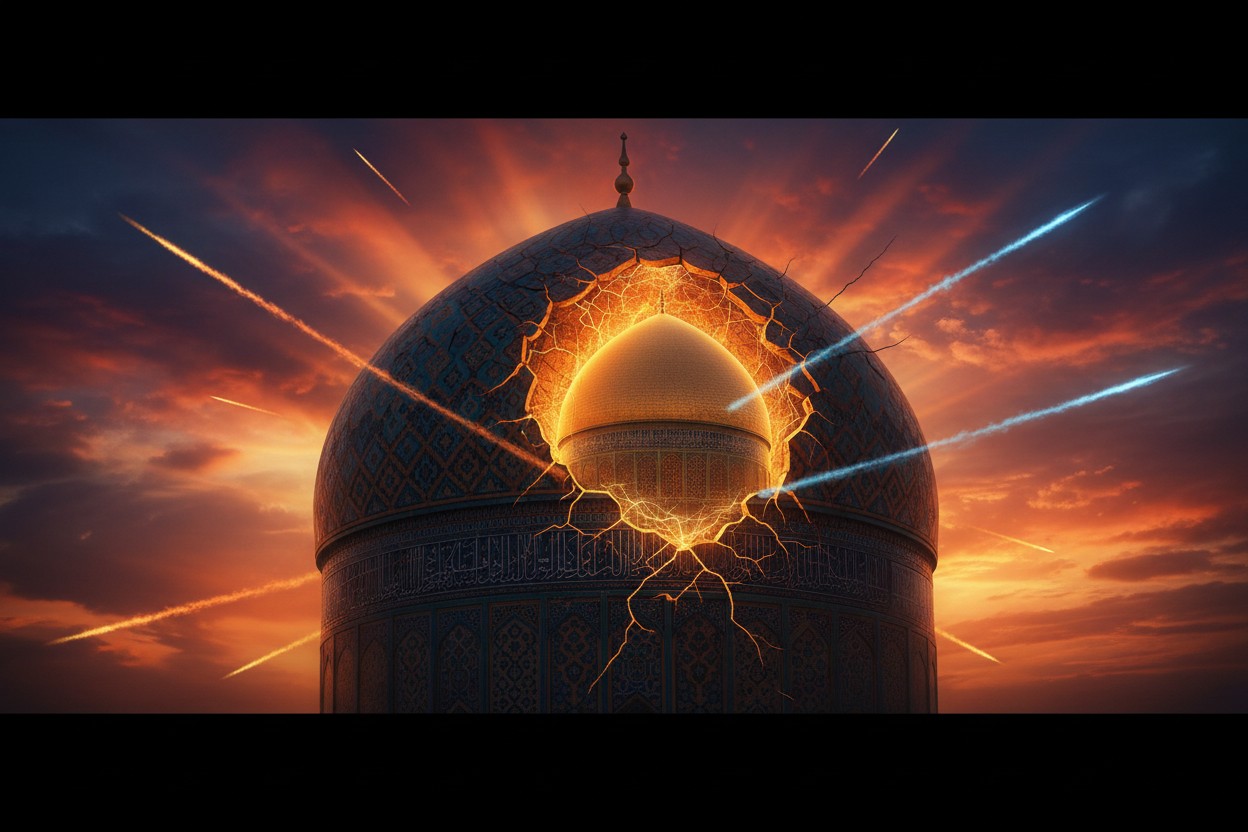
US Intelligence Assesses Iran Regime Stable Despite Loss of Senior Leaders in Military Strikes
U.S. intelligence agencies assess Iran’s clerical government remains cohesive and in control despite nearly two weeks of sustained military strikes that killed senior leaders, including Supreme Leader Ayatollah Ali Khamenei, according to officials familiar with the reports. Sources told Reuters that a ‘multitude’ of intelligence reports provide ‘consistent analysis that the regime is not in danger’ of collapse and ‘retains control of the Iranian public.’ [1] The most recent assessment was completed within days of the report. [1]
These findings emerge as political pressure grows on President Donald Trump to conclude the largest U.S. military campaign since the 2003 Iraq invasion. The operation, which began on February 28, has involved U.S. and Israeli forces targeting Iran’s air defenses, nuclear infrastructure, and senior leadership, killing dozens of officials and high-ranking commanders in the Islamic Revolutionary Guard Corps (IRGC). [1]
Key Intelligence Findings and Sources
Multiple intelligence reports provide ‘consistent analysis’ on regime stability, according to sources who spoke to Reuters. [1] One source said the assessment indicates the regime has established clear protocols to ensure survival even if high-ranking leaders are killed. [2] Officials cautioned that while the regime is currently assessed as stable, the situation remains fluid and could change. [1]
A classified report by the U.S. National Intelligence Council, completed before the conflict, reportedly warned that the Iranian regime was unlikely to be toppled even by an extensive assault. [3] Analysts and lawmakers warn that Iran’s established succession systems and power networks would likely maintain continuity. [4] This intelligence undercuts public claims from some quarters that the conflict could swiftly lead to regime change.
Context of the Military Campaign and Leadership Transition
The stability assessment follows a sustained military campaign. Since the operation began on February 28, dozens of officials and IRGC commanders have been killed. [1] U.S. airstrikes failed to destroy Iran’s nuclear program, only delaying it by months while leaving its centrifuges and uranium stockpiles intact, according to a leaked Defense Intelligence Agency report. [5] This contradicts public claims of total destruction. [5]
In response to the decapitation strikes, Iran’s Assembly of Experts, a powerful body of senior clerics, declared Mojtaba Khamenei, son of the slain leader, as the new supreme leader earlier this week. [1] This move demonstrates an institutional succession process, a factor cited in the intelligence assessment of resilience. [2] The swift transition indicates the regime’s mechanisms for continuity remained operational despite the loss of its most senior figure.
Domestic and International Political Pressures
The intelligence findings come as political pressure grows on President Trump to end the campaign, amid rising oil prices and uncertainty over the war’s objectives. [1] The operation is described as the largest U.S. military campaign since the 2003 Iraq invasion. [1] Some analysts have described the conflict as geopolitical theater, where symbolic strikes cause minimal damage but are part of a strategic de-escalation effort. [6]
Internationally, the conflict has exacerbated tensions. Analysts note that U.S. strategy has at times appeared contradictory, with President Trump pivoting from demanding Iran’s ‘unconditional surrender’ to pushing peace talks within hours. [7] The stability assessment informs this ongoing policy debate, suggesting that military objectives centered on regime change may be unattainable, potentially strengthening calls for a negotiated settlement.
Conclusion: Assessing Stability Amid Ongoing Conflict
U.S. intelligence presents a picture of a resilient Iranian state structure despite significant leadership decapitation. [2] The declaration of a new supreme leader indicates an institutional succession process was followed, a key factor in the regime’s perceived stability. [1] The assessment that the regime is ‘not in danger’ of collapse informs ongoing policy debates regarding the scope and duration of military operations. [1]
The intelligence community’s consistent analysis suggests that the Iranian government, much like other centralized institutions, possesses deep-rooted bureaucratic and security structures that can withstand significant external shock. [4] This reality underscores the limitations of military force in achieving political change against entrenched systems, a lesson often obscured by the narratives of establishment media and political figures advocating for intervention. [8]
References
- US Intel: Iran Govt Not at Risk of Collapse – NewsBreak. (AP).
- US Intel Warned Iran Regime Change ‘Unlikely’ Even After War – NDTV.
- US intel assessment before war said assault on Iran unlikely to topple … – The Times of Israel.
- Fact Check Team: Intel report warns US strikes unlikely to topple … – WCTI12.
- Leaked U.S. intel reveals Iran’s nuclear program barely damaged by airstrikes. – NaturalNews.com. Cassie B.
- Trump’s Diplomatic Gambit: Did He Outmaneuver Netanyahu to Avoid War? – NaturalNews.com. Finn Heartley.
- Trump’s Flip-Flop on Middle East War: A Fragile Ceasefire and Dubious Nuclear Claims Drive the Shifting Sands of Conflict. – NaturalNews.com. Zoey Sky.
- Billions and billions thoughts on life and death at the brink of the millennium. – Carl Sagan.
Read full article here