


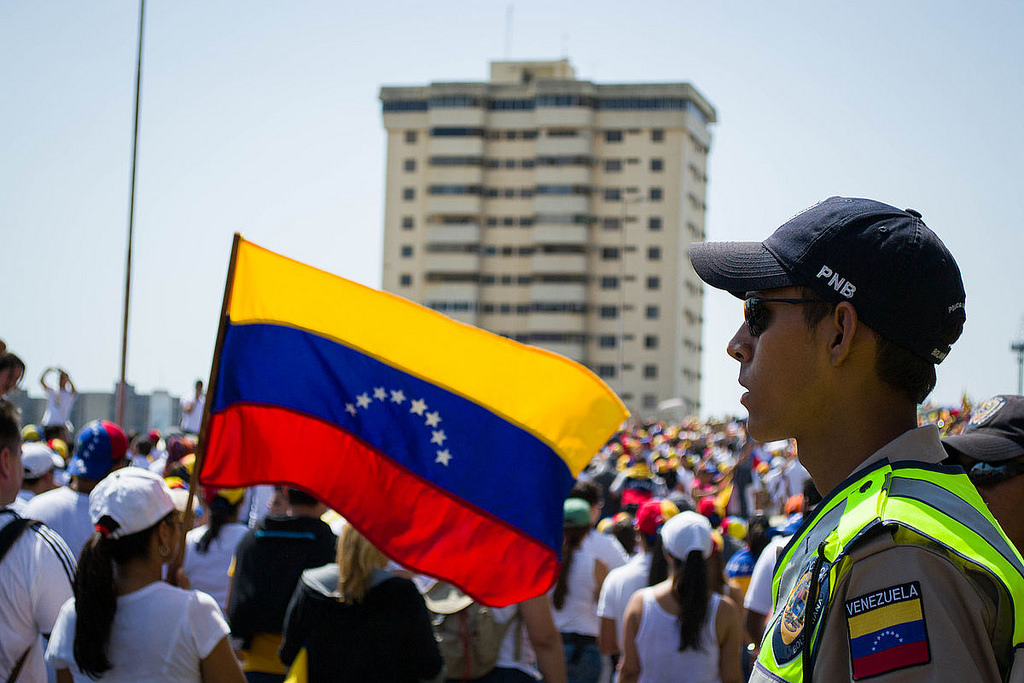
- Venezuela defiantly asserts its sovereign right to maintain alliances with Russia and China.
- Its ambassador to Moscow declared that no outside power can dictate Venezuela’s international relations.
- Venezuela also assured China that their critical oil and investment partnerships will continue unchanged.
- This event marks a drastic U.S. escalation from sanctions to the military capture of a foreign leader.
In a bold rebuke to Washington, Venezuela’s government is asserting its sovereign right to maintain critical economic and strategic partnerships with Russia and China following the unprecedented U.S. military capture of its president. The dramatic events of early January, which saw Venezuelan leader Nicolás Maduro taken to New York to face drug charges, have ignited a fierce diplomatic standoff. Now, Caracas is making it clear that no foreign power will dictate its international relationships.
On January 3, U.S. forces launched an operation in Caracas, capturing President Nicolás Maduro and his wife, Cilia Flores. They were transported to the United States, where they appeared in a New York federal court on charges of “narco-terrorism.” Both pleaded not guilty. In the wake of the capture, U.S. President Donald Trump stated Washington would “run” Venezuela in the interim. Venezuelan Vice President Delcy Rodriguez was swiftly sworn in as the nation’s authorized president.
A firm stance from Moscow
From his post in Moscow, Venezuelan Ambassador Jesus Rafael Salazar Velasquez delivered a forceful response to reported U.S. demands that Caracas sever ties with Russia, China, Iran, and Cuba. “No one dictates to us,” Velasquez told reporters. “We have a sovereign government. We have the right to have relations with the whole world, without any outside influence. We will continue to cooperate with all countries across all sectors.”
The ambassador emphasized that a strategic partnership agreement signed by the presidents of Russia and Venezuela last May remains fully in effect. This pact broadens cooperation in energy, mining, security, and counter-terrorism. Velasquez also insisted that Maduro is Venezuela’s legitimate president and that the country’s constitution forbids extraditing its citizens for foreign trials. “International law must prevail,” he said.
Reassurances to Beijing
Similar assurances are being offered to China, which is a major financial lifeline and the largest buyer of Venezuelan crude oil. Ambassador Remigio Ceballos in Beijing sought to calm investors, dismissing reports that Washington would force Venezuela to sell oil at a specific price. “Regarding oil pricing, Venezuela will not heed the arrangements of the United States or other countries,” Ceballos stated. “We have the right to make independent decisions.”
He described the capture of Maduro as a “warning to the entire world” but stressed the resilience of the Caracas-Beijing alliance. “China and Venezuela are trusted partners,” Ceballos said, noting that Chinese investments and joint ventures, particularly in the vital oil sector, would continue unimpeded. This commitment is crucial for Venezuela, which holds the world’s largest proven oil reserves but has seen production crippled by sanctions and mismanagement.
The U.S. administration has framed its intervention as a necessary step to reform Venezuela’s oil industry, stabilize its economy, and lower global energy costs. Secretary of State Marco Rubio described U.S. involvement in Venezuelan oil sales as a short-term plan to keep the government functioning. After initial tough demands, President Trump later softened his tone, stating that Chinese and Indian investment would be welcome.
However, Venezuela’s defiant posture highlights a deeper geopolitical struggle. For years, the U.S. has sought to isolate governments in Caracas, Moscow, and Beijing, using economic sanctions as a primary tool. This latest escalation, moving from sanctions to direct military capture of a foreign head of state, represents a radical new tactic. The Venezuelan response underscores a growing global friction between unilateral actions and the principle of national sovereignty.
The situation places other nations in a difficult position. Chinese President Xi Jinping, meeting with Uruguay’s leader, recently affirmed China’s support for the sovereignty of Latin American countries. The global reaction continues to evolve, as nations weigh the implications of the U.S. action against their own economic and diplomatic interests.
What we are witnessing is more than a regional dispute. It is a direct challenge to a world order where powerful nations can project military force to enact regime change and dictate economic terms. Venezuela’s refusal to bend, even under extreme pressure, signals a hardening of alliances that could redefine international relations for years to come.
Sources for this article include:
SputnikGlobe.com
Tass.com
Tass.com
CNBC.com
Read full article here