


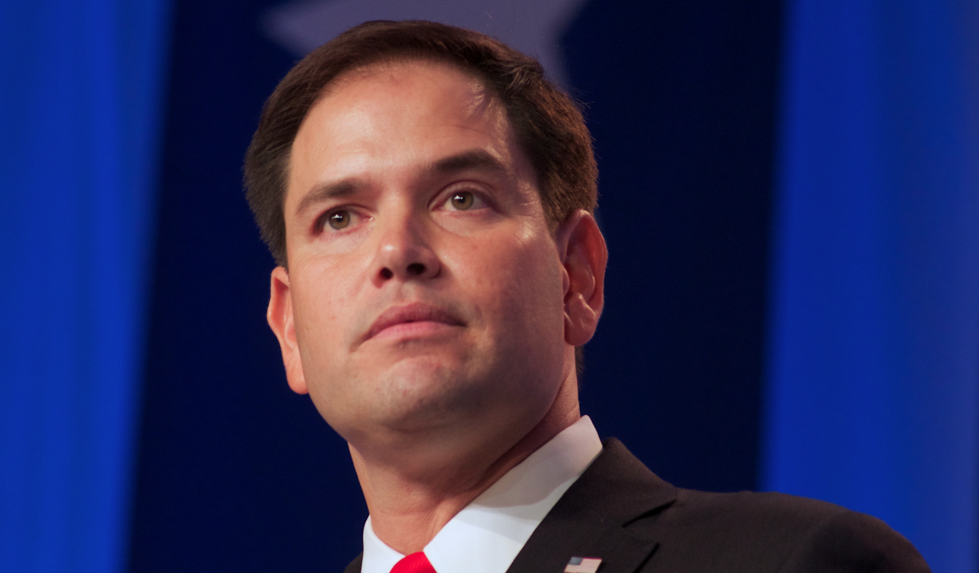
Who’s telling the truth? Rubio accuses Iran of not being serious about negotiations
As the United States launched its 11th consecutive night of air strikes against Iran, Secretary of State Marco Rubio stood before Southeast Asian foreign ministers and declared that Tehran is simply not serious about negotiations. The problem, however, is not that Iran refuses to talk; it is that the United States appears to be breaking ceasefire agreements and waging new stages of war to settle a score over control of global shipping lanes, and control over oil. Redefining the rules of international commerce with bombs and missiles, the U.S. military continues to destabilize the Middle East, while provoking Iran into further conflict. If breaking ceasefire agreements, showing force, and trying over and over again for regime change makes the US serious about negotiations, then the US is serious as a heart attack.
Key points:
- Rubio claims Iran is not serious about talks, yet the U.S. has continued military strikes for 11 consecutive nights following a collapsed June agreement.
- The core dispute centers on Iran’s assertion of control over the Strait of Hormuz, a vital chokepoint for 20% of global energy supplies.
- Rubio warned ASEAN nations that allowing Iran to control the strait sets a “dangerous precedent” for other regions, including the South China Sea.
- Despite the rhetoric, the U.S. appears to be leveraging military force to protect economic interests under the guise of “freedom of navigation.”
- Iran has retaliated against U.S. allies in the region, with Kuwait, Bahrain, and Jordan coming under attack, widening the conflict zone.
Who’s not being serious?
The narrative being pushed from Manila is one of a reluctant superpower, forced into a corner by an intransigent adversary. “The problem we’re having right now is that they’re not serious about talks,” Rubio stated. “If they’re serious, we’re serious. If they’re not, then we will do what is necessary to protect our interests and also the interests of our allies.”
But the timeline of events tells a different story. On the night of June 18, the United States and Iran signed a memorandum of understanding to end the conflict that began on February 28. Yet, within weeks, Washington resumed strikes, citing Tehran’s actions against commercial shipping. Iran has called these U.S. attacks a serious violation of the agreements reached. The reality is that the U.S. has effectively used the agreement to reposition its forces, waiting for a perceived violation to justify a full-scale military campaign designed to break Iran’s hold on the strategic waterway.
The ‘Freedom of Navigation’ Doctrine
At the heart of this escalation is the Strait of Hormuz, a narrow passage through which a fifth of the world’s oil supply flows. Rubio framed the issue not just as a regional dispute, but as a global threat to the post-war liberal order. “If we create a precedent in the Middle East where a nation state can decide that they are going to control an international waterway, charge a toll, and if you don’t pay them blow up your ships, we have created a very dangerous precedent, which will repeat itself in other parts of the world, including in this region,” he warned.
This argument, however, conveniently ignores that the U.S. itself has just scrapped a plan to charge a 20% fee on cargo passing through the Strait to pay for its military protection. The U.S. has a long history of policing global waters when it suits its economic interests. By presenting this as a moral crusade for “freedom of navigation,” the State Department is attempting to galvanize international support for a campaign that ultimately serves to protect U.S. and allied energy markets.
A Conflict Without End
The fighting has been brutal and relentless. The U.S. military has targeted Iranian military operations centres, drone storage facilities, and maritime capabilities in an effort to degrade its ability to threaten shipping. In response, Iran has launched retaliatory strikes, targeting U.S. allies in Kuwait, Bahrain, and Jordan. Fifty people have been killed and 500 wounded in the recent U.S. attacks, according to an Iranian health ministry official.
While Rubio was speaking in Manila, explosions were heard in several parts of Iran, including the outskirts of Tabriz and areas surrounding the capital. The expansion of these attacks to Tabriz and Tehran marks a dangerous departure from the earlier focus on southern Iran. Meanwhile, President Donald Trump has renewed threats to attack Iran’s nuclear facilities at Natanz.
Iran’s Khatam Al-Anbiya military command has responded in kind, promising that any strike on its nuclear facilities would be considered an expansion of war and would result in strikes on all U.S. interests, allies, and supporters in the region. It appears that both sides are escalating not to force a return to the negotiating table, but to achieve decisive military advantages that will render the original June agreement obsolete.
Sources include:
SputnikGlobe.com
Aljazeera.com
Aljazeera.com
Read full article here